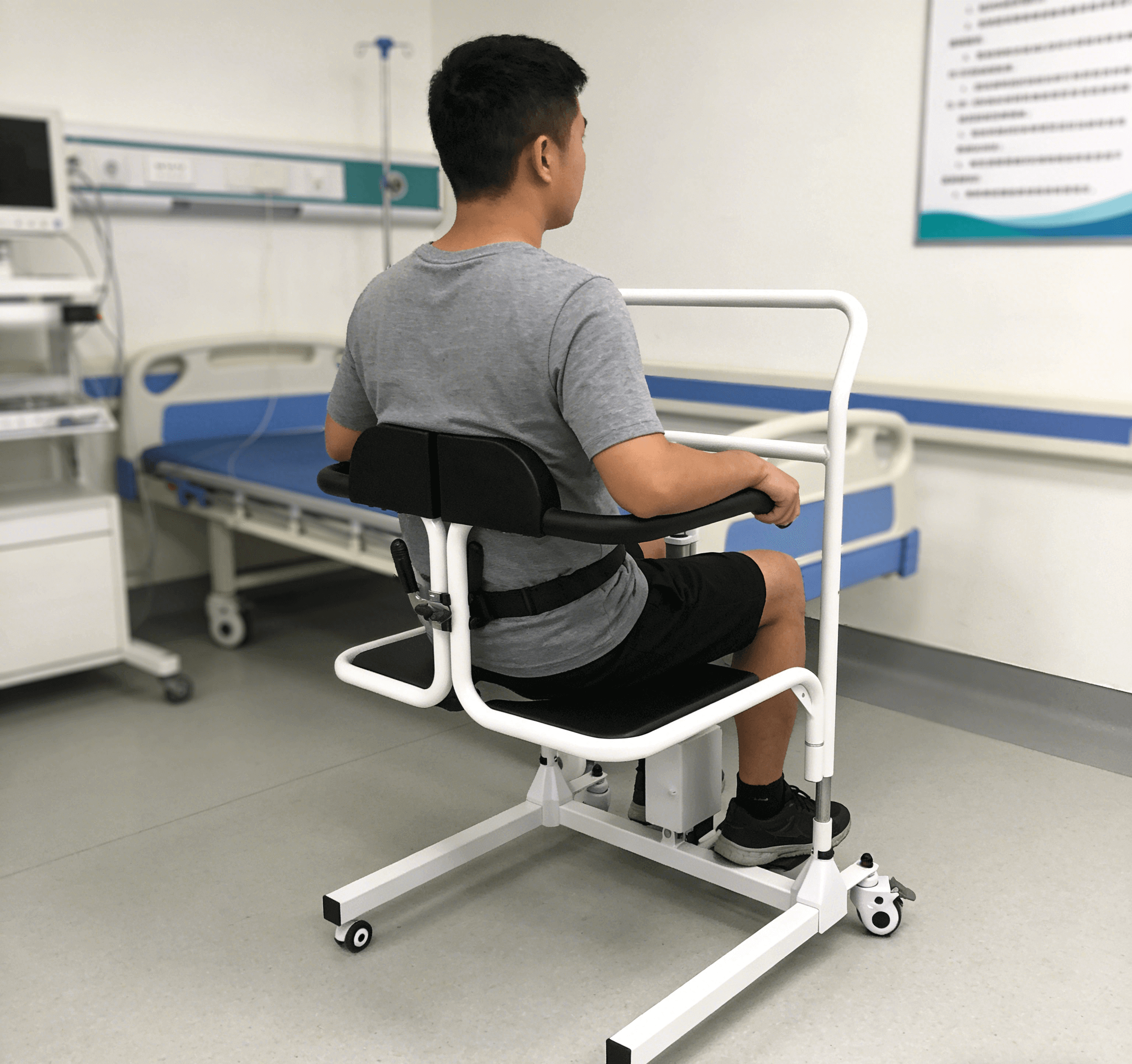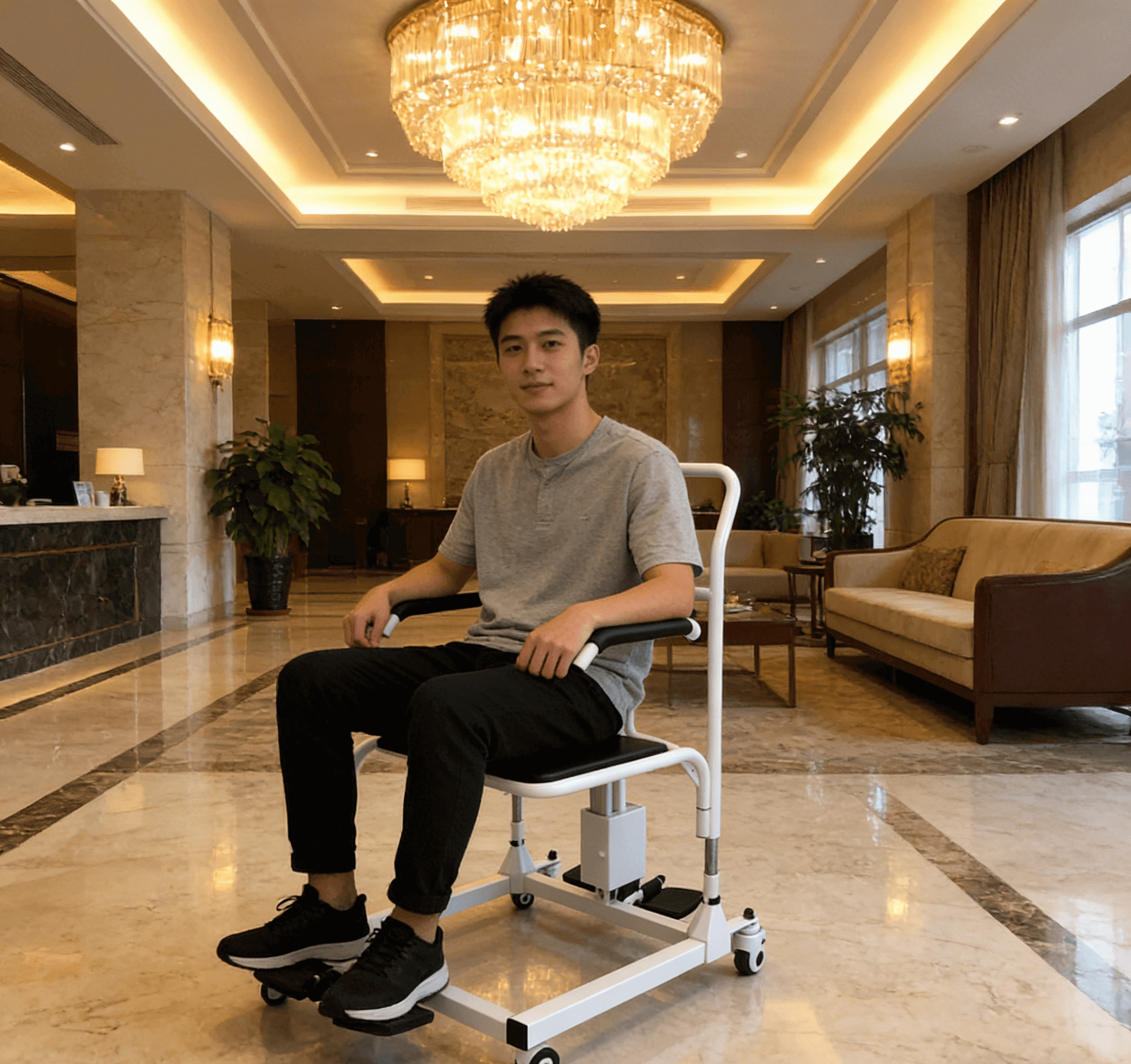
Category: power lift chairs
Posted by 2025-12-20 11:12
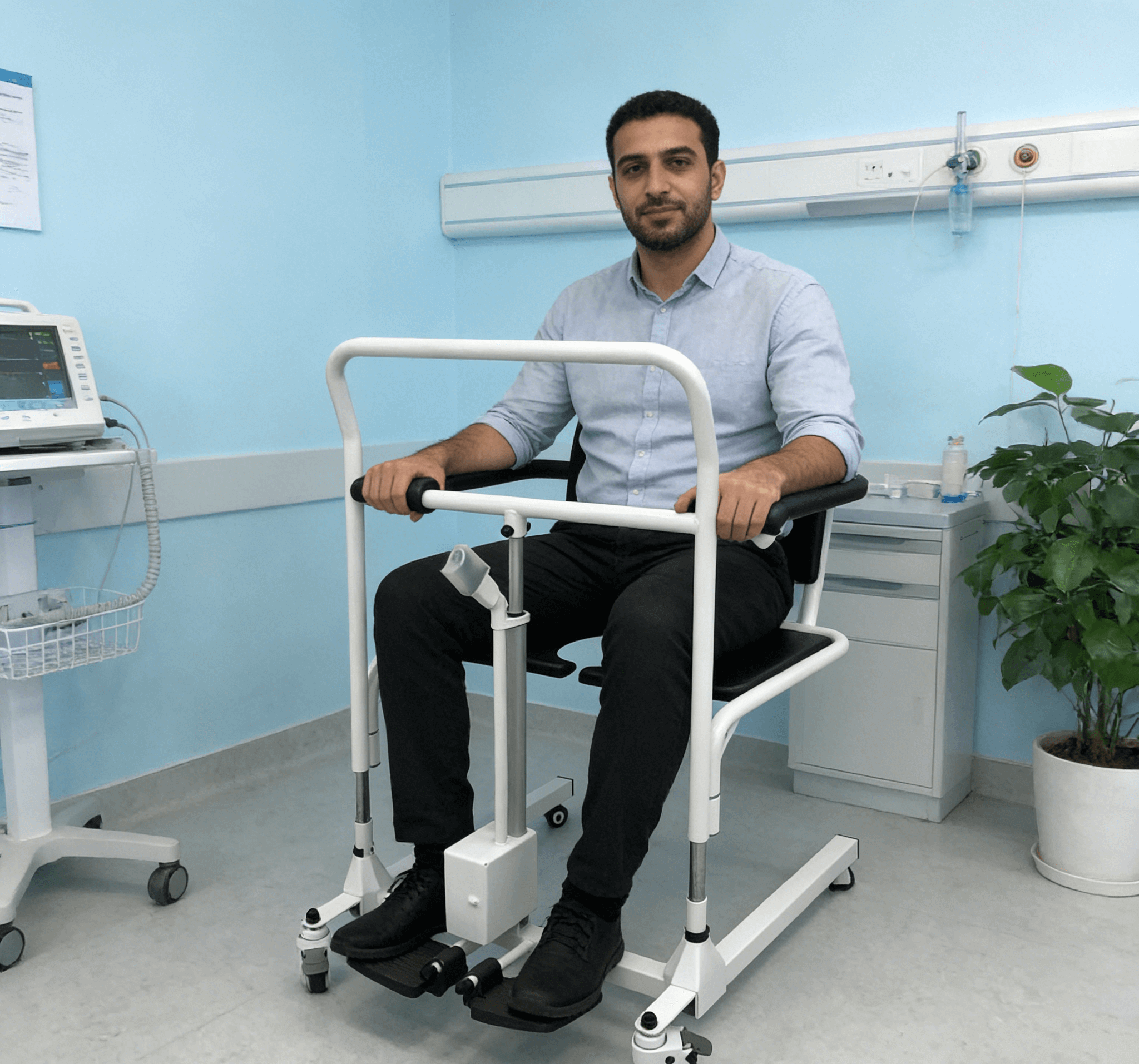
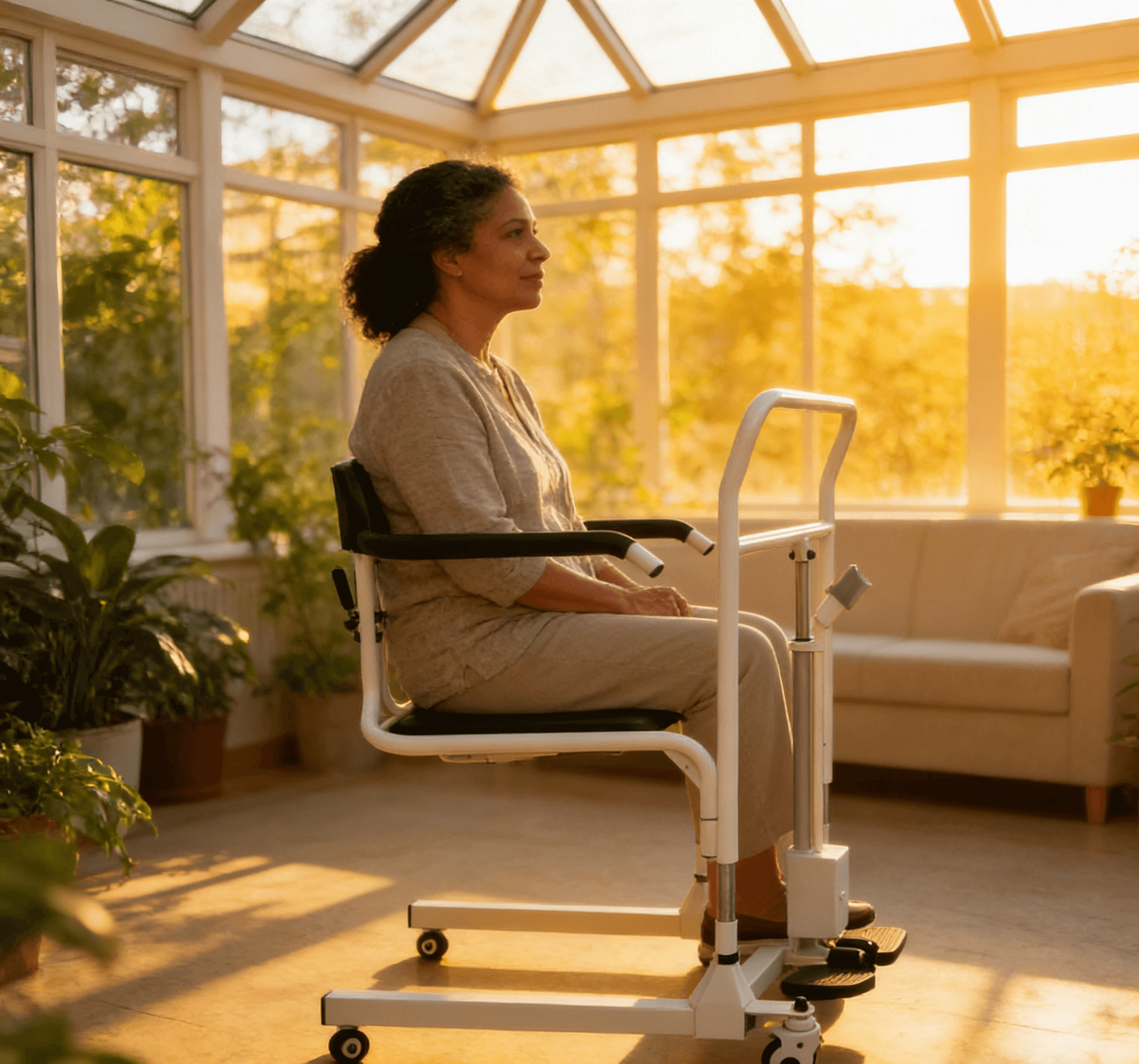
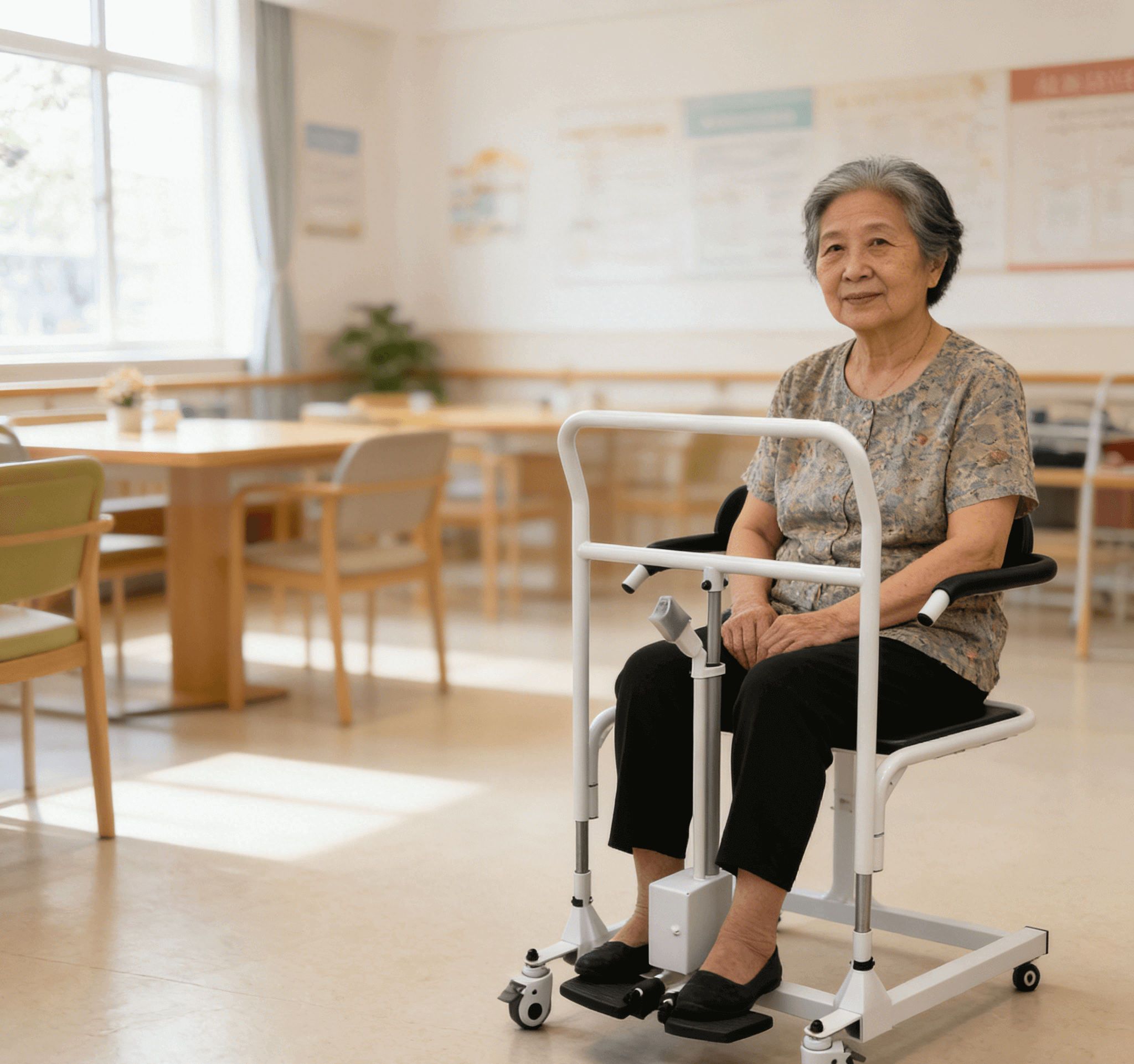
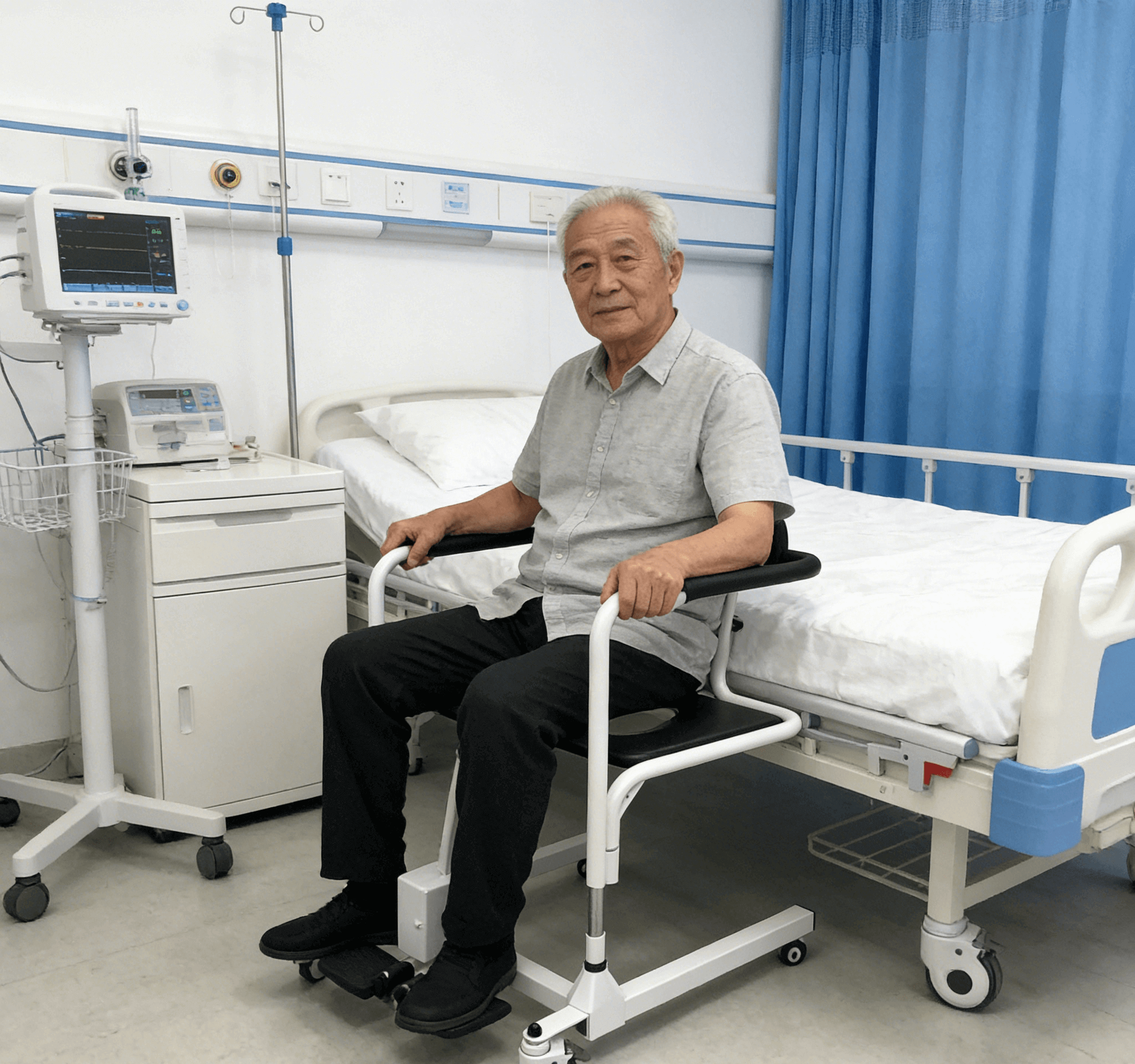
hoyer lift for elderly
Hoyer Lift: Reshaping Autonomy and Safety for People with Disabilities
In the field of assistive technology for people with disabilities, the Hoyer Lift (also known as a patient hoist) holds an irreplaceable core position. It is far more than a simple lifting device; it is a key tool for ensuring safety, preserving dignity, enabling independent living, and reducing caregiving burdens. For people with disabilities who have limited mobility, it serves as an important bridge to a higher quality of life.
I. Why Is the Hoyer Lift Transformative?
With its safe and efficient transfer capabilities, the Hoyer Lift provides support for a wide range of disability scenarios:
Severely limited limb function: Such as spinal cord injuries, cerebral palsy, and quadruple amputations.
Progressive neuromuscular diseases: Including muscular dystrophy, multiple sclerosis, and motor neuron disease.
Severe bone and joint diseases: For example, osteogenesis imperfecta and severe rheumatoid arthritis.
Impaired balance and coordination: Such as Parkinson’s disease, traumatic brain injury, and certain post-stroke sequelae.
Temporary impairments: Like the recovery period after major surgery (hip/knee replacement).
Its core value is reflected in the following aspects:
Cornerstone of Safety Assurance
For users: Almost completely eliminates the risk of secondary injuries such as falls and fractures caused by slipping, loss of balance, or caregiver errors during transfers.
For caregivers: Effectively prevents occupational injuries like lower back strain and muscle pulls from manual lifting, protecting the health and sustainability of the caregiving workforce.
Guardian of Dignity and Autonomy
Smooth, controlled mechanical lifting preserves the user’s personal dignity far better than strenuous and potentially awkward manual lifting.
For users with certain upper limb functions, through adapted equipment (such as electric models and ceiling track systems), they can achieve independent transfers after training—this is a key step toward psychological autonomy and independent living.
Innovator of Care Models
Enables a single caregiver to safely assist users with larger body weights, reducing the physical demands on caregivers.
Makes home care feasible, delaying or avoiding the need for institutional care and giving families more choices.
II. How to Choose a Suitable Hoyer Lift?
The selection process should be based on a comprehensive consideration of the user’s specific needs, living environment, and long-term goals.
1. Equipment Type
Mobile Hoyer Lifts: The most common type, with high flexibility. Suitable for scenarios requiring transfers between different rooms. They require sufficient space for movement and turning on the floor.
Ceiling Track Transfer Systems: Fixed to the ceiling. Their core advantage is maximizing floor space savings and potentially enabling fully independent, unattended transfers. Particularly suitable for use between fixed routes (e.g., bedrooms and bathrooms), they are one of the ultimate solutions for enhancing autonomy.
2. Sling Type
Sitting Slings: Standard configuration, suitable for transfers between most beds, wheelchairs, toilets, and chairs.
Full-body/Recumbent Slings: Designed for users who cannot maintain a sitting position or require full supine support.
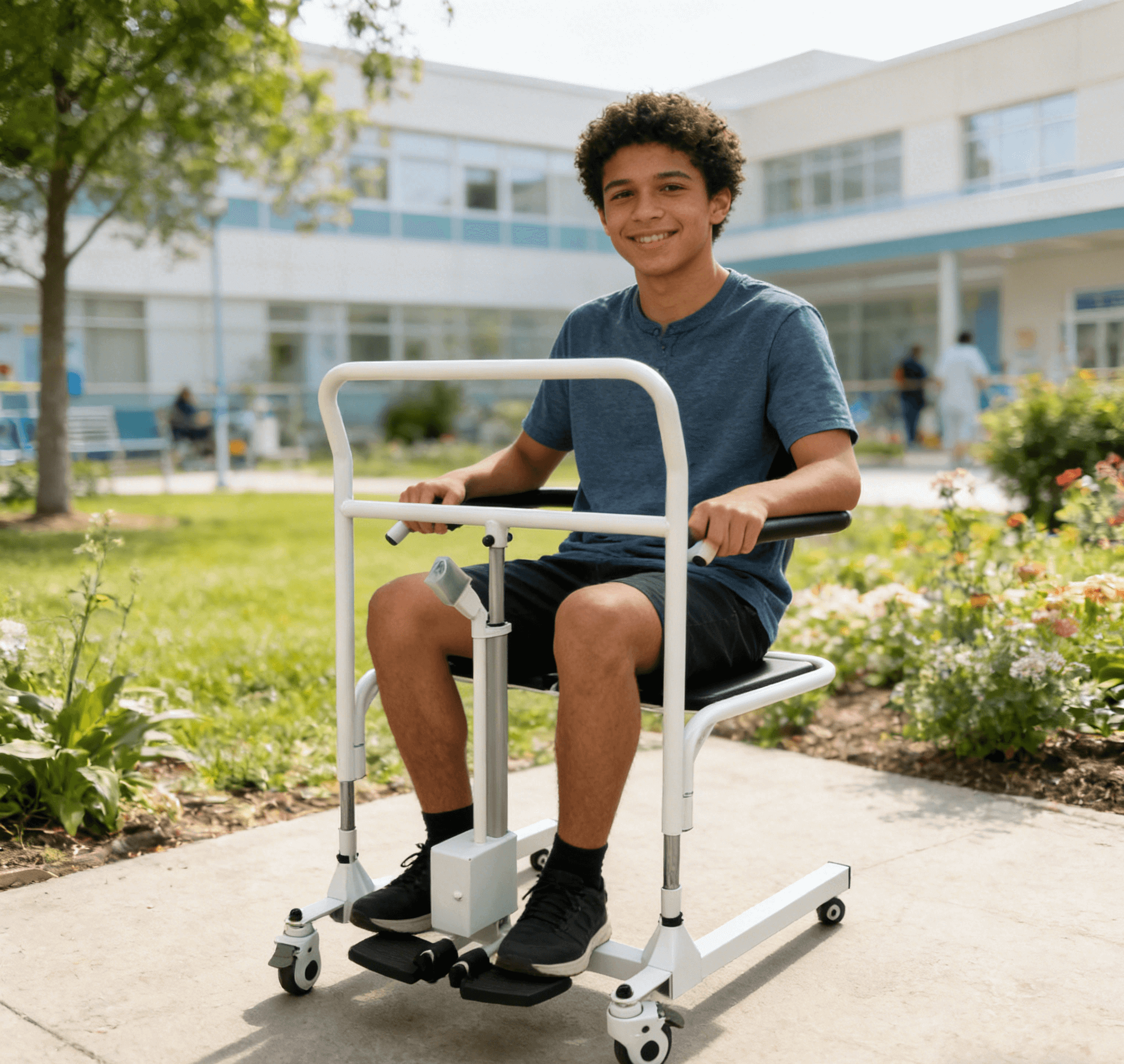
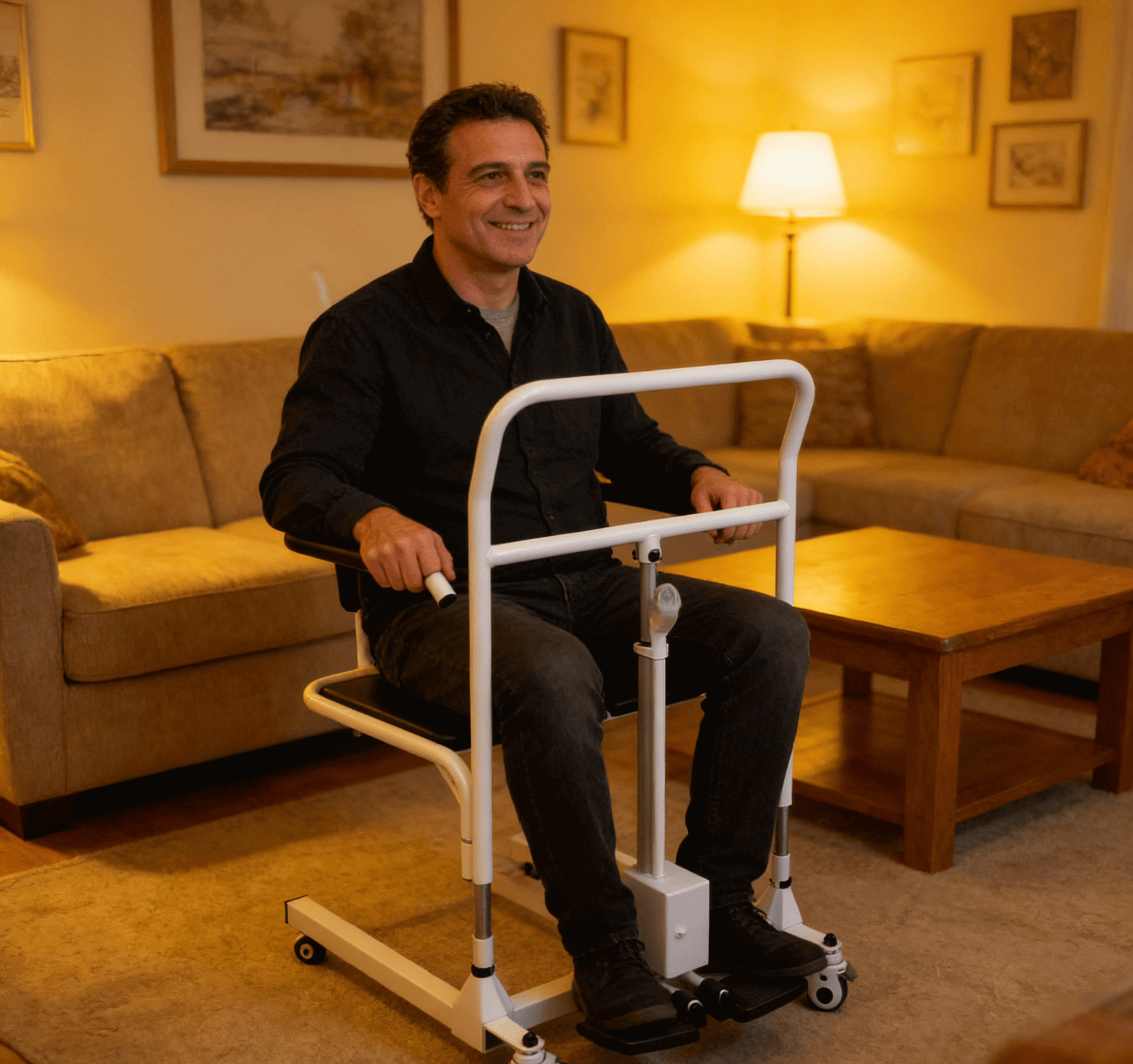
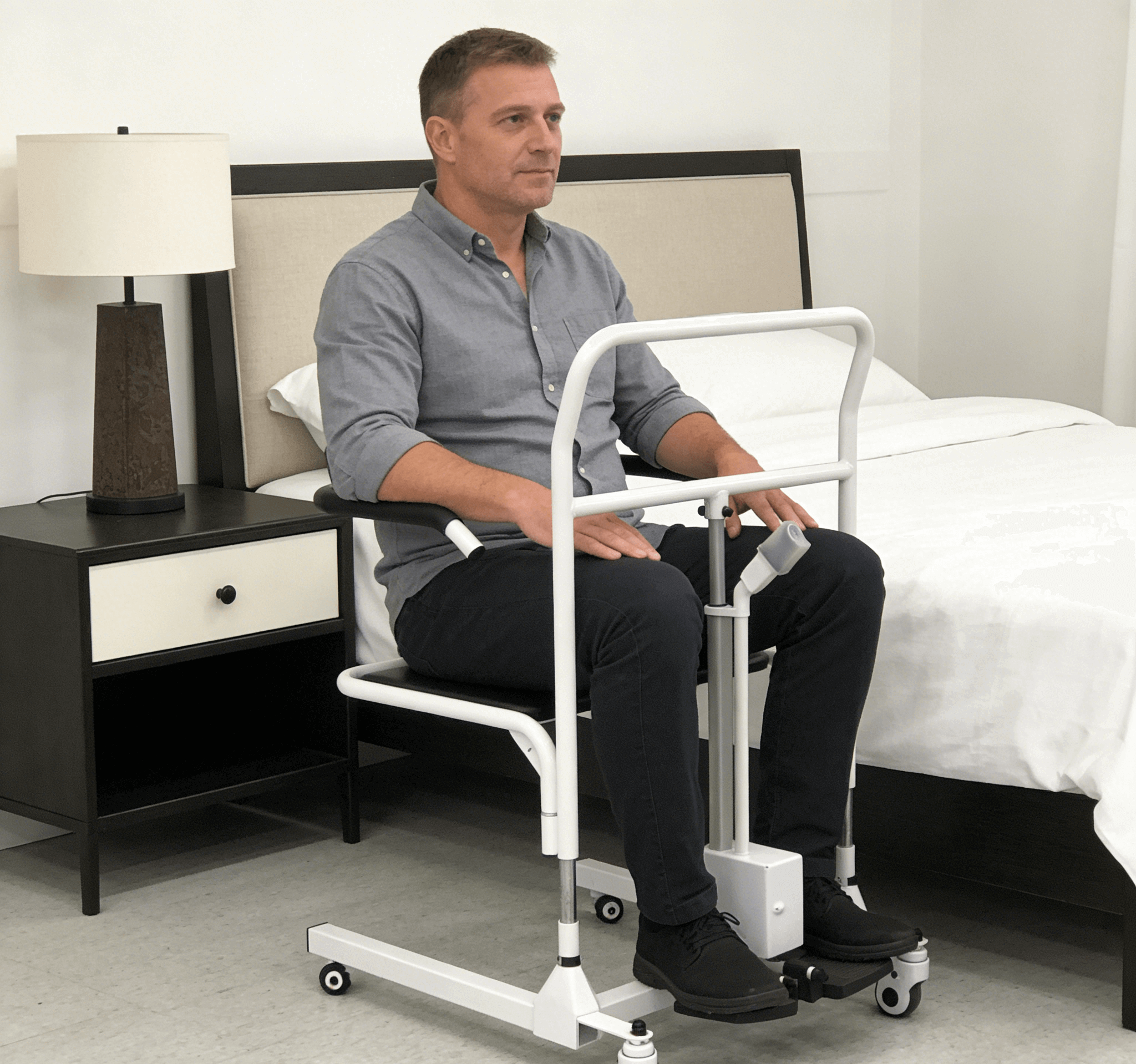
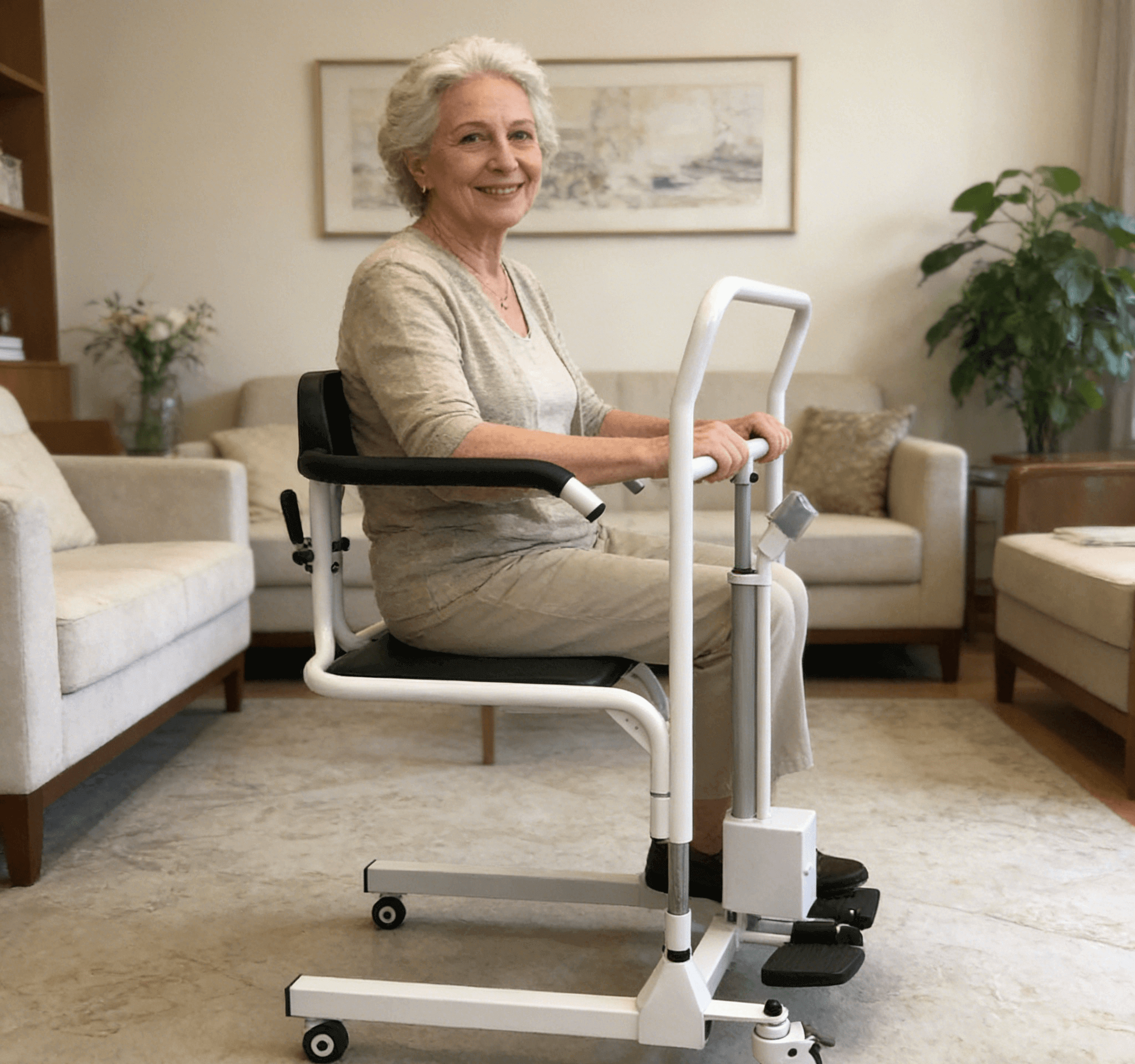
Stand-up Hoyer Lifts: Suitable for users with partial lower limb weight-bearing capacity who can understand and follow simple instructions. They help with daily activities such as using the toilet and getting dressed in a standing position.
3. Drive Type
Hydraulic Lifts: Operated via a manual hydraulic pump. Advantages include simple structure, low maintenance costs, and affordable price; the disadvantage is that they require a certain amount of physical effort from the caregiver.
Electric Lifts: Lifting is controlled by batteries and buttons. Advantages include extreme labor-saving and smooth, precise operation—especially suitable for caregivers with limited strength or users with larger body weights.
III. Key Steps for Safe Transfers
Preparation and Communication
Clearly and calmly explain the upcoming operation steps to the user, and obtain their consent and cooperation.
Conduct equipment pre-inspection: Check the integrity of the sling, the firmness of hook connections, and the power supply (for electric models).
Ensure the transfer path is clear, and lock the brakes of the wheelchair and the Hoyer Lift.
Sling Placement
Assist the user to lie on their side, and place the unfolded sling flat under their back and buttocks.
Help the user lie flat again, and adjust the sling to keep it centered and wrinkle-free.
Connect the attachment points on the sling to the lift arm of the Hoyer Lift symmetrically and securely.
Lifting and Moving
After a final safety check, slowly and smoothly lift the user just off the bed surface.
Hover briefly to confirm stability and comfort.
Release the brakes, and smoothly move the user directly above the target position.
Lowering and Detaching
Slowly lower the user onto the seat, ensuring they are fully seated securely.
Unfasten the hooks one by one (usually starting with the near-side hook, then the far-side one), assist the user to slightly roll onto their side, and gently pull out the sling.
IV. Beyond Operation: Psychological Adaptation and Social Integration
Mindset Shift: Redefining the Hoyer Lift as a "tool for autonomy" rather than a "symbol of dependence" is crucial for first-time users.
Progressive Familiarization: Conduct multiple practice sessions under the guidance of an occupational therapist, starting with low-difficulty transfers to gradually build the user’s trust in the equipment.
Empower with Control: Allowing the user to participate in the process as much as possible—such as holding the controller or pressing buttons—can effectively enhance their sense of control.
Promote Social Participation: Safe transfer capability is the foundation for participating in social activities and going out. A reliable Hoyer Lift means the user can plan daily life with greater confidence.
V. Clarification of Common Questions
Q: Will using a Hoyer Lift lead to further functional decline?
A: No. Its role is to provide protection when safe transfers cannot be completed independently. Under the guidance of a rehabilitation therapist, it can also be used to assist with safe standing and weight-bearing training, which helps maintain function.
Q: My home space is narrow—can I still use a Hoyer Lift?
A: Not necessarily. You can choose a mobile Hoyer Lift with an adjustable base width. For extremely limited spaces, a ceiling track system is the optimal solution; it makes perfect use of overhead space to achieve "zero floor space occupation."
Misconception: The Hoyer Lift is a last resort.
A: Correct Answer: It is a proactive risk management tool. Introducing it early can effectively prevent accidental injuries and protect the well-being of all parties involved—it should not be regarded as a "last resort."
Conclusion
The Hoyer Lift is a profound empowering technology. It unlocks not only physical constraints but also limitations on social participation. For people with disabilities, it represents safety, dignity, and the right to autonomous choices; for caregivers and society as a whole, it embodies a more scientific, humane, and sustainable care philosophy.
Would you like me to organize this English translation into a formatted document with a table of contents? This will make it easier for you to quickly locate key sections (such as selection guides or operation steps) when sharing it with caregivers or relevant professionals.