Category: power lift chairs
Posted by 2025-12-30 11:12
hoyer lift incident
Hoyer Lift Accident Analysis: When Assistive Equipment Becomes a Source of Risk
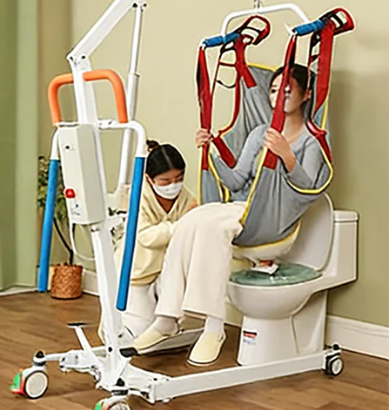
Hoyer Lifts are widely regarded as a safety guarantee for transferring patients with limited mobility, hoyer lift incident and they are indispensable assistive tools in hospitals, nursing homes, and home care settings. However, despite their original design purpose of preventing injuries, serious accidents caused by improper operation, equipment defects, or management oversights occur from time to time—ranging from sling breakage and patient falls to equipment tipping, skin tears, and even permanent injuries or deaths.
These "avoidable" incidents remind us that no matter how advanced the equipment is, it may become a safety hazard without standardized use and systematic management. This article will conduct an in-depth analysis of the common types, root causes, real cases, and prevention strategies of Hoyer Lift-related accidents, providing warnings and guidance for caregivers, institutional managers, and home users.
Common Types of Hoyer Lift Accidents
1. Patient Falls
This is the most serious and common type of accident, usually occurring when:
The sling is not properly secured or the connection points become loose.
Damaged, aged, or ill-fitting slings are used.
The equipment suddenly loses power or the hydraulic system fails during lifting/lowering.
The transfer path is blocked, causing the patient to lose balance and slip out.
Falls can lead to fractures, traumatic brain injuries, and spinal cord injuries, with particularly severe consequences for elderly patients with osteoporosis.
2. Equipment Tipping
When the base legs of a Hoyer Lift are not fully extended, the floor is uneven, or the equipment is overloaded, the entire unit may tip forward or sideways. Once this happens, not only will the patient fall, but the heavy metal structure may also cause secondary crushing injuries.
3. Skin Shear and Pressure Injuries
Incorrect sling types or placement methods (e.g., placing the sling around the armpits, jamming it behind the popliteal fossa) can generate significant shear forces during lifting, leading to skin tears, subcutaneous hematomas, and even deep tissue damage. Such injuries are often overlooked but can easily develop into hard-to-heal pressure ulcers.
4. Accidental Dislodgement of Catheters or Medical Tubing
If intravenous lines, urinary catheters, or gastric tubes are not organized in advance during transfers, hoyer lift incident they may be pulled and dislodged, causing infections, bleeding, or interruptions in treatment.
5. Caregiver Injuries During Operation
Even with mechanical assistance, caregivers may still suffer from waist strains or shoulder pulls if they stand in the wrong position, forcefully push a fully loaded device, or attempt to operate a two-person process alone.
Underlying Causes Behind the Accidents
Equipment Factors
Use of non-original or low-quality compatible slings with insufficient load-bearing capacity or easily frayed seams.
Aged batteries causing electric lifts to stop midway.
Hydraulic system oil leaks, preventing manual models from maintaining height.
Human Factors
On-the-job without training: Many home caregivers only learn through videos, lacking practical feedback.
Cutting corners for speed: Skipping safety checks, such as not confirming leg locks or testing no-load operation.
Lack of communication: Failing to inform patients about upcoming transfers, leading to sudden struggles or coordination errors.
Management Factors
Healthcare institutions failing to establish a regular sling replacement system.
Families not keeping manuals or ignoring maintenance reminders.
DME (Durable Medical Equipment) suppliers not providing on-site training when delivering equipment.
Warning from Real Cases
Case 1: Sling Breakage Causing Hip Fracture
An 82-year-old woman with Alzheimer’s disease was cared for by her daughter at home. hoyer lift incident The family bought a set of "universal" slings online without checking the load-bearing label. During a transfer, the sling seam suddenly tore, and the patient fell from mid-air, suffering a femoral neck fracture. Postoperative complications led to her death within three months. An investigation later found that the sling was labeled to bear 300 pounds, but its actual seam strength was insufficient, and it had been used for over 18 months without replacement.
Case 2: Legs Not Locked Causing Tipping
A night nurse at a nursing home operated a Hoyer Lift alone to transfer a 220-pound male resident. In a hurry to finish the task, she did not fully extend and lock the base legs. When the lift was raised to its maximum height, it tilted forward, and the patient fell to the ground with the sling, suffering multiple rib fractures and lung contusions. The institution was sued and forced to rectify its operating procedures.
Case 3: Incorrect Sling Causing Skin Necrosis
A paralyzed patient used a full-body sling for toileting for a long time, but the family mistakenly used a regular sling without a crotch opening, requiring forced pulling of clothing during each transfer. After several weeks, the patient developed extensive skin exfoliation on the buttocks, which secondary developed into a severe infection. The rehabilitation treatment took six months, and the cost far exceeded the price of a dedicated toileting sling.
How to Effectively Prevent Hoyer Lift Accidents?
For Home Users
Only use original or certified slings, and strictly select models based on weight and purpose.
Inspect before each use: Check for sling wear, abnormal equipment noises, and sufficient battery power.
Never operate high-risk transfers alone, such as floor rescues or transfers of critically ill patients.
Keep training records: After watching official videos, ask a professional therapist to provide on-site guidance once.
For Healthcare Institutions
Develop a Hoyer Lift Standard Operating Procedure (SOP) and enforce a two-person verification system.
Implement sling lifecycle management: Attach labels indicating the start date of use, and enforce replacement every 6–12 months.
Include equipment safety in new employee orientation training and annual assessments.
Equip high-risk areas (such as bathrooms) with low-base emergency rescue kits.
For DME Suppliers
Provide on-site operation demonstrations when delivering equipment, rather than just handing over manuals.
Proactively remind customers of the sling replacement cycle and warranty policies.
Offer multilingual support, especially for non-English-speaking families.
Conclusion: Safety Lies Not in the Equipment, but in Its Use
A Hoyer Lift itself is not a hazard; the danger stems from underestimation, misunderstanding, or misuse of the device. hoyer lift incident Behind every successful transfer is the combined effort of standardization, patience, and responsibility; while every accident often starts with an overlooked detail—a frayed seam, an unlocked leg, or an unspoken reminder.
Whether in homes or institutions, we should remember that the value of assistive technology does not lie in its ability to "replace human effort," but in its ability to "enhance safety." Only by treating every operation with a sense of awe can we truly make Hoyer Lifts reliable partners in protecting lives, rather than the starting point of hazards.