Category: power lift chairs
Posted by 2026-01-03 11:01
hoyer lift mechanical

Hoyer Lift Mechanical: Man-Powered, Upholding Safety and Dignity
In the world of patient transfer assistive devices, the Hoyer Lift Mechanical—known as the manual mechanical lift—may lack the quiet smoothness of electric models and the convenience of one-touch operation. However, with its no-power-required design, sturdy structure, affordable cost, and high reliability, it still plays an irreplaceable role in countless homes, small care facilities, and resource-constrained environments worldwide. It doesn’t rely on batteries, isn’t affected by power outages, and can safely lift people with limited mobility using only the caregiver’s hands and a precise hydraulic system.
This is more than just a device; it embodies a pragmatic and resilient care philosophy: achieving the most fundamental safety guarantees through the simplest mechanisms.
What is a Hoyer Lift Mechanical?
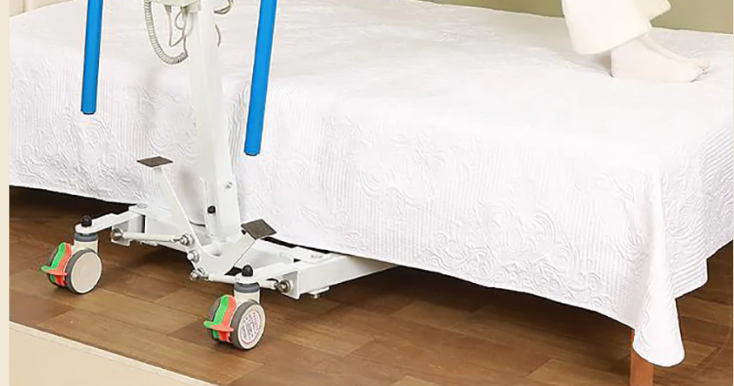
A Hoyer Lift Mechanical generally refers to a non-electric lift operated entirely by human power, with a hydraulic drive system at its core. Users repeatedly press a handle to pump hydraulic oil into the main cylinder, which lifts the lifting arm. For lowering, a release valve is slowly turned to control the flow of hydraulic oil back, enabling a steady descent. The entire process requires no plugging in or charging, relying solely on physical principles to amplify and transmit force.
This design stems from the ultimate pursuit of "reliability." In rural areas with unstable power supplies, during late-night power outages, or in families with tight budgets, a manual Hoyer Lift is often the only tool that ensures the safe transfer of patients.
Working Principle: Engineering Wisdom Behind Simple Movements
When you press the handle up and down, a small internal piston pump starts working, pushing hydraulic oil from the oil reservoir into the main lifting cylinder. Since liquids are nearly incompressible, pressure is evenly transmitted, pushing the piston rod upward and lifting the boom and sling slowly. Each pump stroke builds up a small amount of height, and it usually takes more than a dozen presses to fully lift the patient off the bed.
The lowering process is even more sophisticated. The release valve is designed to only open when manually and slowly rotated. Once you let go, the valve closes automatically, and the device stops immediately. This "fail-safe" mechanism fundamentally eliminates the risk of free fall caused by accidental touches or loss of control.
It is this seemingly primitive yet highly reliable mechanical logic that allows the manual Hoyer Lift to maintain its position even as medical equipment becomes increasingly electronic.
Why Choose Mechanical? The Victory of Pragmatism
The reasons for choosing a manual Hoyer Lift are often very practical: its price is usually half or even lower than that of electric models; there’s no need to worry about battery aging or charging issues; its simple structure means almost no electronic failures; maintenance costs are extremely low, and daily checks only involve inspecting for oil leaks or loose parts.
For family caregivers who only need to transfer patients once or twice a day, manual models are more than sufficient. More importantly, in emergencies—such as widespread power outages caused by hurricanes or circuit failures in nursing homes—a lift that doesn’t require plugging in can be the key to preventing patients from being trapped in bed for long periods, which helps avoid pressure sores or urinary tract infections.
Additionally, many experienced caregivers actually trust manual devices more. They believe that the process of manually pumping allows them to more keenly sense the device’s status and the patient’s reactions, thereby improving the overall safety of the operation.
Core of Safe Operation: No Compromise on Details
When using a Hoyer Lift Mechanical, safety does not come from the device itself, but from every step taken by the operator.
The primary and absolutely indispensable action is to fully extend and lock the base legs. This is the only physical barrier to prevent the device from tipping forward. The root cause of countless accidents is skipping this step in a hurry. The legs must be pulled to the end, and a clear locking sound must be heard before proceeding to the next step.
Next is the correct wearing of the sling. The sling should fully support the patient’s hips and the middle of the thighs, with a flat and non-twisted back. It is particularly important to note that the leg straps must not get stuck behind the knees; otherwise, they may compress nerves and cause permanent injuries such as foot drop.
After connecting the sling hooks, a low-altitude test is essential: first lift the patient a few centimeters, observe whether it is stable, and check for slipping or discomfort. Only when everything is confirmed normal should you continue to lift to the required height.
When lowering, you must use your fingers to rotate the release valve extremely slowly. Ideally, the patient should sit down as gently as a feather, with no impact at all. Any hasty or forceful twisting operation may pose dangers.
Who is the Manual Model Most Suitable For?
Manual Hoyer Lifts are most suitable for caregivers with sufficient physical strength, families with low transfer frequency, those with short-term rehabilitation needs, or as a backup for electric devices. They are also widely used in developing countries, remote areas, or disaster emergency scenarios.
However, if the caregiver is elderly, suffers from low back pain, or the patient’s weight is close to the device’s upper limit (usually 350 pounds), careful evaluation is needed to determine whether the manual model is still applicable. The caregiver’s health is also important—forced pumping is not only inefficient but may also cause muscle strains or even herniated discs.
Maintenance and Responsibility: Simple Does Not Mean Maintenance-Free
Although the structure is simple, the manual Hoyer Lift still requires basic maintenance. Regularly check whether the hydraulic system has oil seepage, whether the handle is loose, and whether the leg locking is sensitive. If you find that pumping is abnormally strenuous, the device cannot maintain height, or lowering is out of control, stop using it immediately and contact professional maintenance.
As the part that directly bears weight, the sling is recommended to be replaced every 6 to 12 months even if it looks intact. After long-term use, the fibers will fatigue and age, reducing strength and potentially breaking at critical moments.
Conclusion: Safeguarding Dignity in Simplicity
A Hoyer Lift Mechanical may not have a screen, beep alerts, or Bluetooth connectivity, but it fulfills the promise of care in the most honest way: using reliable mechanics to lift fragile bodies; using the effort of hands to convey silent care.
In this era of pursuing intelligence, its existence reminds us that sometimes, the most trustworthy things are precisely the simplest and most tested designs. As long as operations are standardized and handled with respect, this manually powered lift can still be a solid pillar for safe transfers, safeguarding the dignity between every time a patient gets up and sits down.