Category: power lift chairs
Posted by 2026-01-08 10:01
hoyer lift scale

Hoyer Lift with Integrated Weighing Function: Accurately Monitoring Patient Weight During Transfers
In modern clinical care and home-based care, accurate monitoring of a patient’s weight is not only the foundation for assessing nutritional status, edema levels, or medication responses, hoyer lift scale but also a key basis for formulating care plans. However, for patients who are bedridden, have limited mobility, or rely entirely on transfer assistance, traditional standing scales are often unusable. Frequent lifting not only increases the care burden but also raises the risk of falls or secondary injuries.
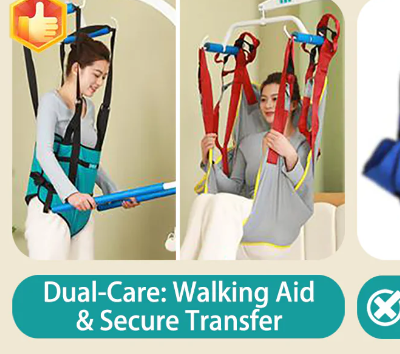
To address this challenge, Hoyer Lifts with built-in scales have emerged. These innovative devices skillfully integrate high-precision electronic scales with lifting systems, enabling automatic capture of patient weight data during safe transfers—no additional operations required. This cutting-edge technology is gradually becoming an essential tool in hospitals, nursing homes, and high-end home care settings.
This article will delve into the working principle, clinical value, usage precautions, and applicable scenarios of the weighing function in Hoyer Lifts, helping care teams manage patient health more efficiently and humanely.
I. How Does the Hoyer Lift Weighing System Work?
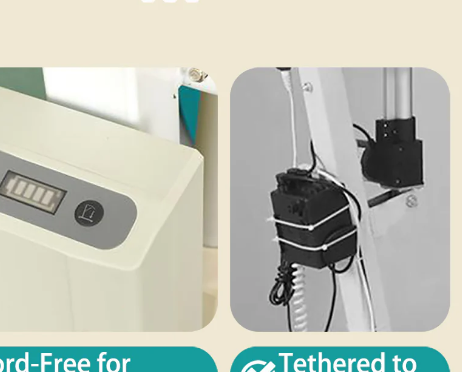
A Hoyer Lift with an integrated weighing function is not simply a lift with an added scale pan. Instead, it embeds high-precision load cells into the base or boom structure. hoyer lift scale When the patient is lifted by the sling and stabilized in mid-air, the system automatically detects the vertical force exerted and converts it into a weight reading.
The typical operating process is as follows:
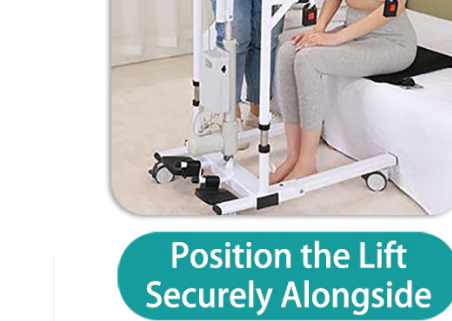
Properly fit the sling on the patient and unfold the lift;
Activate the lift to gently raise the patient 5–10 centimeters off the ground;
Keep the patient stationary for 3–5 seconds to allow the reading to stabilize;
The weight data is then displayed on the remote control screen, the lift’s control panel, or wirelessly transmitted to a care information system (if Bluetooth/Wi-Fi is supported).
The entire process does not interrupt the transfer workflow—weighing and transfer are completed simultaneously, truly achieving "one operation, double benefits."
II. Why Is the Weighing Function So Important?
1. Accurate Monitoring of Fluid Balance
For patients with heart failure, kidney disease, or post-surgery recovery, a weight change of more than 1–2 kilograms within 24 hours may indicate fluid retention or dehydration. Traditional weighing methods require multiple caregivers to lift the patient, while the Hoyer Lift weighing system allows daily measurements at fixed times to detect abnormalities promptly.
2. Evaluating the Effectiveness of Nutritional Interventions
Bedridden patients are prone to muscle loss and malnutrition. Regular weight records are a core indicator for determining the effectiveness of enteral nutrition support and rehabilitation training.
3. Ensuring Medication Safety
Many medications (e.g., diuretics, antibiotics) require dosage adjustments based on body weight. Accurate weight measurements prevent over-dosage or under-dosage, which is particularly critical for elderly patients.
4. Reducing the Risk of Manual Lifting Injuries
Studies show that manual lifting for weighing accounts for 18% of care-related back injury incidents. hoyer lift scale The integrated weighing function completely eliminates this unnecessary risk.
5. Improving Recording Efficiency and Compliance
Automatically recorded weight data can be directly imported into electronic medical records (EMRs), reducing handwritten errors and meeting the audit requirements for "objective vital sign monitoring" from organizations such as JCI and CMS.
III. Technical Features and Accuracy Assurance
Weight Range: Typically 20–300 kg (some bariatric models can handle up to 450 kg);
Accuracy: ±0.1–0.2 kg, meeting medical-grade standards;
Unit Switching: One-click switching between kilograms (kg) and pounds (lb);
Tare Function: Deducts the weight of the sling to display only the patient’s net weight;
Data Output: High-end models support Bluetooth, USB, or Wi-Fi transmission to care terminals.
Note: To ensure accuracy, the lift must be placed on a hard, level surface. During weighing, the patient must remain stationary to avoid swaying or grasping external objects.
IV. Applicable Populations and Scenarios
Intensive Care Units (ICUs): Critically ill patients who cannot leave their beds;
Rehabilitation and Orthopedic Wards: Post-surgery patients with weight-bearing restrictions (e.g., hip replacement);
Geriatrics and Palliative Care: Bedridden patients or those with cognitive impairments;
High-End Home Care: Families caring for patients with heart failure or kidney disease requiring close monitoring;
Obesity Management: Bariatric Hoyer Lift weighing systems can safely measure patients with high body weight.
V. Usage Precautions
Calibration Requirements: Perform zero-point calibration (automatically completed by most models) before first use or after moving the lift;
Sling Selection: Only use original compatible slings—third-party slings may affect tare accuracy;
Environmental Interference: Avoid weighing in areas with direct fan drafts, soft carpets, or sloped floors;
Patient Preparation: Remove heavy clothing, blankets, or urine bags from the patient before weighing to obtain an accurate weight;
Regular Maintenance: Weighing load cells require annual verification by professionals to ensure long-term accuracy.
VI. Representative Brands and Models
Major medical equipment manufacturers have launched Hoyer Lifts with weighing functions:
Arjo/Hoyer: Elevate Smart+ Scale series, supporting EMR integration;
Sara (by Arjo): Stretcher and Lift with Scale;
Drive Medical: MediComfort Bariatric Lift with Scale;
Invacare: Perfecto 2 Scale Model.
While these devices are more expensive than standard models (usually with a 20%–40% price premium), their clinical value far outweighs the cost difference in high-frequency use scenarios.
Conclusion: Weighing Is More Than Just Numbers—it’s an Extension of Care
The integrated weighing function in Hoyer Lifts may seem like a simple technical addition, but it actually represents an evolution in care philosophy. hoyer lift scale It reminds us that attention to patients can be earlier, more accurate, and gentler.
When an elderly patient with heart failure is transferred in the morning, the system quietly records a "1.8kg weight gain today." Nurses then adjust the diuretic regimen immediately, preventing potential acute pulmonary edema. At this moment, weighing is no longer an isolated task, but a critical link in the safety net.
In the vulnerable moments of life, every precise number is the starting point of protection. And the weighing function of Hoyer Lifts ensures that this protection is firmly grounded in the silent rise and fall of each transfer.