Category: power lift chairs
Posted by 2026-01-08 10:01
hoyer lift scale attachment
Hoyer Lift Scale Attachments: Adding Smart Monitoring Capabilities to Existing Equipment
In clinical and home care settings, accurately obtaining weight data for bedridden or mobility-impaired patients is crucial. However, not all facilities or households are equipped with high-end Hoyer Lifts that have built-in weighing functions. For users who already own standard Hoyer Lifts, replacing the entire unit is costly and unnecessary. Fortunately, a cost-effective solution is becoming increasingly popular: Hoyer Lift Scale Attachments (also known as Weighing Kits).
This modular accessory eliminates the need to replace the entire lift. With simple installation, it can equip ordinary Hoyer Lifts with medical-grade weighing capabilities, enabling automatic capture of precise weight data while ensuring safe patient transfers. This article will detail the working principle, installation method, compatible models, advantages, and precautions of scale attachments, helping care teams achieve intelligent upgrades with minimal investment.
I. What Is a Hoyer Lift Scale Attachment?
A Hoyer Lift Scale Attachment is an add-on weighing system, typically including:
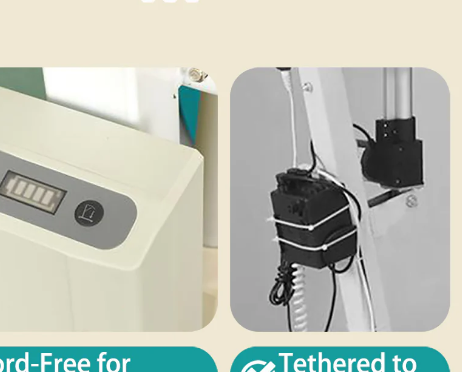
High-precision load cells: Installed at the base legs or boom connection points;
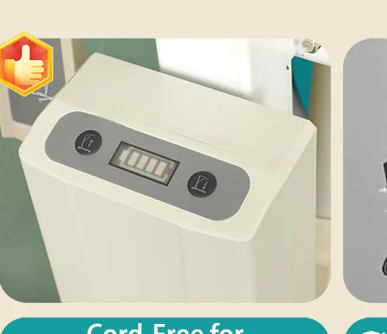
A digital display unit: Equipped with an LCD screen to show weight in real time;
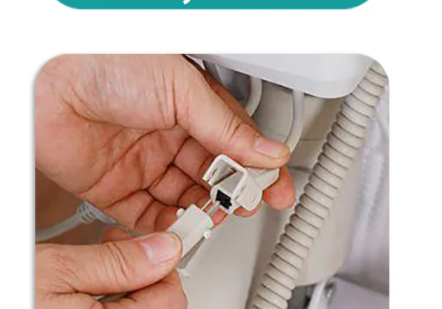
Connecting cables and mounting brackets: Used to integrate into the existing equipment structure;
A tare/zero button and unit switching function.
Unlike integrated weighing Hoyer Lifts, scale attachments feature a "retrofit" design, compatible with multiple mainstream brands (such as Arjo/Hoyer, Drive Medical, Invacare, etc.). This allows users to quickly gain weighing capabilities while retaining their existing equipment.
II. Working Principle: How to Weigh During Transfers?
The core of a scale attachment is force-sensing technology. When the patient is lifted by the sling and stabilized in mid-air, their full weight is transmitted to the load cells via the boom. The system detects the vertical load and, through a built-in algorithm, subtracts the weight of additional items (such as the sling and clothing—requires a "tare" operation first), ultimately displaying the patient’s net weight on the screen.
The typical operating process is as follows:
Properly fit the sling on the patient;
Press the "Tare" button on the display unit to zero out the unloaded state;
Activate the Hoyer Lift to gently raise the patient 5–10 centimeters off the ground;
Keep the patient stationary for 3–5 seconds to allow the reading to stabilize;
Read and record the weight data.
The entire process does not change existing operating habits. Weighing is naturally integrated into the transfer workflow, eliminating the need for additional lifting of the patient.
III. Key Advantages: Low Cost, High Returns
1. Significant Cost Savings
A brand-new electric Hoyer Lift with a built-in scale typically costs over ¥20,000, while scale attachments range from ¥3,000 to ¥6,000—only 15%–30% of the cost of a full unit—yet deliver over 95% of the weighing functionality.
2. Protect Existing Investments
Nursing homes, rehabilitation centers, or households with multiple standard Hoyer Lifts do not need to discard old equipment. Instead, they can uniformly upgrade by adding attachments, extending the equipment’s service life.
3. Quick Deployment, Ready-to-Use
Most scale attachments are designed for "tool-free disassembly" or "simple bolt-on installation." Technicians can complete the installation within 30–60 minutes, without disrupting daily care schedules.
4. Improved Care Efficiency and Safety
Eliminates the need for additional manual lifting for weighing, reducing the risk of back injuries for caregivers. hoyer lift scale attachment At the same time, it enables daily weight monitoring, supporting the management of chronic conditions such as heart failure, kidney disease, and malnutrition.
IV. Compatibility and Selection Recommendations
Not all Hoyer Lifts support scale attachments. Before purchasing, confirm the following:
Brand and model compatibility: Mainstream brands like Arjo, Drive Medical, and Medline usually offer official scale kits (e.g., Arjo Scale Kit for Hoyer Advance);
Base structure suitability: Some older or manual models cannot be retrofitted due to structural limitations;
Power interface availability (for electric models): Some attachments require power from the lift’s main unit;
Consistent weight capacity: The maximum weight capacity of the attachment should be ≥ the rated capacity of the lift.
Recommendation: Contact the original equipment manufacturer or an authorized dealer, provide your Hoyer Lift’s model and serial number, and confirm compatibility.
V. Usage Precautions
Calibration Cannot Be Ignored
Zero-point calibration must be performed after initial installation, moving the equipment, Hoyer Lift Scale Attachment or prolonged non-use. Some attachments support automatic calibration, but manual verification is more reliable.
Ensure a Level, Hard Surface
Carpets, slopes, or soft surfaces will severely affect accuracy. Always perform weighing on flat surfaces such as tile or concrete.
Patient Must Be Fully Suspended and Stationary
Weight bearing on the feet, holding onto bed rails, or body movement will cause reading errors. Remind the patient to relax and cooperate before operation.
Regular Maintenance of Load Cells
Load cells are sensitive to water, dust, and impact. Avoid liquid seepage into seams during cleaning, and prevent drops during handling.
Battery Management (for Independent Display Units)
If the display unit uses a button battery, low battery power will cause reading drift. It is recommended to replace the battery every 6 months.
VI. Typical Application Scenarios
Community nursing homes: Limited budgets but need to meet basic health monitoring requirements;
Home care: Long-term care for patients with heart failure or kidney disease, requiring daily weight tracking;
Rehabilitation clinics: Assess patients’ nutritional status and edema levels to adjust rehabilitation plans;
Hospice care facilities: Non-invasive, comfortable recording of vital signs in end-of-life care.
Conclusion: Small Accessory, Great Value
Hoyer Lift scale attachments represent a practical and smart upgrade path—they do not require replacing existing equipment but instead add new life and functionality to it. For facilities or households looking to improve care quality while working within budget constraints, this is undoubtedly a cost-effective choice.
More importantly, it conveys a philosophy: Attention to patients should not be compromised by equipment limitations. Even a small sensor is worth investing in if it makes care more precise, safer, and more dignified.
Next time you struggle with weighing challenges, ask yourself: "Can my Hoyer Lift be retrofitted with a scale attachment?" The answer may be the key to better care.