Category: Power Wheelchair
Posted by 2025-12-13 11:12
hoyer lift at home
Home-Use Hoyer Lift: Relieving the Burden of Care, Restoring Dignity to Transfers
In home care, helping bedridden or mobility-impaired loved ones transfer from the bed to a wheelchair, toilet, or sofa is a daily practical challenge. Driven by instinct, many caregivers resort to "carrying," "dragging," or "lifting" with their hands to complete these tasks. However, this seemingly loving behavior can lead to dual harm: caregivers may suffer lumbar strain or even permanent injury, while patients face risks of skin tears, joint dislocations, or falls.
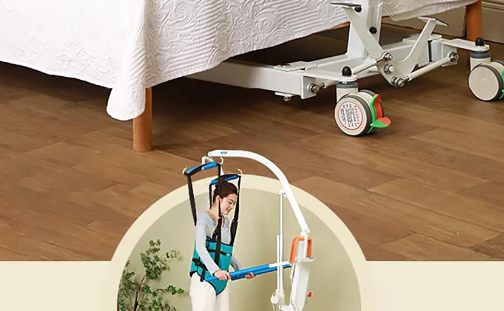
The introduction of the Hoyer Lift is precisely to break this predicament. It is not a cold machine, but a symbol of safety, dignity, and sustainability in modern home care. This article will comprehensively explain how to correctly select, arrange, and use a Hoyer Lift at home, ensuring every transfer is smooth and secure.
I. When Does a Household Need a Hoyer Lift?
Not all individuals with mobility issues require a lift. The use of a Hoyer Lift is strongly recommended in the following situations:
The patient is completely unable to stand or bear weight (e.g., high paraplegia, advanced muscle weakness, severe stroke);
Medical advice explicitly prohibits weight-bearing (e.g., within 6–8 weeks after hip replacement surgery);
The caregiver has limited physical strength (e.g., elderly spouses, individuals with small builds);
The patient has a large body weight (>70 kg), making it difficult for one person to move them manually;
The patient already has fragile skin, is at risk of pressure sores, or has osteoporosis, requiring the elimination of dragging and friction.
✅ Simple Judgment:If two people are needed to assist with transfers, or if the caregiver frequently experiences back pain,it is time to consider a Hoyer Lift.
II. Home-Use vs. Medical-Use: How to Choose the Right Model?
Home-use Hoyer Lifts do not require the high durability of hospital-grade models, but they need to balance compactness, ease of use, and cost-effectiveness. Key considerations include:
1. Drive Type
Manual Hydraulic Models (e.g., Hoyer Advance 340):
No power supply required, simple structure, low price (approximately ¥3,000–6,000), suitable for 1–3 transfers per day.
Full Electric Models (e.g., Drive Medical Elite):
Button-operated, labor-saving and quiet, suitable for frequent use or elderly caregivers, higher price (approximately ¥8,000–15,000).
2. Base Design
Narrow/Sliding Leg Base:
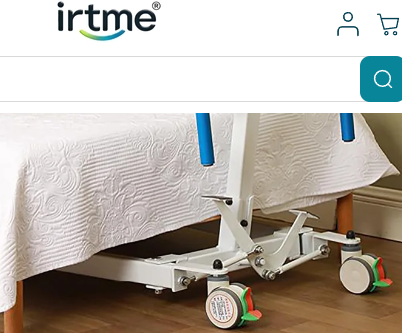
Can slide under most hospital beds, with a width of only about 60 cm—ideal for home use.
Avoid fixed wide-base models, as they struggle to fit in bedrooms or bathrooms.
3. Weight Capacity
Home-use models typically have a weight capacity of 136–180 kg (300–400 lbs);
The capacity must include the total weight of the patient + clothing + sling.
III. How to Arrange the Home Space?
A Hoyer Lift cannot be used immediately after purchase; reasonable space planning is a prerequisite for safety.
Bedroom:
Reserve a width of ≥90 cm beside the bed for the lift’s base to enter and exit;
The gap between the bed and the floor should be ≥10 cm, with no bottom crossbeams blocking the lift;
Bed rails should be detachable or foldable.
Bathroom:
Doorway width ≥80 cm;
The floor should be non-slip and dry, with no thresholds;
Consider a combination of a dedicated narrow-base lift and a waterproof sling.
Transfer Path:
Create a fixed path from the bed to the wheelchair, toilet, and living room;
Clear wires, carpet edges, and debris to ensure smooth movement of the lift.
IV. Five-Step Safe Operation (Home Version)
Preparation: Lower the bed, remove bed rails, clear the path, and install the sling.
Sling Application: With the patient lying flat, slide the sling under their back and thighs, fasten it securely without causing tightness.
Connection: Attach the four-point hooks firmly, ensuring no twisting.
Lifting & Transfer: Slowly lift the patient 10 cm to test balance, then move them to the target location.
Lowering & Reset: Gently lower the patient until they are seated securely, remove the sling, reattach the bed rails, and store the lift.