Category: Electric Transfer Chair
Posted by 2026-01-03 10:01
hoyer lift machine
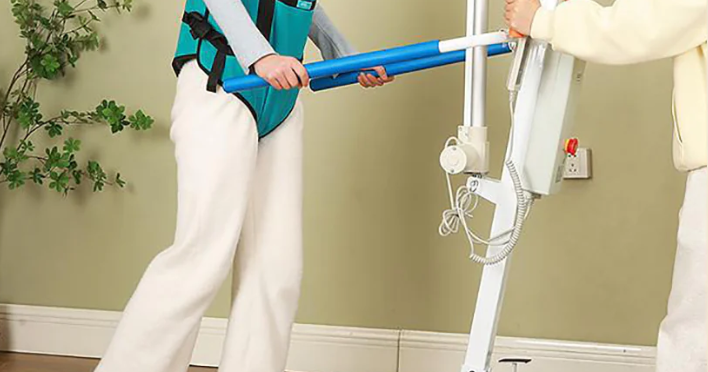
Hoyer Lift Machine: The Cornerstone of Safe Transfers and Guardian of Dignified Care
In modern long-term care, rehabilitation medicine, and home care, the Hoyer Lift Machine has evolved from an "optional device" to an "infrastructure for safe care." It is not merely a mechanical tool, but a crucial bridge connecting patient safety, caregiver health, and humanized services. Whether assisting an elderly post-surgery patient in transferring from bed to wheelchair, or helping a child with severe cerebral palsy complete daily bathing routines, the Hoyer Lift quietly undertakes the mission of supporting the weight of life.
This article provides a comprehensive overview of the Hoyer Lift Machine, including its types, working principles, applicable scenarios, key safety operation points, and purchasing recommendations. It aims to help home caregivers, medical professionals, and institutional administrators gain a deeper understanding of this vital assistive device and utilize it effectively.
What is a Hoyer Lift Machine?
A Hoyer Lift Machine is a lifting device designed for mechanically assisting the transfer of individuals with limited mobility. It uses a sling to support the patient’s body and relies on hydraulic or electric systems to achieve smooth lifting and lowering, thereby eliminating the risks associated with manual handling. The name originates from its inventor, Ted Hoyer. Today, "Hoyer" has become a synonym for patient lifts—while multiple brands exist on the market, "Hoyer Lift" remains widely used.
Its core function is to safely, comfortably, and dignifiedly complete patient transfers (e.g., bed-to-chair, chair-to-toilet, and even floor rescue) without relying on manual lifting.
Main Types: Classified by Power and Structure
1. Manual Hydraulic Hoyer Lift
Working Principle: Repeatedly pressing the handle pump drives hydraulic oil to push the lifting column upward; releasing the valve allows for slow lowering.
Advantages: No power supply required, simple structure, lower price (approximately $800–$1,500).
Disadvantages: Labor-intensive operation, slow lifting speed, not suitable for frequent use.
Applicable Scenarios: Occasional home use, areas with unstable power supply, users on a limited budget.
2. Electric Hoyer Lift
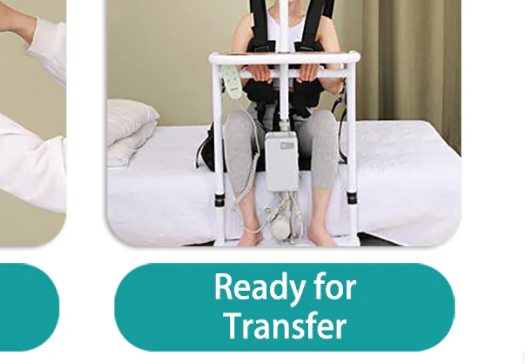
Working Principle: Equipped with a rechargeable battery, enabling one-touch lifting and lowering via a control handle.
Advantages: Effortless operation, smooth lifting/lowering, low noise, and emergency stop function.
Disadvantages: Higher price ($1,500–$3,500), requires regular charging.
Applicable Scenarios: Nursing homes, rehabilitation centers, high-frequency home care.
3. Ceiling Track Lift System
Working Principle: A motor installed on a ceiling-mounted track moves and lifts along the track.
Advantages: Saves floor space, flexible transfer paths, suitable for narrow bathrooms.
Disadvantages: Requires professional installation, high initial cost ($5,000+).
Applicable Scenarios: Newly built age-friendly residences, long-term home care, multi-user environments.
Analysis of Core Components
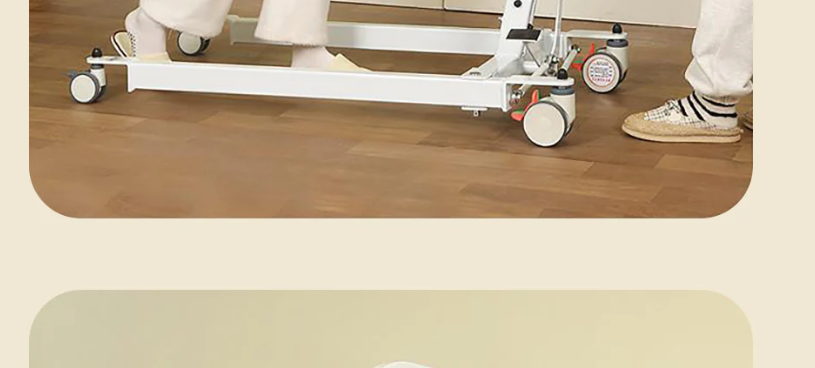
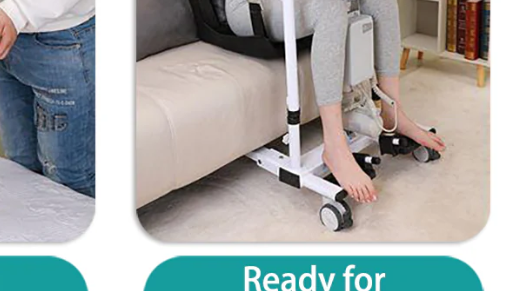
Base and Legs: Provide stability; legs must be fully extended and locked to prevent tipping.
Lifting Column/Arm: Supports the sling; height-adjustable to adapt to different beds and chairs.
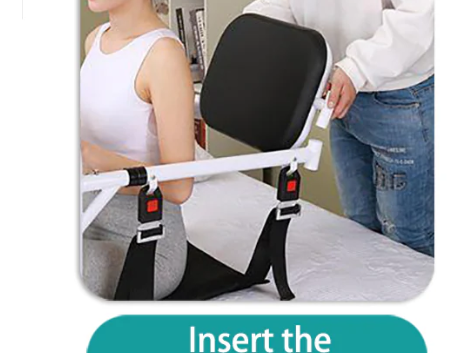
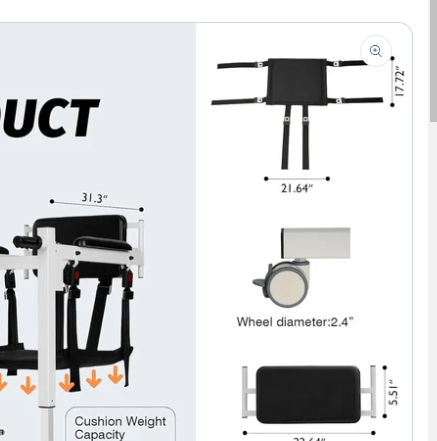
Sling: Directly contacts the patient; available in designs such as full-body, toileting, and bathing slings.
Control Unit:
Manual models: Hydraulic pump handle + release valve.
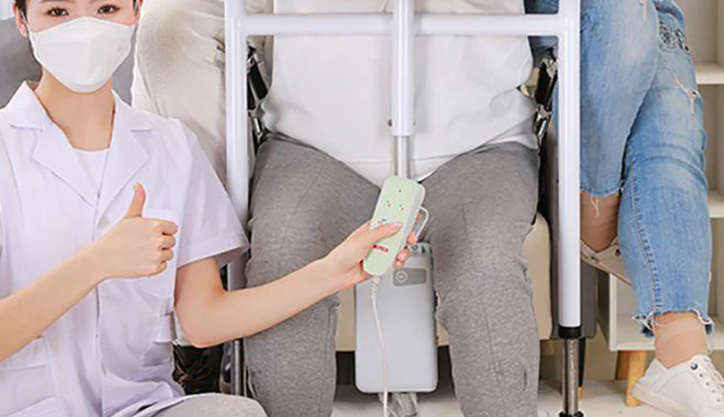
Electric models: Waterproof control handle with up/down buttons and emergency stop.
Wheels: Typically swivel casters with brakes for easy movement and positioning.
Who Needs a Hoyer Lift Machine?
The following groups are usually assessed as having "Total Dependence for Transfers," and the use of a Hoyer Lift is strongly recommended:
Patients with spinal cord injuries (paraplegia, quadriplegia)
Patients with severe Parkinson’s disease or ALS (unable to maintain a sitting position)
Elderly individuals in the non-weight-bearing period after hip fracture surgery
Children with severe cerebral palsy or developmental disabilities
Individuals with advanced dementia and immobility
Severely obese individuals unable to move independently (requiring bariatric models)
Additionally, caregivers with low back problems, insufficient physical strength, or those working alone should prioritize using a Hoyer Lift to prevent occupational injuries.
Five Core Principles of Safe Operation
Always lock the spreader legs→ This is the most critical step to prevent the device from tipping forward!
Use the correct sling for the task→ A toileting sling with a crotch opening is mandatory for toilet transfers; otherwise, mid-transfer sling changes will increase risks.
Perform a low-height test lift→ First lift 5–10 cm, and only continue if stability is confirmed.
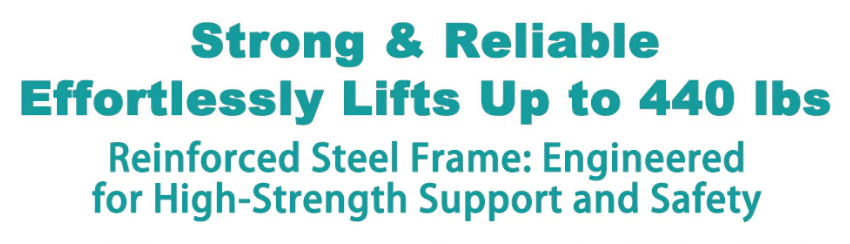
Never exceed weight capacity→ Standard models typically have a weight capacity of 350–400 lbs (160–180 kg); specialized models are required for overweight users.
Two-person assist for high-risk transfers→ Applies to situations such as patient restlessness, spasms, or weight approaching the device’s limit.
Purchasing Guide: How to Choose the Right Hoyer Lift?
Consideration Factor Recommendations
Frequency of Use Choose electric for high-frequency use; manual for occasional use.
Living Space For small apartments, select models with detachable legs; for narrow bathrooms, consider ceiling track lifts.
Patient Weight Bariatric models (600–1,000 lbs capacity) are required for weights over 350 lbs.
Transfer Scenarios If toilet/bathing transfers are needed, select matching specialized slings.
Power Conditions For areas with frequent power outages, prepare a backup manual pump or choose a manual model.
✅ Prioritize well-known brands: Arjo (formerly Hoyer), Stryker, Handicare, Invacare.✅ Confirm sling interface compatibility; avoid purchasing "universal" third-party accessories that may not fit.
Maintenance and Lifespan Management
Sling: Replace every 6–12 months, or immediately if wear, odor, or loose stitching is found.
Battery (Electric Models): Fully charge and discharge once a month to extend lifespan.
Hydraulic System (Manual Models): Contact professional maintenance if the pump becomes weak or oil leaks occur.
Cleaning: Wipe the machine body with a damp cloth; waterproof slings can be cleaned with disinfectant and stored after drying.
Conclusion: Machines Can Be Compassionate, Care Can Be Dignified
The value of a Hoyer Lift Machine lies not in its metal and circuits, but in how it enables a mother who cannot stand to safely hold her grandchild, a young person with a spinal cord injury to bathe independently, and an elderly caregiver to avoid tears from low back pain. It is not a cold tool, but a carrier of safety, respect, and hope.
As aging societies accelerate globally, popularizing Hoyer Lifts is not just a sign of technological progress, but a reflection of civilized care. May every Hoyer Lift become a reliable support for upholding the dignity of life.