Category: Patient Lifts
Posted by 2025-12-11 11:12
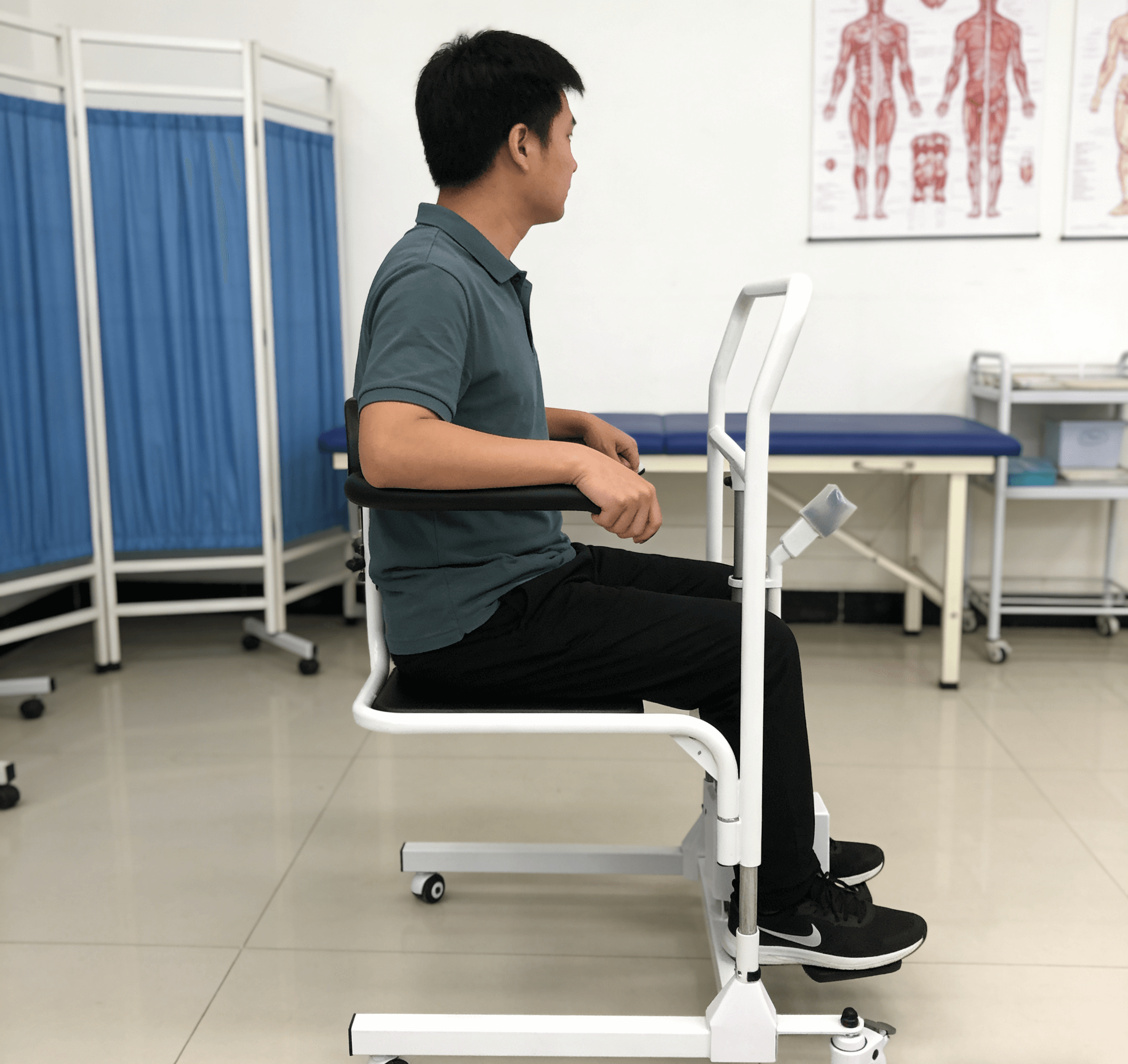
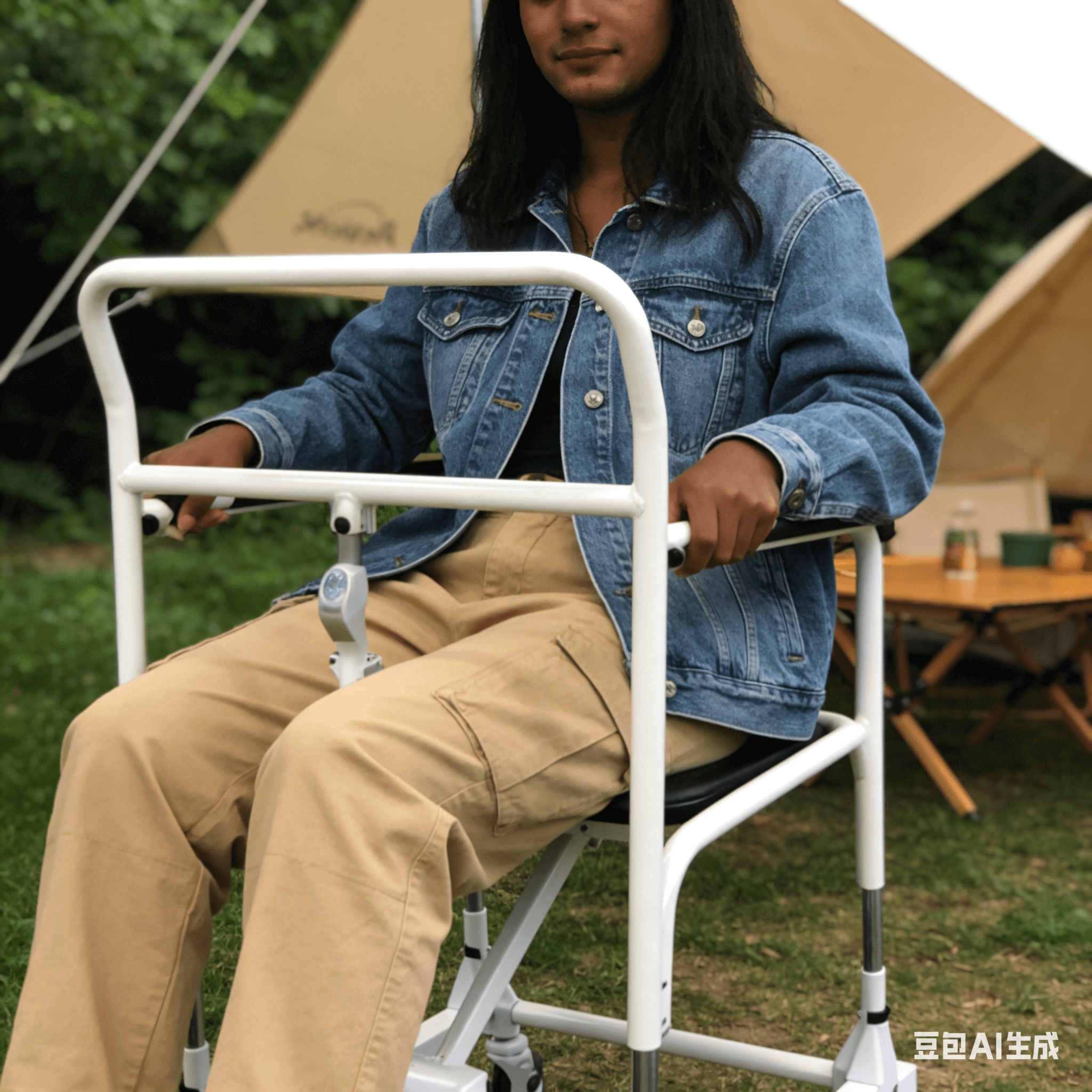
hoyer lift and wheelchair
Hoyer Lift and Wheelchair: A Safe Bridge from Bed to Freedom of Movement
For patients who are fully or severely dependent on others for mobility assistance, a wheelchair is an essential tool to access the living room, balcony, hospital, and even outdoor spaces. The Hoyer Lift, on the other hand, serves as a key medium to safely transfer them from their hospital bed to the wheelchair. When these two pieces of equipment are used in a scientifically coordinated manner, they not only significantly improve the quality of life but also fundamentally eliminate risks such as caregivers’ low back injuries, patient falls, and skin tears.
However, during use, many families often encounter difficulties in transfer, equipment idleness, or even accidents due to improper wheelchair selection, incorrect operation procedures, or unreasonable spatial layout. This article will detail how to achieve truly efficient coordination between the Hoyer Lift and the wheelchair, building a safe, smooth, and dignified mobility path.
I. Why Must the Wheelchair Be "Compatible" with the Hoyer Lift?
Not all wheelchairs are suitable for use with the Hoyer Lift. Some seemingly comfortable models, such as high-back wheelchairs, those with fixed armrests, or non-removable footrests, can instead become obstacles to transfer. An ideal wheelchair should meet the following criteria:
1. Removable or Foldable Armrests
One armrest needs to be temporarily removed during transfer to allow the sling to land smoothly on the seat cushion;Fixed armrests will block the proper positioning of the patient’s hips and increase the risk of slipping.
2. Foldable or Removable Footrests
Footrests must be able to be flipped up or completely removed; otherwise, they will prevent the Hoyer Lift’s base from approaching;They can be reinstalled after the transfer to ensure support for the sitting posture.
3. Seat Width Matching the Sling
The wheelchair seat width should be slightly larger than the patient’s hip width but not excessively wide (usually 40–48 cm is appropriate);An overly wide seat will cause unstable sitting posture, while an overly narrow one will compress the thighs and affect blood circulation.
4. Stable Structure and Adequate Weight Capacity
The wheelchair must clearly indicate its maximum weight capacity (e.g., 100 kg, 150 kg) with a safety margin;Lightweight folding wheelchairs with weak frames may deform under the impact of lifting and placing.
✅ Recommended Types: Standard medical transport wheelchairs or adjustable high-back rehabilitation wheelchairs. Priority should be given to products marked with "Lift-Compatible" (shift-friendly design).
II. Key Preparations Before Transfer
1. Wheelchair Positioning
Place the wheelchair beside the hospital bed at a 90-degree right angle;Firmly engage the brakes on both sides to prevent sliding;If space allows, the wheelchair can be slightly tilted (approximately 15 degrees) to facilitate the transition of the patient’s center of gravity.
2. Adjusting the Wheelchair State
Remove the armrest on the side close to the hospital bed;Flip up or remove the footrest on the same side;Keep the seat cushion flat, free of wrinkles or foreign objects.
3. Checking the Hoyer Lift Path
Ensure the floor is flat and unobstructed;The Hoyer Lift’s base can be smoothly pushed directly in front of the wheelchair, and the boom can cover the seat area.
III. Standard Transfer Operation Process (Bed → Wheelchair)
Patient Preparation
Assist the patient to lie flat and put on a suitable sling (usually a full-body or seated sling);Ensure the sling is not twisted and the buckles are secure.
Lifting the Patient
Operate the Hoyer Lift to vertically lift the patient approximately 10–15 cm off the bed;Pause briefly to check for balance and any signs of discomfort.
Horizontal Movement
Slowly push or remotely control the Hoyer Lift to move the patient directly above the wheelchair;The height of the boom should ensure that the patient’s hips are slightly higher than the wheelchair seat surface.
Precise Lowering
Lower the patient slowly so that their hips gently touch the wheelchair seat cushion;Fine-tune the position to ensure the patient sits in the center with legs hanging naturally.
Completing the Placement
Unbuckle the sling and carefully pull it out;Reinstall the armrests and footrests;Adjust the backrest angle and fasten the safety belt if necessary.
IV. Precautions for Transferring from Wheelchair Back to Bed
First, confirm that the hospital bed has been lowered to its lowest position and the side rails have been removed;If the patient has edema or fragile skin, lower them more slowly to avoid impact;Immediately after the transfer, check for redness or damage on pressure points such as the sacrococcygeal area and heels.
V. Common Risks and Avoidance Strategies
❌ Using "Comfortable" Wheelchairs with Fixed Armrests→ Although such wheelchairs look aesthetically pleasing, they cannot be used with the Hoyer Lift and should be avoided for patients with severe dependence.
❌ Forcing Transfer Without Handling the Footrests→ This may cause the Hoyer Lift’s base to collide, the patient’s legs to be compressed, or even the equipment to tip over.
❌ Failing to Secure the Wheelchair Brakes→ Wheelchair sliding during transfer is a common cause of accidents; always double-check the brakes.
❌ Lowering the Patient Too Quickly→ The impact may cause pain to the patient or damage to the ischial tuberosities, especially for patients with osteoporosis.
VI. Handling Special Scenarios
1. Power Wheelchair Users
Most power wheelchairs have non-removable armrests and low seats;It is recommended to use a dedicated transfer sling with a high-lifting Hoyer Lift, or switch to a slide board for lateral transfer.
2. Patients Who Need Frequent Transfers to/from Wheelchairs
Consider equipping two wheelchairs: one fixed in the bedroom for transfers, and one lightweight folding wheelchair for outdoor use.
3. Narrow Home Spaces
Choose a Hoyer Lift with a narrow base and a lightweight standard wheelchair to reduce the turning radius;The wheelchair should be parked in a fixed position to form a "transfer route."
VII. Recommendations for Purchase and Maintenance
Wheelchair
Choose well-known brands (e.g., Invacare, Drive Medical, Yuwell) and confirm that accessories are removable;
Hoyer Lift
Prioritize electric models with an emergency lowering function, and ensure the weight capacity is ≥ the patient’s weight + 20%;
Regular Inspection
Test the wheelchair’s brake sensitivity, armrest buckle firmness, and the Hoyer Lift’s hydraulic/motor status monthly.
Conclusion
The few meters from the hospital bed to the wheelchair,Mean little to those with free mobility,But may be the entire journey to the outside world for patients with disabilities.
The tacit coordination between the Hoyer Lift and the wheelchair,Is not just a combination of technologies,But also a respect for the "right to mobility" and "right to participate in life."
Genuine care,Is not about moving a person around,But about helping them,Move steadily from here to there.
May every transfer,Be as smooth as the wind;May every user,Continue to see the sunshine, hear the laughter, and embrace life in their wheelchair.