Category: Patient Lifts
Posted by 2026-01-05 11:01
hoyer lift new law

At the end of 2025, the U.S. federal government and multiple state governments released a series of new regulations related to Hoyer Lifts, marking the official entry of safe patient transfer into an "era of enhanced supervision." These new rules not only cover Medicare reimbursement processes and equipment safety standards but also explicitly incorporate care institutions' operating specifications and legal liabilities into legal provisions for the first time. Starting January 1, 2026, nursing homes, hospitals, home care agencies, and even individual caregivers must adapt to this series of profound changes.
This article comprehensively interprets the core content of the new Hoyer Lift laws taking effect in 2026, hoyer lift new law helping relevant parties achieve compliance in advance and avoid legal and safety risks.
1. Federal Level: Medicare Mandatory Prior Authorization System Officially Implemented
According to the final rule issued by the U.S. Centers for Medicare & Medicaid Services (CMS) in October 2025, starting January 1, 2026, all Medicare beneficiaries must obtain prior authorization when applying for electric Hoyer Lifts (HCPCS code E0635).
This means:
Durable Medical Equipment (DME) suppliers are prohibited from delivering equipment before obtaining approval;
Applications must include a doctor's prescription, face-to-face consultation records, and a functional assessment report;
Approval is handled by Palmetto GBA, with a processing time of 5–7 business days;
Approval letters are valid for 6 months, and reapplication is required if expired.
Impact: Home users need to plan the application timeline in advance; DME suppliers that deliver equipment in violation of regulations will bear all costs and have no right to appeal. This measure aims to ensure the equipment is only used by patients clinically confirmed to be "fully dependent on transfer assistance," eliminating abuse.
2. FDA Issues New Mandatory Labeling Rules for Slings
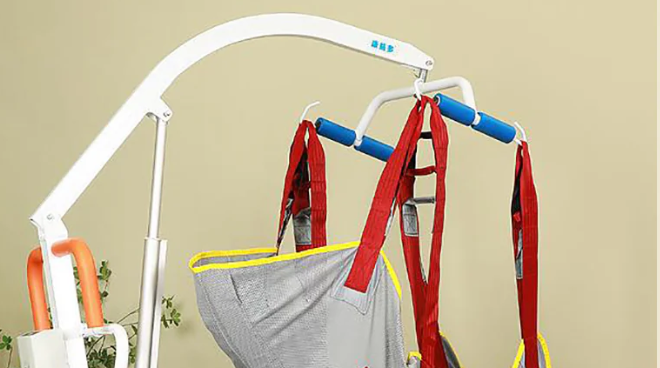
In November 2025, the U.S. Food and Drug Administration (FDA) released the Patient Sling Safety Labeling Requirements, stipulating that starting July 1, 2026, all newly marketed Hoyer slings must display the following information in a prominent position:
Maximum weight capacity (in both pounds and kilograms);
Recommended replacement cycle (e.g., "12 months" or "after 500 uses");
Material composition and cleaning guidelines;
Manufacturer name and FDA registration number.
Slings without such labels will be deemed "misbranded" and prohibited from sale or import. hoyer lift new law This regulation directly responds to multiple fall accidents caused by aged and broken slings in recent years, emphasizing that "slings are life-support components, not ordinary fabrics."
3. OSHA Strengthens Law Enforcement: "Manual Lifting" to Be Deemed a Violation
Although the Occupational Safety and Health Administration (OSHA) has not yet issued federal standards specifically for Hoyer Lifts, it is stepping up law enforcement efforts against long-term care institutions through the General Duty Clause.
Starting 2026, OSHA will focus on inspecting:
Whether institutions are equipped with mechanical assistive devices for patients "fully dependent on transfer";
Whether there are records of employees' low back injuries caused by manual lifting;
Whether annual Hoyer Lift hands-on training is provided and records are retained.
If systemic negligence is found, OSHA may impose a maximum fine of $16,131 per violation. States such as California, New York, and Ohio have taken the lead in incorporating the "zero manual lifting policy" into state laws, and a nationwide law enforcement trend is expected to take shape in 2026.
4. Multiple States Simultaneously Upgrade Operating Standards for Nursing Institutions
Ohio
In December 2025, Ohio revised the Ohio Administrative Code for Nursing Homes (OAC 3701-17), explicitly requiring:
All high-risk transfers (e.g., weight > 300 pounds, unstable spine) must be operated by two people and recorded electronically;
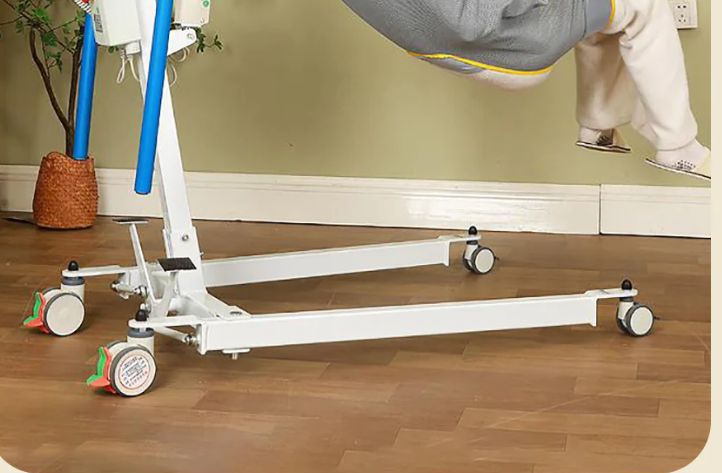
Using a Hoyer Lift without locking the base legs is deemed a "serious violation" and may trigger an immediate correction order.
Florida
Under the new law, starting March 2026, all residential care facilities must conduct third-party safety inspections of Hoyer Lifts every quarter and submit reports to the state Department of Health.
Texas
Texas requires employees of home care agencies to hold a certified "Mechanical Patient Transfer Operation Certificate"; operating without a certificate will result in points deducted from the agency's license.
5. Medicaid Sling Separate Reimbursement Policy Promoted Nationwide
Following the successful pilot in 2025, CMS announced that starting January 2026, Medicare and Medicaid will allow separate reimbursement for slings (HCPCS code E0639) nationwide.
A maximum of 2 slings can be reimbursed per year;
A "certificate of necessity for replacement" issued by a DME supplier is required;
Only original factory products or ISO 10535-certified products are eligible.
This measure significantly reduces long-term use costs for families and also encourages regular replacement to ensure safety.
6. Legal Liabilities Clarified: Stricter Accountability for Accidents
Under the new regulations, if a Hoyer Lift-related injury occurs, the determination of liability will be clearer:
Institutional Liability: Failure to equip necessary devices, failure to train employees, or use of damaged slings all constitute "care negligence";
DME Supplier Liability: Selling unlabeled slings or failing to provide operation training may result in joint liability;
Individual Caregiver Liability: Family members who cause patient injuries due to obvious operational errors (e.g., not locking the base legs) may face civil claims in extreme cases.
Courts will determine negligence based on "industry standards" and "duty of reasonable care," hoyer lift new law and the 2026 new regulations are providing clear basis for this standard.
Action Recommendations for Different Groups
Nursing Homes/Care Institutions
Immediately review the quantity and distribution of Hoyer Lifts to ensure sufficient supply in high-demand areas;
Organize hands-on refresher training for all staff and retain signed records;
Establish a sling replacement log and enforce updates every 6 months.
Home Caregivers
Initiate the Medicare prior authorization application 3–4 weeks in advance;
Retain doctor's prescriptions and assessment reports for at least 5 years;
Never use "universal slings" without weight capacity labels.
DME Suppliers
Upgrade electronic submission systems to support prior authorization;
Provide multilingual operation videos and training confirmation forms upon delivery;
Proactively track sling service life and remind users to replace them.
Conclusion: New Laws Are Not Constraints, but the Cornerstone of Safety
The intensive introduction of new Hoyer Lift regulations in 2026 may seem like increased supervision on the surface, but in essence, hoyer lift new law it represents the collective awakening of society to care ethics. When the law requires marking sling service life, mandating prior assessment, and prohibiting manual lifting, the signal it conveys is clear and firm: every person who cannot stand deserves to be lifted safely; every caregiver should not be injured due to lack of support.