Category: Patient Lifts
Posted by 2026-01-05 11:01
hoyer lift name origin
Origin of the Name "Hoyer Lift": From a Father's Love to a Global Care Standard
In hospital rooms, nursing homes, and home bathrooms, the lifting device that helps people with limited mobility transfer safely is often simply called a "Hoyer Lift." hoyer lift name origin Yet few people know that "Hoyer" is not a generic term, but the name of a real person—behind it lies a touching story rooted in family affection, driven by innovation, and ultimately transforming care practices worldwide.
This article will take you back to the origin of the "Hoyer Lift" name, exploring how its inventor used a homemade lifting device to not only lift his paralyzed son but also establish the concept of safe patient transfer in modern healthcare.
A Father's Dilemma: Care Challenges in the 1930s
The story begins in Minnesota, USA, in the 1930s. Ted Hoyer (full name Theodore Hoyer) was an ordinary mechanic—and a father deeply devoted to his son. His son was paralyzed in the lower limbs due to polio, unable to stand or walk on his own. In that era, there were no electric wheelchairs, let alone professional patient transfer equipment. Every time Ted moved his son from the bed to a wheelchair, he had to lift him with his bare hands—a task that was not only extremely strenuous but also often left both father and son in pain and discomfort.
What worried Ted even more was that as his son grew heavier, manual lifting became increasingly dangerous. He feared he might drop his son one day, and also worried that years of bending to lift would ruin his own health. More importantly, he wanted his son to retain dignity during transfers, rather than being dragged around like a "piece of cargo."
From Garage to Patent: The Birth of the First Hoyer Lift
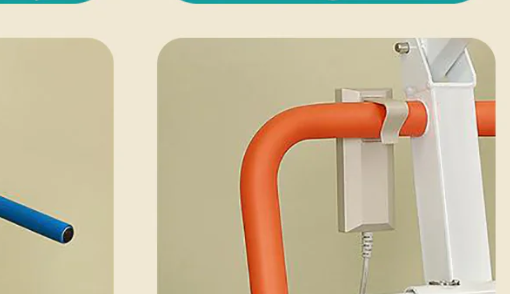
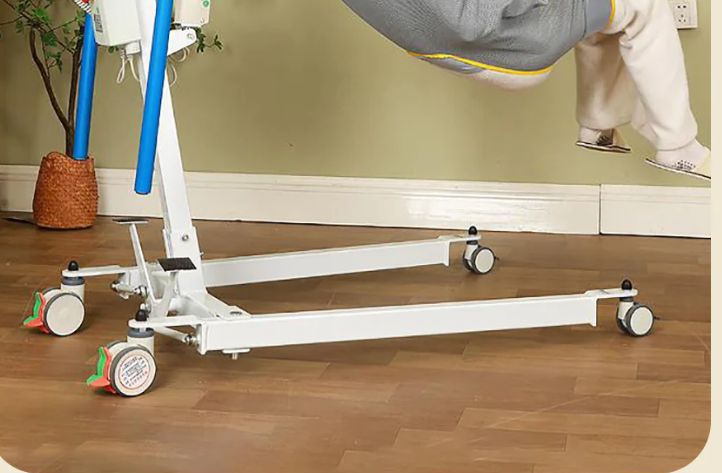
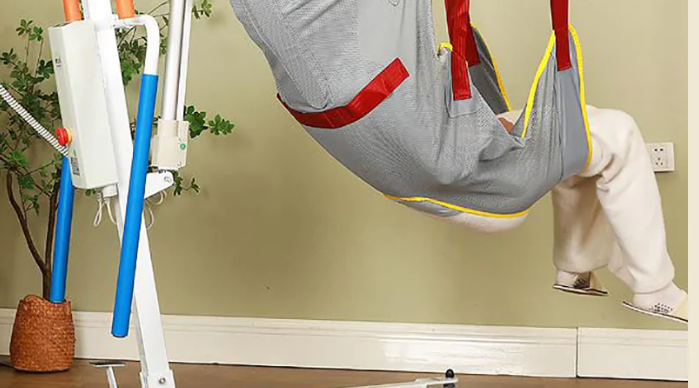
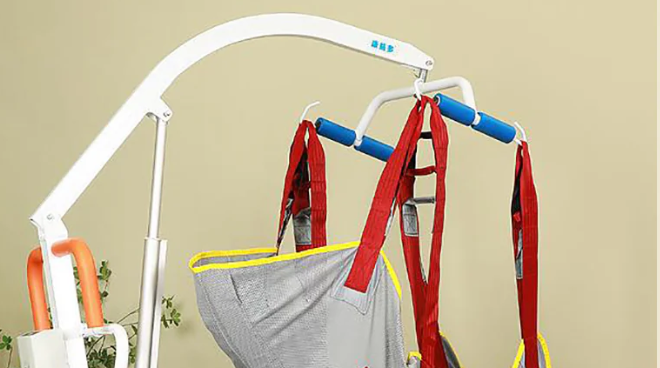
With the ingenuity of a mechanic and the dedication of a father, Ted Hoyer began crafting a new type of transfer device in his garage. Drawing on the hydraulic principle of car jacks, he designed a metal frame structure with expandable legs, a lifting arm, and a fabric sling. By manually pumping a handle, the device could smoothly lift a person from the bed and move them to a wheelchair or another location.
Though simple in design, this prototype completely transformed the father-son duo’s daily life. The son no longer feared transfers, and Ted no longer lost sleep over lower back pain. hoyer lift name origin When neighbors and other families with disabled members in the community heard about the device, they flocked to ask for help. Ted realized this was more than just a household tool—it was an invention that could benefit countless people.
In 1949, Ted Hoyer officially applied for a U.S. patent for his "Patient Lifting Device" (U.S. Patent No. 2,577,786), which was granted in 1951. Soon after, he founded Hoyer Manufacturing Company, starting small-scale production and selling the device to hospitals and rehabilitation centers.
From Brand to Generic Name: The Cultural Phenomenon of "Hoyer Lift"
As one of the earliest and most reliable patient lifts on the market, Ted Hoyer’s device quickly became an industry benchmark. hoyer lift name origin Over time, healthcare workers and family caregivers began using "Hoyer Lift" to refer to all similar lifting devices—much like how "Kleenex" is used for facial tissues or "Xerox" for photocopying.
Even as competitors like Stryker, Arjo, and Medline launched their own patient lifts, the name "Hoyer Lift" retained its status as the generic term for such equipment in English-speaking regions, thanks to its first-mover advantage and deep-rooted recognition. People still habitually call such devices "a Hoyer," even if they are not manufactured by Hoyer.
This linguistic phenomenon is not only a tribute to Ted Hoyer’s innovative spirit but also a reflection of how his invention profoundly shaped healthcare culture.
Brand Legacy: From Family Business to Global Giant
Hoyer Manufacturing Company thrived under Ted Hoyer and his family’s management for decades. In 2005, the brand was acquired by Arjo, a Swedish medical technology company. Today, Arjo is a global leader in patient mobility and safety solutions, and "Hoyer" is preserved as the name of its core product line, continuing to appear on hospital procurement lists and home care guides.
To this day, Arjo’s official website still labels its products as "Hoyer® Patient Lifts," emphasizing that they are rooted in Ted Hoyer’s original design philosophy: safety, dignity, and people-centered care.
Conclusion: Behind the Name, Timeless Humanistic Care
"Hoyer Lift" is more than just a trademark—it is a story of fatherly love, empathy, and engineering wisdom. hoyer lift name origin Ted Hoyer’s experiment in his garage was never about commercial success; it was his answer to a simple question: "How can I care for my loved one more safely and with more dignity?"
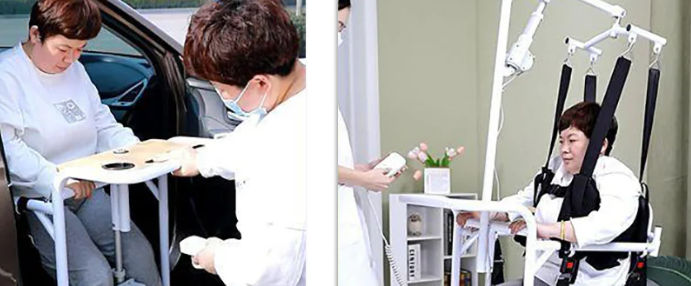
It is this original intention that has allowed the Hoyer Lift to transcend its identity as a mere machine and become a symbol of modern care ethics. Today, when a nurse presses an electric button, when a family member extends the device’s legs, or when a patient is lifted smoothly into the air—they are all carrying forward Ted Hoyer’s promise: no transfer should come at the cost of safety or dignity.
So the next time you hear the term "Hoyer Lift," remember:
It is not just the name of a machine,
but a gentle legacy left to the world by a father.