Category: Patient Lifts
Posted by 2026-01-02 11:01
hoyer lift letter of medical necessity
Comprehensive Guide to Writing a Medical Necessity Letter for a Hoyer Lift
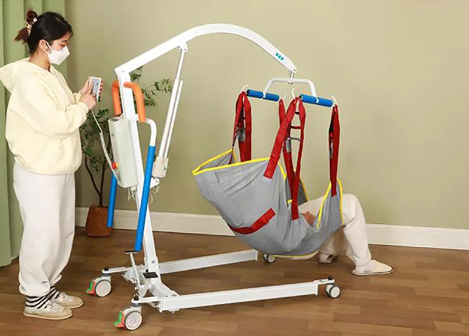
A medical necessity letter is a critical document for obtaining insurance approval for a Hoyer Lift. This letter needs to strongly and professionally explain why this equipment is essential for the patient’s care. hoyer lift letter of medical necessity This guide provides detailed writing instructions and templates to help you prepare a convincing proof document.
Core Elements of the Medical Necessity Letter
1. Basic Patient Information
Complete demographics (full name, date of birth, medical record number)
Relevant diagnoses and comorbidities
Detailed description of functional limitations
Current care status and challenges
2. Argument for Medical Necessity
Specific results of functional assessments
Objective evidence of safety risks
Analysis of the impracticability of alternative solutions
Clear explanation of expected benefits
3. Statement of Professional Qualifications
Professional qualifications and experience of the writer
Description of the therapeutic relationship with the patient
Explanation of assessment methods and tools
Basis for professional judgment
Detailed Content Guidelines
1. Description of Functional Limitations
Transfer Ability
Fully dependent on others for assistance
Requires assistance from two or more people
Safety issues with current transfer methods
History of falls or accidents
Mobility Ability
Specific difficulties with bed-to-chair transfers
Challenges with toilet transfers
Limitations in personal hygiene activities
Barriers to functional activities
2. Risk Assessment Documentation
Fall Risk
Use of standardized assessment tools (e.g., Morse Fall Scale)
Documentation of past fall incidents
Negative impact of environmental factors
Evidence of medications affecting balance
Skin Integrity
Braden Pressure Ulcer Risk Assessment results
Documentation of existing skin issues
Risks of shear and friction forces
Difficulty with position changes
Compliance with Insurance Requirements
1. Medicare/Insurance Standards
Home Use Requirements
Prove the equipment will be used in a home environment
Confirm the home environment is suitable for the equipment
Explain the caregiver’s ability to operate the equipment
Describe how the equipment improves home care
Durability Requirements
Prove the equipment can withstand repeated use
Specify the expected period of use (typically 3–5 years)
Confirm the equipment is primarily for home use
Rule out the possibility of one-time or temporary use
2. Proof of Medical Necessity
Irreplaceability
Prove the risks of manual transfers
Explain the inadequacies of other equipment
Analyze the cost-benefit ratio
Elaborate on improvements to quality of life
Professional Writing Skills
1. Language Expression Key Points
Use professional yet understandable medical terminology
Provide specific quantitative data
Avoid vague or subjective descriptions
Maintain an objective and professional tone
2. Evidence Support Strategies
Cite specific assessment results
Provide verifiable observation data
Use standardized assessment tools
Include relevant laboratory or imaging findings
3. Logical Structure Arrangement
Progress from problem description to solution
Support each claim with evidence
Balance risk assessment and benefit analysis
Clearly link conclusions to recommendations
Templates and Examples
Doctor’s Medical Necessity Letter Template
[Hospital/Clinic Letterhead]
Date: [Current Date]
To: [Insurance Company Name][Address]
Re: Medical Necessity Proof – Patient LiftPatient: [Patient’s Full Name]Date of Birth: [Patient’s Date of Birth]Insurance ID: [Insurance Number]
Dear Claims Adjuster,
As the attending physician of [Patient’s Name], I am writing to confirm the medical necessity of a patient lift (Hoyer Lift) for my patient. hoyer lift letter of medical necessity My patient has been diagnosed with [Specific Diagnosis], which results in severe functional limitations.
Summary of Functional Assessment:
Transfer Ability: Fully dependent on others for assistance
Fall Risk: Morse Fall Scale score of [Specific Score] (high risk)
Skin Condition: Braden Scale score of [Specific Score], requiring regular position changes
Care Needs: Currently requires [Number] people to assist with each transfer
Argument for Medical Necessity:Manual transfers have led to [Specific Incident or Risk]. A Hoyer Lift will provide a safe and effective transfer solution to prevent further complications.
Based on the above assessment, I confirm that a Hoyer Lift is medically necessary for the patient’s home care.
Sincerely,
[Doctor’s Full Name and Signature][Professional Title][License Number][Contact Information]
Preparation of Supporting Documents
1. Essential Attachments
Latest medical history and physical examination report
Functional assessment documents
Relevant diagnostic test results
Treatment plan and progress records
2. Supplementary Evidence
Physical therapist’s assessment report
Occupational therapist’s recommendations
Home environment assessment
Proof of caregiver’s ability
Common Mistakes to Avoid
1. Content Deficiencies
❌ Lack of specific functional assessment data
❌ Failure to explain why alternative solutions are impracticable
❌ Omission of specific evidence of safety risks
❌ Use of vague or subjective descriptions
2. Format Issues
❌ Missing necessary patient information
❌ No explanation of the writer’s qualifications
❌ Ignoring the insurance company’s specific requirements
❌ Unprofessional or hard-to-read format
Insurance Appeal Support
1. Appeal Strategies
Emphasize key points that may have been omitted in the initial application
Provide additional supporting evidence
Cite relevant clinical guidelines
Seek peer review support
2. Escalation Pathways
Request direct communication with the medical director
Seek assistance from patient advocacy organizations
Utilize the insurance company’s appeal process
Consider external review options
Considerations for Special Populations
1. Pediatric Patients
Emphasize developmental and growth needs
Explain the importance of family involvement
Describe the equipment’s impact on daily activities
Consider the necessity for long-term use
2. Elderly Patients
Focus on age-related risk factors
Explain the benefits of preventive use
Describe the role in maintaining independence
Consider the impact of comorbidities
3. Complex Cases
Comprehensive impact of multiple diagnoses
Long-term needs for progressive diseases
Special considerations for rare diseases
Comfort needs for end-of-life patients
Conclusion
A well-prepared medical necessity letter is key to obtaining approval for a Hoyer Lift. hoyer lift letter of medical necessity Through detailed assessment data, professional argumentation logic, and complete supporting documents, you can secure the necessary care equipment for the patient. Remember, the best medical necessity letter not only meets insurance requirements but also truly reflects the patient’s care needs and quality-of-life demands. Maintain professionalism, objectivity, and empathy during the writing process, so every word serves to improve the patient’s life.