Category: Electric Transfer Chair
Posted by 2025-12-11 11:12
hoyer lift and trapeze
Hoyer Turning Lift vs. Overbed Trapeze: The Perfect Complement for Empowering Patients and Assisting Transfers
In the care of bedridden patients, promoting their independent movement and enabling safe transfers are two core goals. The Hoyer Turning Lift and Overbed Trapeze are two classic devices designed to meet these needs. Although both are installed above the bed, their original design purposes, functions, and requirements for patients are distinctly different. Understanding their differences and connections is key to developing an efficient and safe care plan.
I. Overbed Trapeze: Empowering Patients with Independent Movement
1. What Is It?
An overbed trapeze consists of a triangular horizontal bar suspended from a frame above the bed via one or more chains or rods. It resembles the horizontal bar above a gymnastics ring.
2. Core Functions: Assisting Movement and Posture Adjustment
Aiding in sitting up: By grasping the bar, patients can use their upper body strength to pull themselves from a lying position to a sitting position or assist in turning over.
Lifting the hips: By pulling the bar and pushing their legs, patients can lift their hips—this helps prevent bedsores and facilitates changing bed sheets or placing a bedpan.
Upper limb exercise: Provides patients with the opportunity to perform rehabilitation exercises while in bed.
3. Suitable User Groups
Patients with sufficient upper body strength and clear cognitive abilities (who understand how to use it correctly).
Patients who need to increase their independence in bed activities.
Used to prevent bedsores and improve breathing (by assisting in sitting up).
4. Limitations
Fully relies on the patient’s own strength; ineffective for patients with weak upper limbs, paralysis, or confusion.
Cannot help patients get out of bed.
II. Hoyer Turning Lift: Providing Fully Assisted Safe Transfers
1. What Is It?
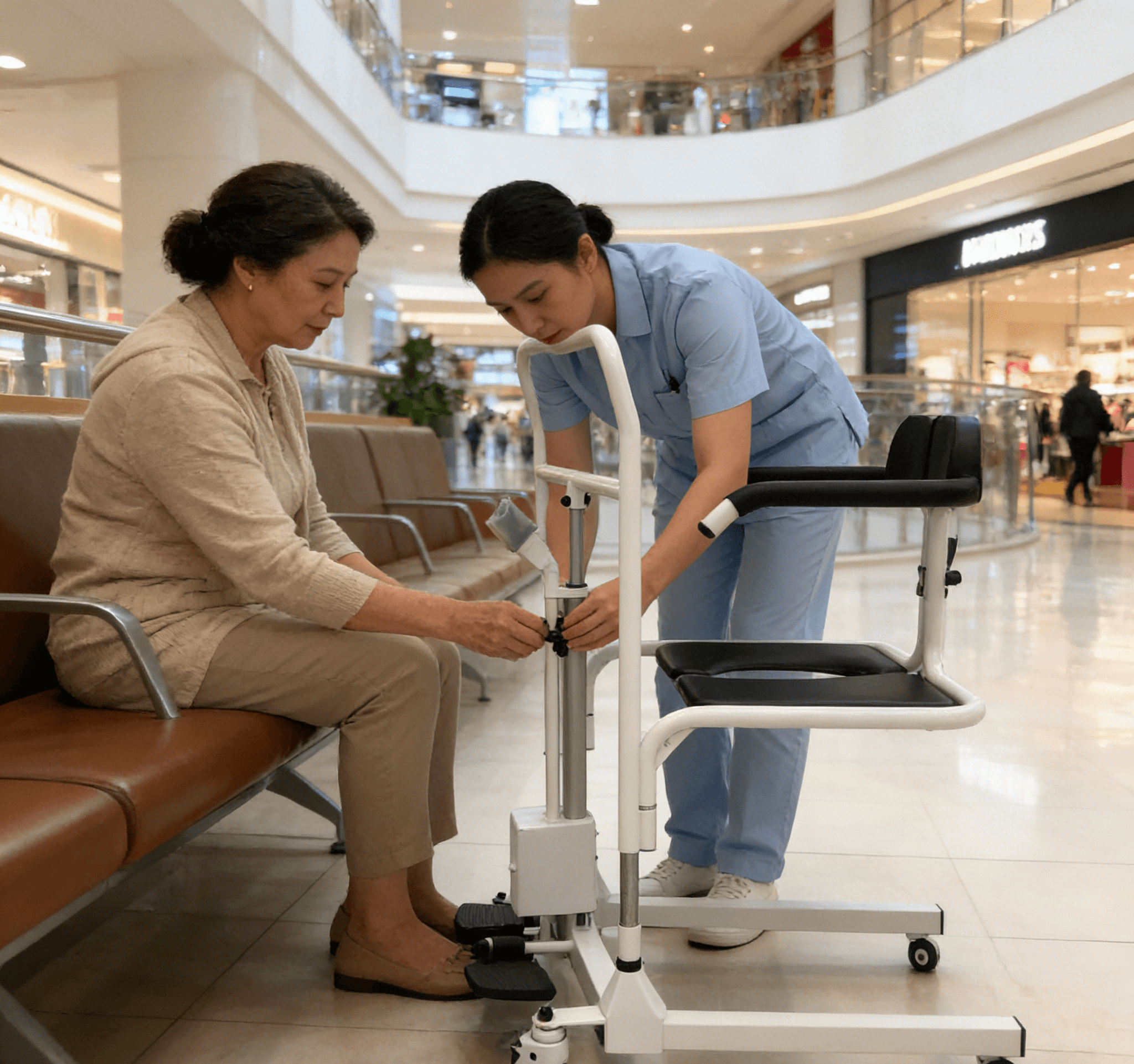
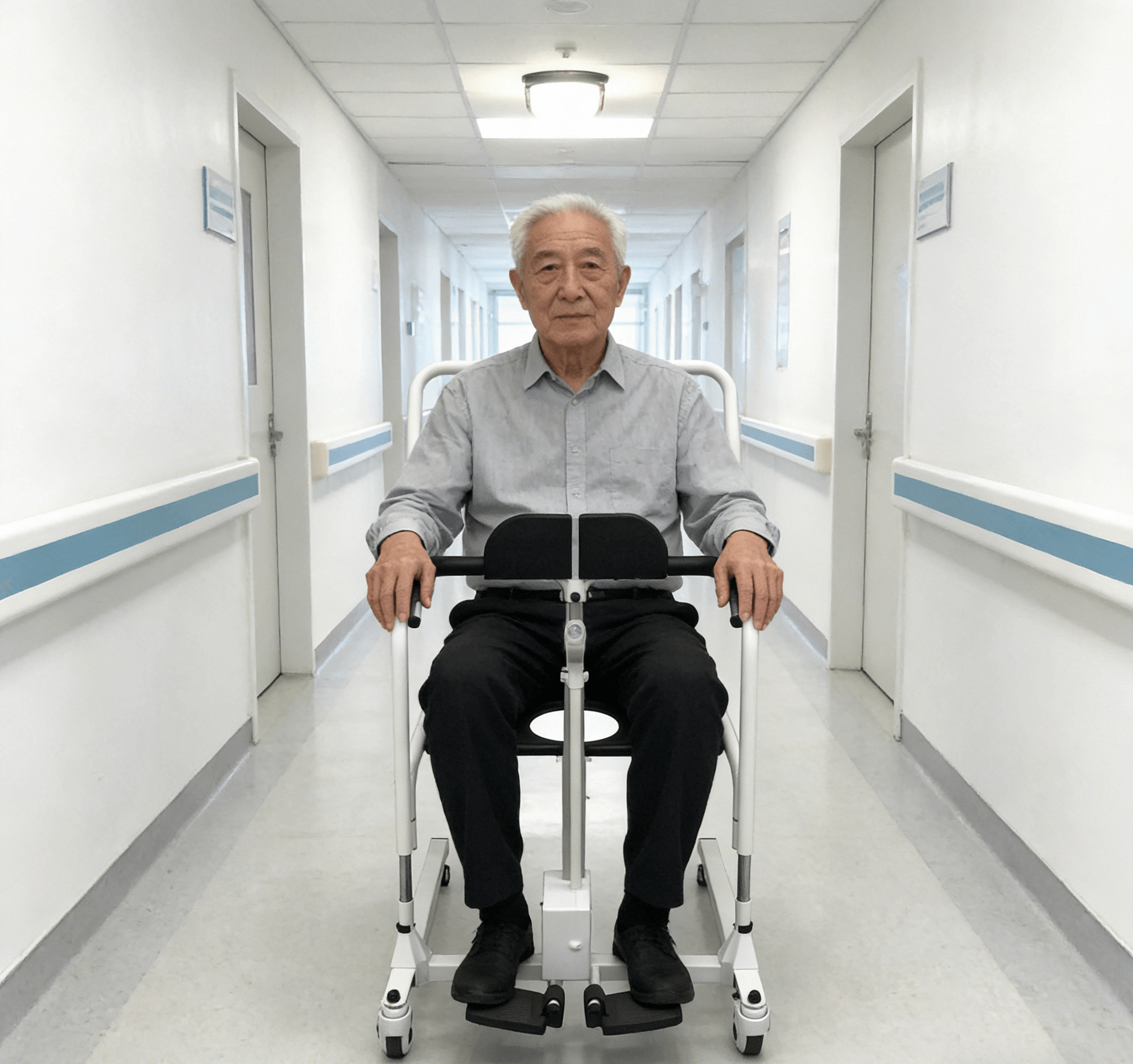
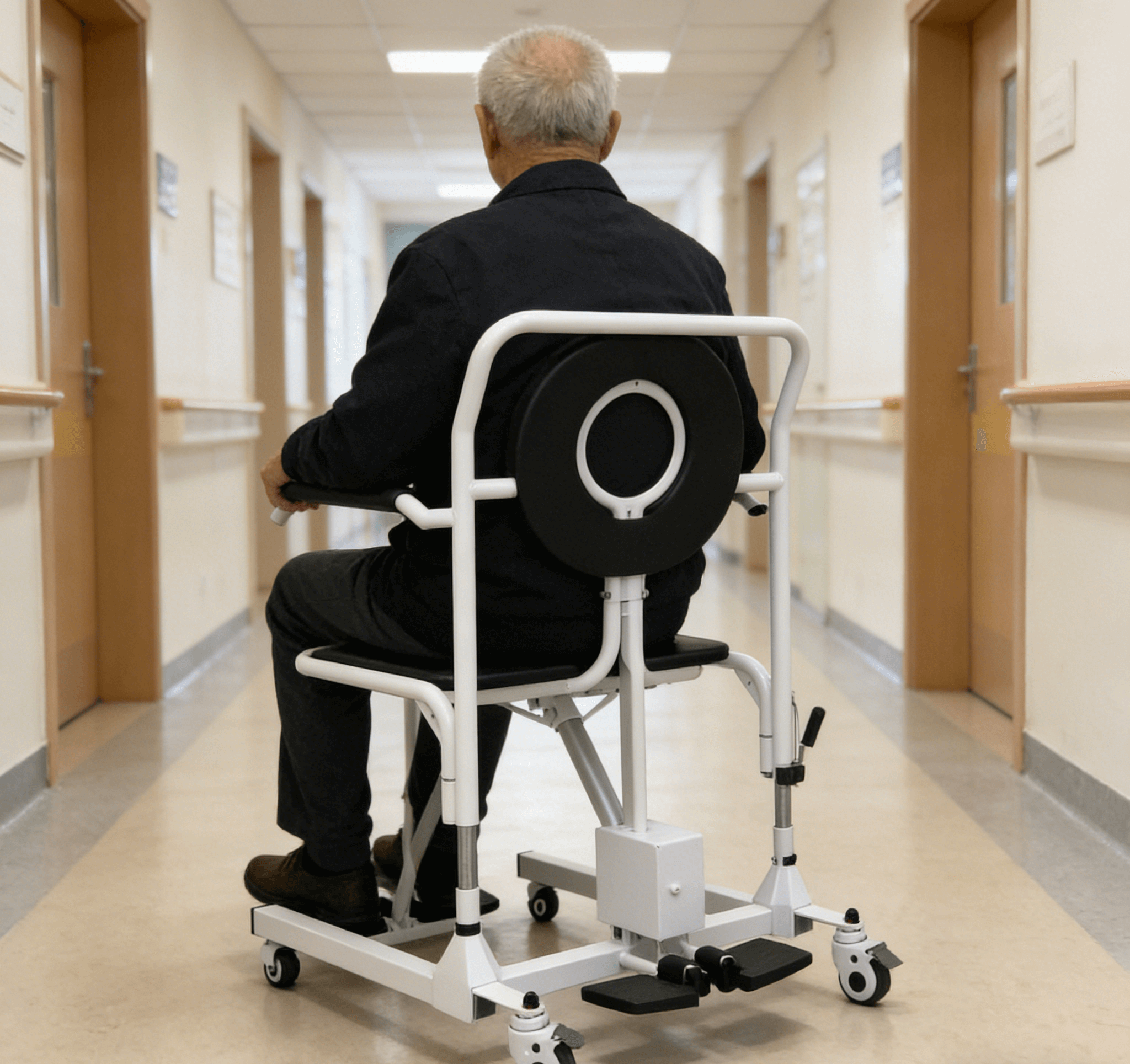
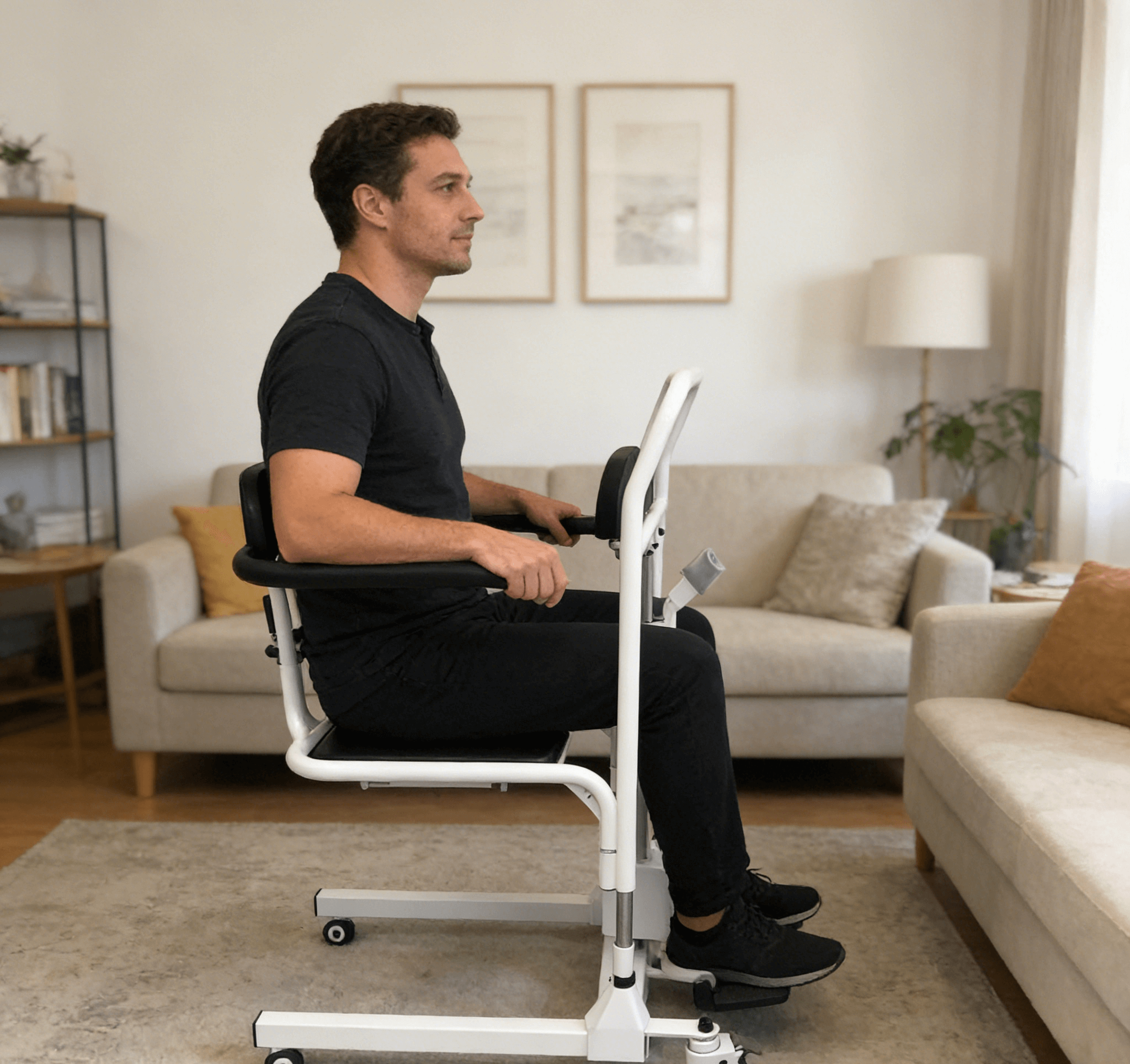
A Hoyer Turning Lift is a device that uses a lifting arm and a sling to completely lift the patient off the bed surface. It is used to safely transfer the patient to a wheelchair, toilet, or chair.
2. Core Functions: Full Weight-Bearing Transfers
Safe transfer: Enables "weight-free" transfers between the patient and the bed.
Reducing caregiver burden: The mechanical device bears the patient’s full weight, completely preventing low back strain in caregivers.
3. Suitable User Groups
Patients completely unable to stand or bear weight (e.g., lower limb paralysis, postoperative immobilization).
Patients who fully rely on caregivers for transfers.
Patients with heavy body weight, for whom manual lifting poses high risks.
4. Limitations
Requires operation by a caregiver; patients cannot use it independently.
Operation is relatively complex and requires learning and practice.
III. Table of Core Differences
Feature Overbed Trapeze Hoyer Turning Lift
Primary Function Assisting patients with independent in-bed activities (sitting up, turning over) Safe transfers (getting out of bed) performed by caregivers
Patient Participation Active; requires the patient to exert force Passive; no force required from the patient
Weight-Bearing Method Patient uses their own upper body strength Mechanical device bears full weight
Usage Goal Preventing complications (bedsores, pneumonia), enhancing independence Safe transfers, protecting caregivers
Operator The patient themselves Caregiver
Simple Analogy:
The Overbed Trapeze is like a "pull-up bar" for patients in bed, used for self-exercise and movement.The Hoyer Turning Lift is like a "crane" for caregivers, used for moving patients.
IV. Collaborative Use: A Powerful Combined Care Plan
These two devices are not mutually exclusive; instead, they can be perfectly combined to provide a comprehensive care environment for patients:
Typical Workflow:
Patient’s independent preparation: The patient uses the overbed trapeze to sit up independently, adjust their posture, or prepare for transfer. This preserves their dignity and initiative.
Caregiver’s safe transfer: Subsequently, the caregiver uses the Hoyer Turning Lift to safely and easily transfer the patient to a wheelchair.
This combination not only encourages the patient’s remaining functional abilities but also ensures absolute safety during the transfer process, while significantly reducing the physical burden on caregivers.
V. How to Choose for Your Home?
If the patient has strong upper limbs and their main need is to move and sit up in bed, prioritize an overbed trapeze.
If the patient is completely unable to stand and the core challenge is transferring out of bed, a Hoyer Turning Lift is a necessity.
If the patient’s condition falls between the two (e.g., has some upper limb strength but is completely unable to stand), using both devices together is the optimal solution.
Most Important Advice:
Before making a decision, consult an occupational therapist. They can conduct a professional assessment of the patient’s abilities, recommend the most suitable type and model of equipment, and even provide guidance on proper installation and usage.
Conclusion
The Hoyer Turning Lift and Overbed Trapeze represent two important aspects of care philosophy: one provides full support and safety through technology, and the other empowers patients through tools to stimulate their independence and dignity. They are not opposing options that require a choice; instead, they are collaborative partners that can be flexibly combined according to the patient’s needs. Investing in the right combination means you are not just purchasing equipment, but also creating a safer, more independent, and more dignified living space for the patient.