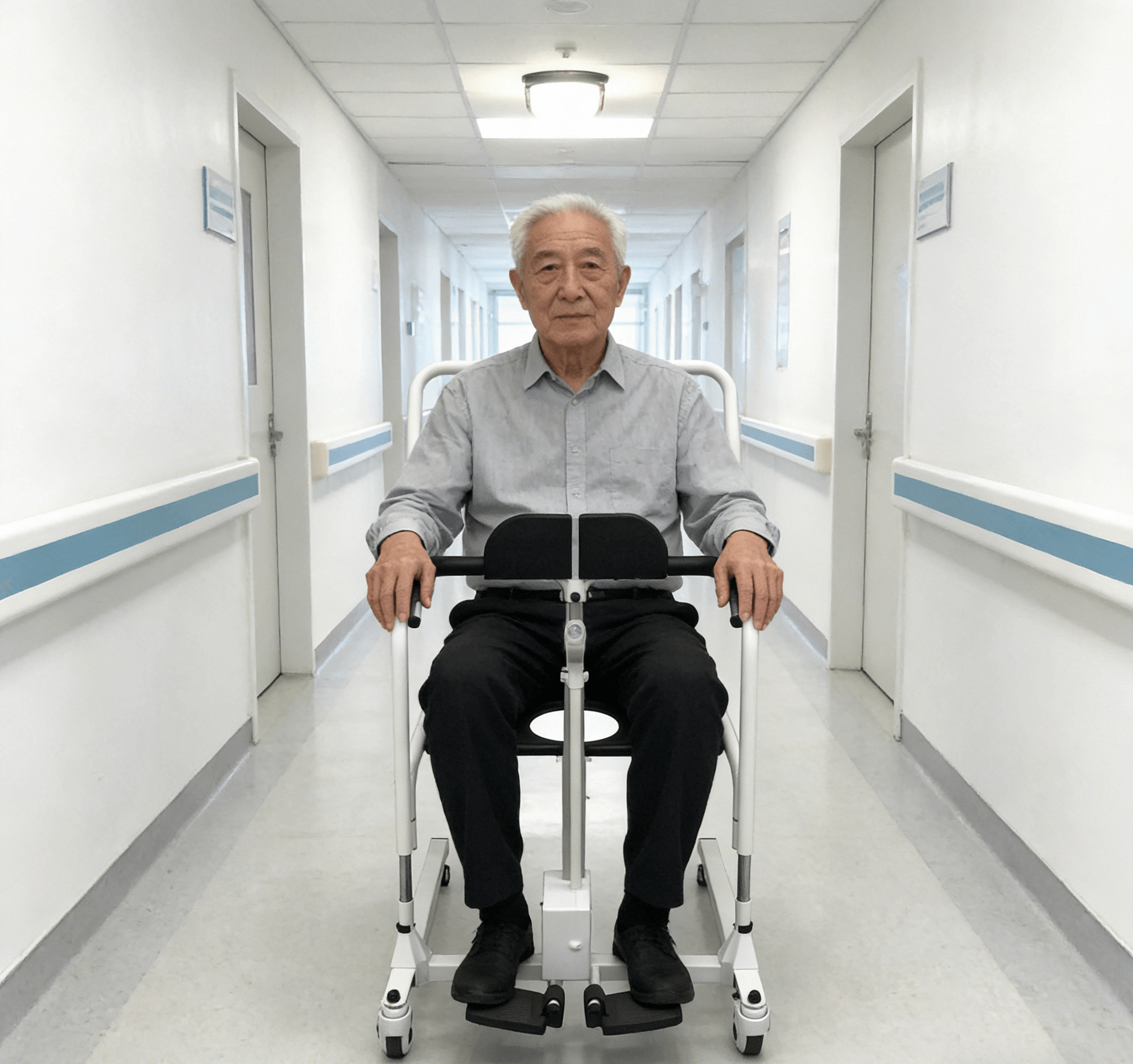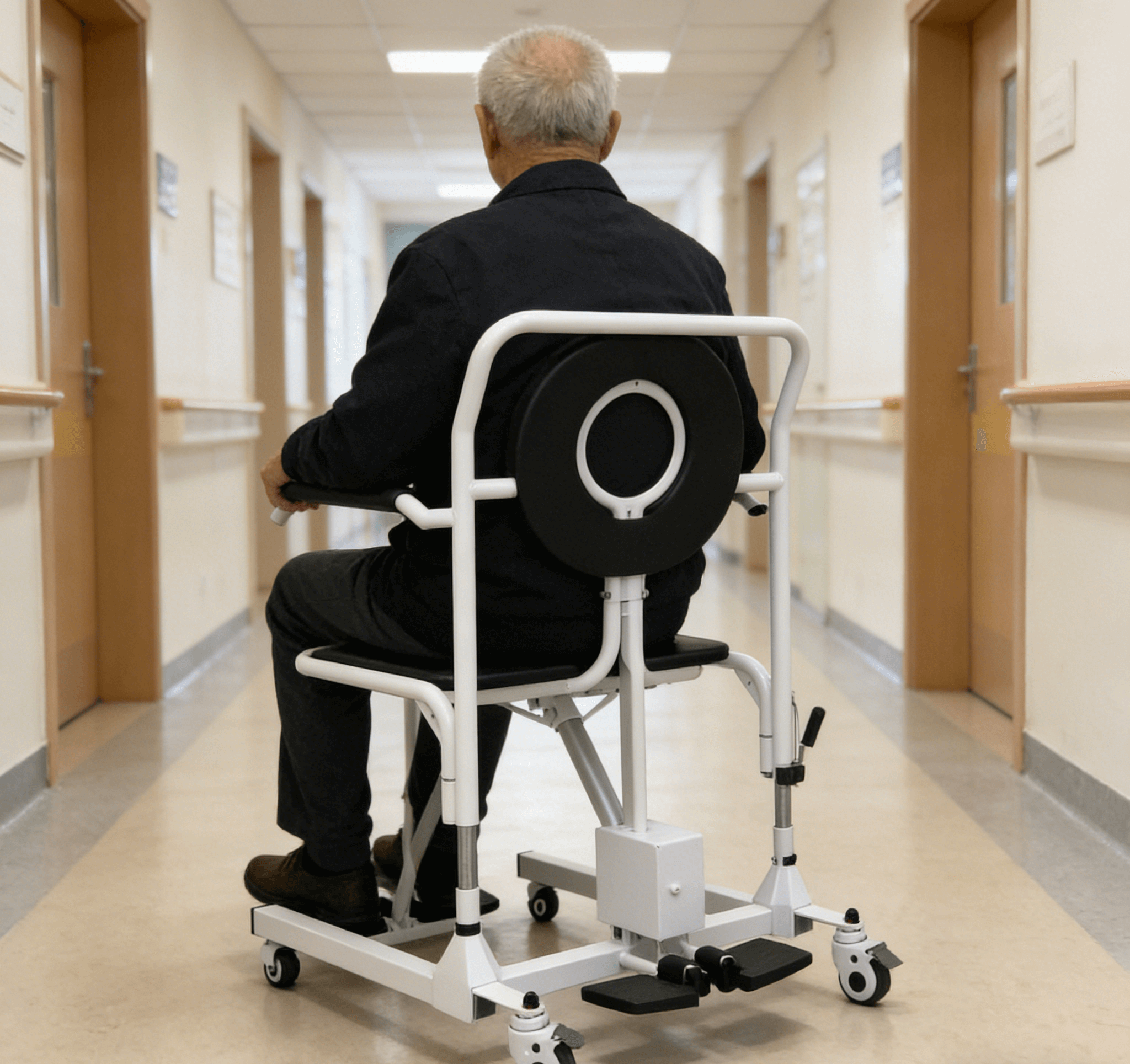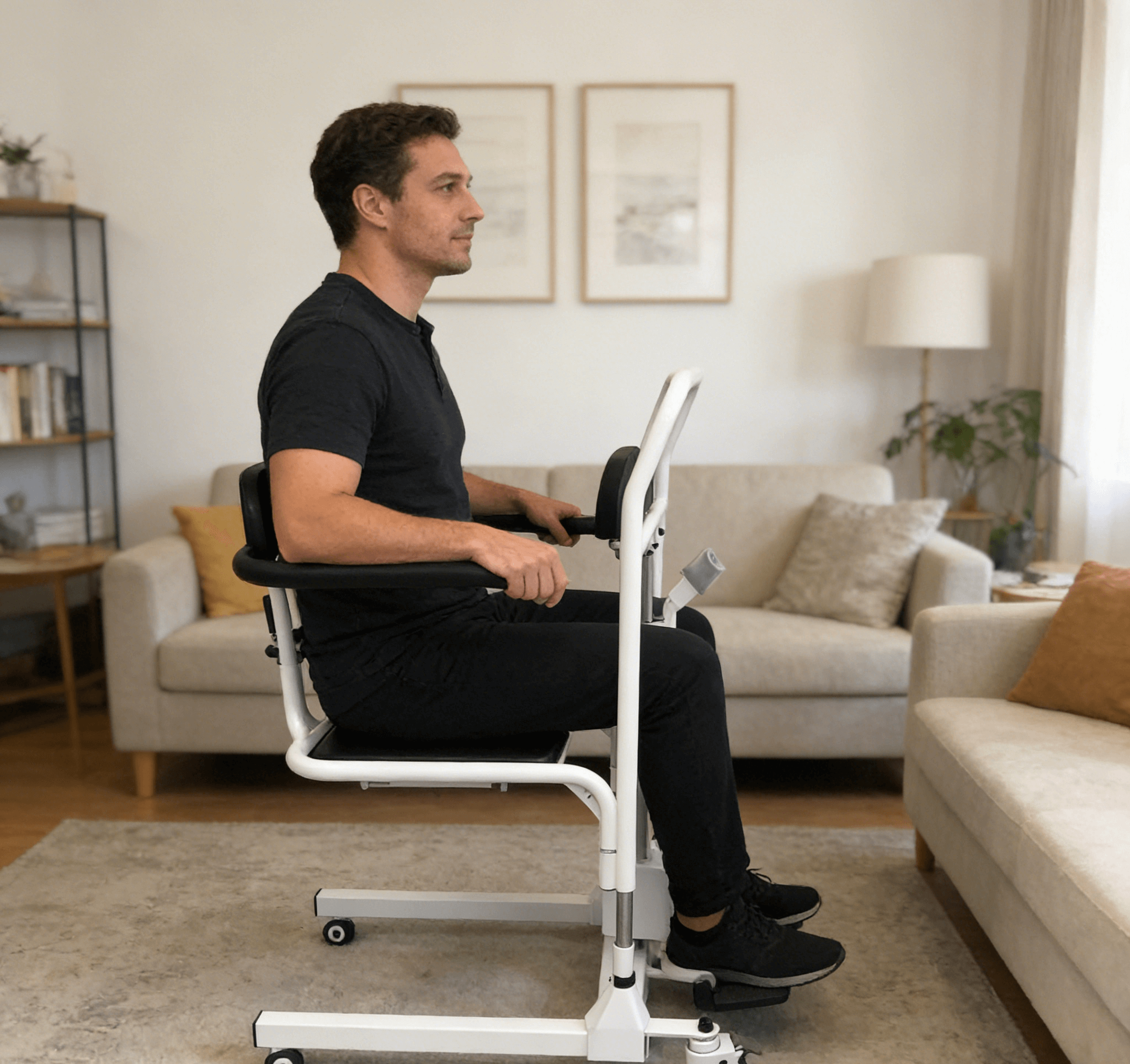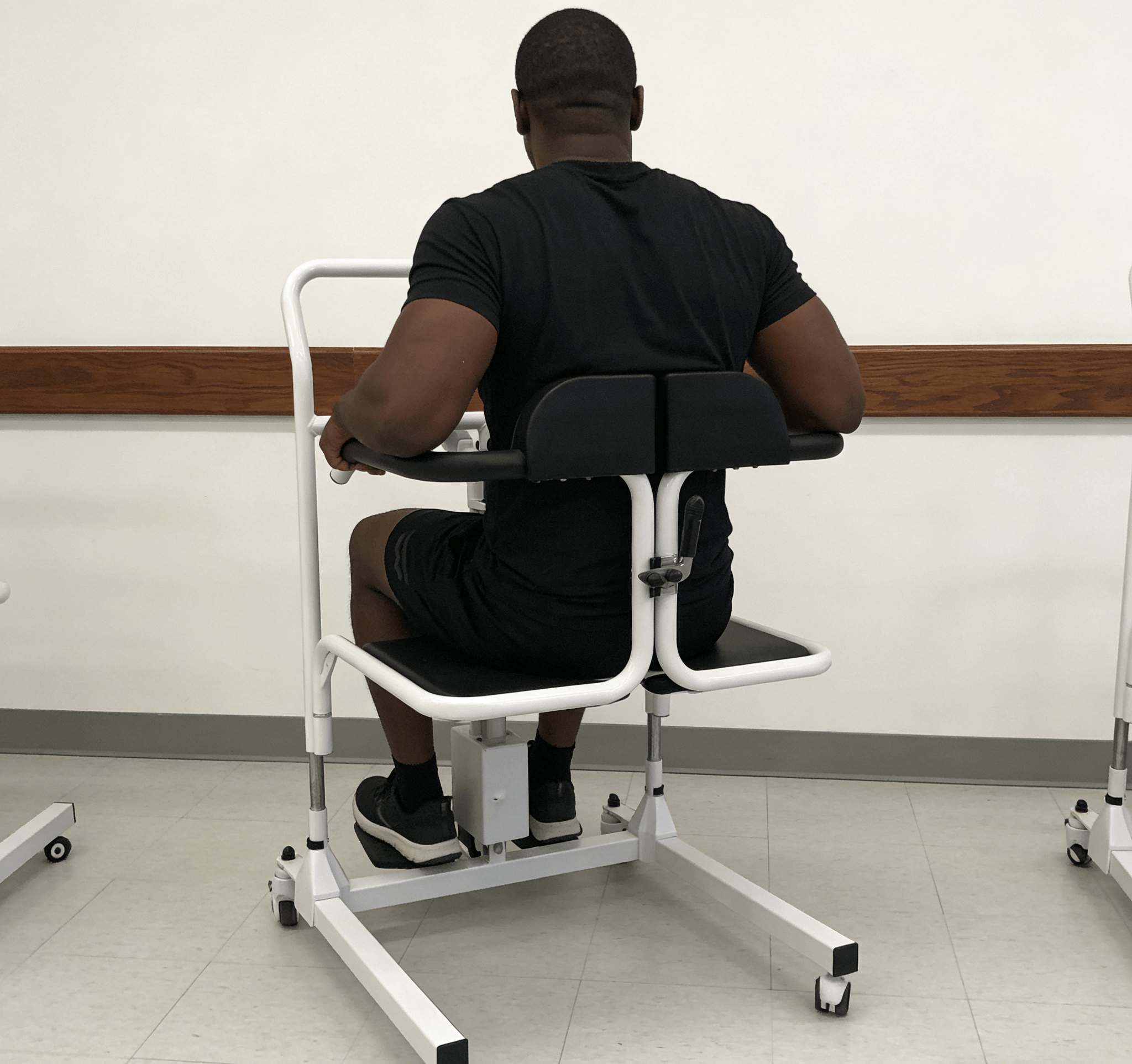
Category: Electric Transfer Chair
Posted by 2025-12-11 11:12
hoyer lift and swing
Hoyer Lift and "Swing Arm" or "Sling": Clarifying Terminology and Mastering Core Functions
When assisting individuals with limited mobility in transfers, the "Hoyer Lift" is an indispensable safety device in both home and institutional care settings. However, regarding its accessories or structure, users often confuse terms—for instance, mistakenly referring to a "sling" as a "swing," or simply calling the lift’s "swingable boom arm" a "swing." Though these misunderstandings seem minor, they can affect equipment selection and proper operation.
This article will clarify key concepts, helping you accurately identify the core components of a Hoyer Lift and grasp essential points for safe use.
I. First, a Clarification: "Swing" ≠ A Standard Accessory
In official medical device terminology:
Sling: A flexible load-bearing component that must be used with a Hoyer Lift. It wraps around the patient’s body to enable safe lifting and transfer.
Swing: Not an independent accessory, but a term describing the movement of the "boom arm"—meaning the boom arm can rotate left and right (usually 90°–180°). This allows transferring the patient directly from the side of the bed to a wheelchair or toilet without moving the lift’s base.
✅ Correct Phrasing Should Be:
"Hoyer lift with sling" (Hoyer Lift equipped with a sling);
"Hoyer lift with swinging boom" (Hoyer Lift equipped with a swing arm).
II. Analysis of Core Component: The Sling
The Role of the Sling
As the load-bearing component that directly contacts the patient’s body, the sling is mostly made of high-strength nylon, polyester, or waterproof non-woven fabric. It connects to the lift’s boom arm via four corner hooks and determines:
The patient’s comfort;
The stability of the transfer process;
Suitability for special scenarios such as toileting or bathing.
Common Types of Slings
Full-body sling: Wraps around the torso and thighs, suitable for patients with complete loss of mobility;
Seated/toileting sling: Features an open-back design for easy donning and doffing of pants;
Standing training sling: Used in conjunction with rehabilitation training;
Disposable waterproof sling: For incontinence or bathing scenarios to prevent cross-contamination.
⚠️ Important Reminder: Never use slings that are damaged, deformed, or exceed weight capacity! Always inspect the stitches and fasteners before each use.
III. Analysis of Structural Advantage: The Swinging Boom
What Is a Swinging Boom Design?
Traditional Hoyer Lift boom arms are fixed in a forward position. During transfers, the entire base must be pushed under the bed and then pulled out to the target location, which requires significant space. In contrast, models with a swinging boom ("Swinging Boom Lift") allow the boom arm to rotate horizontally left and right after being raised, enabling "in-place turning."
Core Value of the Swinging Boom
Space-saving: Particularly suitable for narrow bedrooms or bathrooms;
Fewer movements: One positioning adjustment suffices for multi-directional transfers;
Increased efficiency: Caregivers do not need to repeatedly push and pull the heavy base.
Applicable Scenarios
Narrow doorways in home bathrooms;
Limited passage space in multi-patient rooms of nursing homes;
Frequent transfers between bed ↔ wheelchair ↔ commode chair.
✅ Selection Tip: If the home space is narrower than 1.2 meters wide, prioritize electric or hydraulic Hoyer Lifts with a swinging boom.
IV. Common Principles for Safe Use
Regardless of whether the lift is equipped with a swinging boom, the following guidelines must be followed when using a Hoyer Lift:
Match the Sling to the Patient
Choose the appropriate sling type and size based on the patient’s weight, mobility level, and transfer purpose.
Test Balance
After lifting the patient 5–10 centimeters off the bed, pause to check for tilting or slipping before continuing the transfer.
Lock the Casters
Ensure the base casters are locked throughout the lifting and transfer process.
Clear the Path
Remove any obstacles on the floor in advance to ensure smooth movement of the base.
Prohibit Overloading
The maximum load capacity marked on the equipment nameplate (e.g., 180kg) includes the total weight of the patient, sling, and clothing.
V. Correcting Common Misconceptions
❌ "Slings are universal for all Hoyer Lifts"→ Sling hook sizes may not be compatible across different brands; always confirm compatibility.
❌ "The swing arm can rotate 360°"→ Most home-use models only support 90°–180° rotation; industrial-grade models may achieve over 270° rotation.
❌ "A swing arm eliminates the need for large space"→ The base still requires sufficient width to extend its support legs (usually ≥80cm); otherwise, it may tip over.
VI. How to Choose the Right Model for You?
Needs & Scenarios Recommended Configuration
Narrow space + frequent toileting transfers Electric + swinging boom + toileting sling
Limited budget + short-term use Manual hydraulic + fixed boom + full-body sling
Need for transfer during bathing Waterproof sling + stainless steel base lift
Caregiver with limited physical strength Fully electric + swinging boom + remote control operation
Conclusion
The value of a Hoyer Liftlies not in its metal and motors,but in turning a dangerous manual liftinto a stable, supported transfer.
And whether it is the "sling" or the "swinging boom,"both are indispensable details in this supporting process.
Remember:Correct terminology leads to correct choices;Correct choices lead to true safety.
May every caregiver,based on clear understanding,build a safe bridge from the bed to daily lifefor their loved ones.