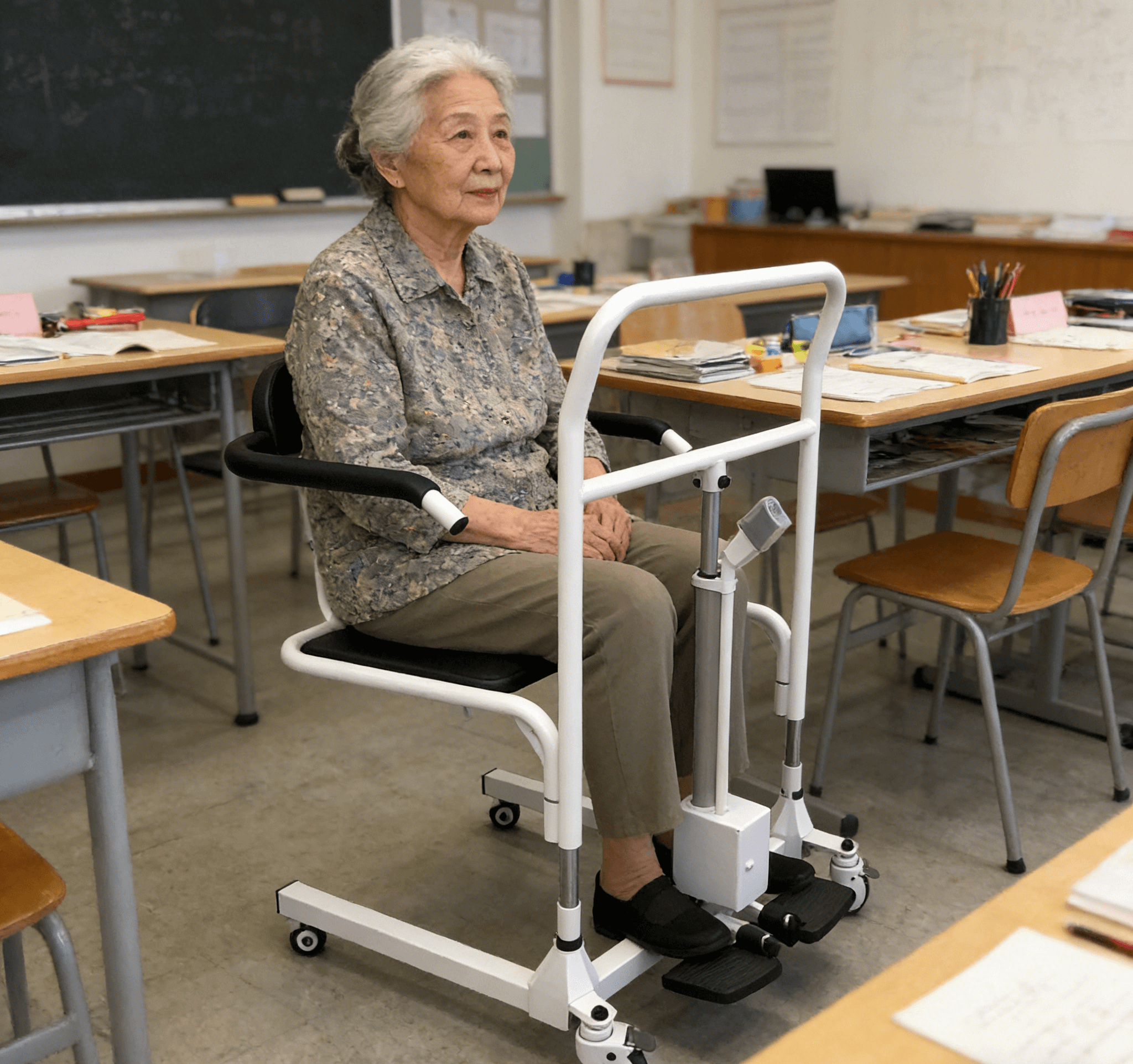
Category: Electric Transfer Chair
Posted by 2025-12-15 10:12
hoyer lift bar
The Core of Hoyer Lifts: A Comprehensive Guide to Booms/Beams
In a Hoyer Lift, the most prominent overhead component—the horizontal bar—officially goes by names such as boom, lifting bar, or suspension bar. Though its structure is simple, it serves as the bridge connecting the power source to the user. Its design and functionality directly impact the safety and comfort of transfers.
What Is a Boom?
A boom is a horizontally extending metal rod on the lift: one end connects to the main lifting column, and the other end suspends hooks. Its primary functions are:
Providing a lifting point: Offers a stable, suspended fulcrum for the sling and the user.
Enabling movement: Keeps the user away from the lift’s base during lifting/lowering to avoid collisions.
Key Features and Types
Fixed-Height vs. Rotatable
Fixed boom: The most basic type, unable to rotate horizontally. The user can only be lifted and lowered vertically.
Rotatable boom: A more common and versatile design. Booms can rotate horizontally (usually 180°, 270°, or 360°), allowing caregivers to easily transfer the user from above the bed to above a wheelchair—no need to exert effort moving the entire lift base. This is the top choice for most homes and institutions.
Number and Configuration of Hooks
The end of a boom typically has 2 to 4 hooks, which connect to the lifting mechanism via chains, straps, or cables.
Independent hooks: Allow caregivers to adjust the length of each hook individually—critical for balancing users with asymmetrical body shapes or making fine adjustments.
Safety latches: Hooks on modern lifts are equipped with safety latches (e.g., thumb latches) to prevent the sling from accidentally detaching during transfers.
"H-Type" vs. "I-Type" Booms
This is a common physical design distinction, mainly referring to the shape of the boom’s end.
I-Type boom: Features a simple structure, usually with 2 hooks. Suitable for standard symmetrical sling suspension.
H-Type boom: Has a wider crossbar at the end, typically with 4 hooks. This provides better stability and weight distribution, especially for users with larger body sizes or those needing extra trunk support. It more effectively prevents the user from swinging or tilting mid-air.
Why Is Boom Selection Important?
Safety and Stability
H-Type booms, with their 4-point support, offer superior stability—ideal for users with heavier weights, spasms, or asymmetrical body shapes.
Rotatable booms reduce the number of times caregivers need to push or pull the entire device, lowering the risk of lift tipping.
Caregiver Convenience
Rotatable booms make the transfer process smoother and more ergonomic. Caregivers can first lift the user off the bed, then easily rotate the boom to position them above the wheelchair, and finally lower them down.
Independently adjustable hooks simplify the process of balancing the user.
User Comfort
A stable, horizontal lifting process significantly enhances the user’s comfort and sense of security, reducing fear and discomfort caused by mid-air swaying.
Safety Precautions for Using Booms
Inspect Before Each Use
Visual inspection: Check for signs of bending, cracking, or wear on the boom.
Functional inspection: Ensure smooth rotation without jamming. Verify that the safety latches on all hooks work properly.
Proper Sling Suspension
Always ensure all attachment loops of the sling are securely hung on the hooks, and listen for the "click" of the safety latches locking into place.
Adjust hook lengths to keep the user in a horizontal, balanced position when lifted.
Watch the Movement Path
Before rotating the boom or lifting/lowering the user, always confirm there are no obstacles (e.g., lamps, fans, furniture) in the path.
Operate with smooth, slow movements—avoid sudden stops or starts.
Understand Weight Limits
Like the entire lift, the boom has a clear maximum weight capacity. Never overload it; otherwise, the boom may break or the lift may be damaged, leading to serious accidents.
Troubleshooting and Maintenance
Issue: Boom cannot rotate or rotates with difficulty
Possible causes: Lack of lubrication in mechanical parts, foreign objects jamming, or damaged internal gears.
Solution: Lubricate according to the manufacturer’s guidelines. If the problem persists, contact professional technicians for repairs.
Issue: Hook chains or straps get stuck
Possible causes: Twisted/kinked chains or worn straps.
Solution: Carefully straighten the chains/straps. If any wear or damage is found, stop use immediately and replace the parts.
Conclusion
The boom of a Hoyer Lift is far more than a simple metal rod—it is the core embodiment of the device’s functionality and safety. Choosing a lift with a rotatable H-Type boom and independent safety hooks will greatly improve care efficiency and user experience.
Before making a final decision, if possible, consult an occupational therapist or equipment supplier and ask them to demonstrate the use of different boom types. The correct selection and use of this key component ensure every transfer is safe, smooth, and dignified.