Category: Electric Transfer Chair
Posted by 2026-01-05 10:01
hoyer lift nurse

Hoyer Lift and Nurses: Professional Guardians in Safe Patient Transfers
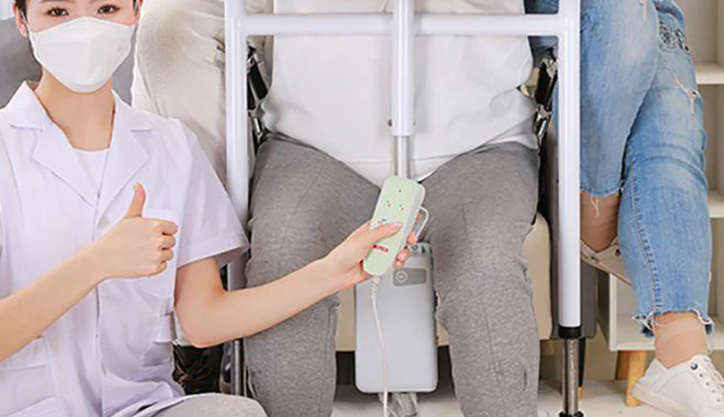
In hospital wards, rehabilitation centers, long-term care facilities, and even home care settings, nurses are often among the most frequent and critical users of Hoyer Lifts. They not only need to master the equipment's operating procedures proficiently but also take on multiple responsibilities, including assessing patients' needs, preventing injuries, training care teams, hoyer lift nurse and ensuring every transfer complies with clinical safety standards.
For nurses, a Hoyer Lift is far more than a mechanical tool—it is a shield to reduce the risk of occupational injuries, a bridge to protect patients' dignity, and a reflection of professional care capabilities. From the perspective of nurses, this article explores the core role, operating standards, common challenges, and best practice recommendations of Hoyer Lifts in clinical practice.
Why Must Nurses Master the Hoyer Lift?
According to data from the U.S. Occupational Safety and Health Administration (OSHA), musculoskeletal injuries (such as herniated lumbar discs) among nursing staff caused by lifting patients are the leading cause of workers' compensation claims in the healthcare industry. The Hoyer Lift is precisely a core component of the "Safe Patient Handling" strategy.
For nurses, proper use of a Hoyer Lift means:
Protecting themselves: Avoiding chronic strain or acute sprains caused by manual lifting.
Protecting patients: Preventing preventable injuries such as falls, skin tears, and joint dislocations.
Improving efficiency: When staffing is tight, one device can replace the collaboration of two or even three people.
Practicing professional ethics: Providing dignified and injury-free care based on evidence-based practice.
Therefore, the ability to operate a Hoyer Lift has become an important part of the basic competence of modern nurses.
The Key Role of Nurses in Hoyer Lift Use
1. Clinical Assessor
Before deciding whether to use a Hoyer Lift, nurses need to conduct a quick and comprehensive assessment:
The patient's transfer ability level (independent, minimal assistance, maximum assistance, fully dependent).
Weight, body type, muscle tone, cognitive status, and pain location.
Presence of contraindications (such as unstable fractures, severe osteoporosis).
Purpose of the transfer (e.g., bed-to-chair transfer, toileting, bathing).
Only patients assessed as "needing maximum assistance or fully dependent" meet the criteria for using a Hoyer Lift.
2. Equipment Selector and Preparer
Nurses need to select the appropriate type of equipment and sling based on assessment results:
Standard vs. bariatric (for weight loss/obese patients) models.
Full-body slings vs. toileting slings vs. mesh slings for bathing.
Manual vs. electric (considering care staffing and transfer frequency).
At the same time, they check the equipment status: whether the base legs are in good condition, hoyer lift nurse whether the battery is fully charged, and whether the sling has wear—these details are directly related to safety.
3. Operator and Supervisor
During the actual transfer process, nurses usually lead the operation process:
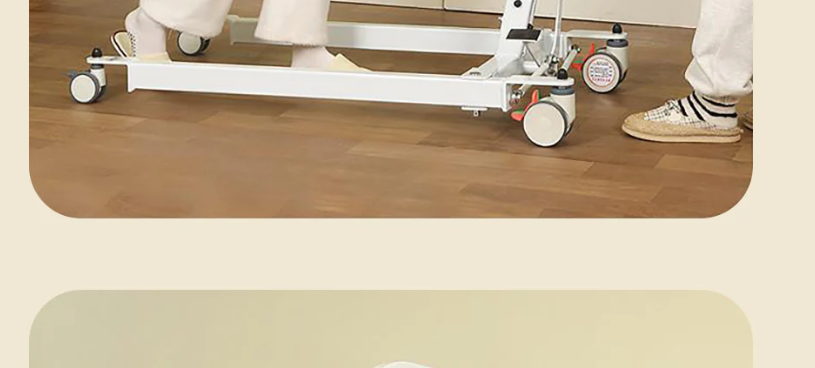
Extend the base legs and confirm they are locked.
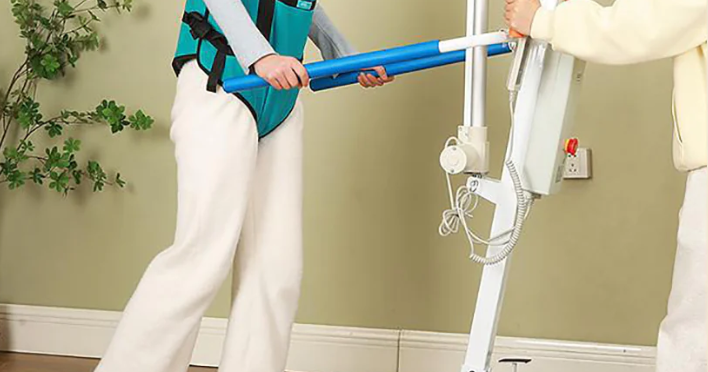
Assist the patient in putting on the sling and ensure it is in the correct position.
Connect the hooks and conduct a low-altitude test.
Lift and lower the patient smoothly, observing the patient's reactions throughout.
Arrange the patient's clothing after the transfer and ask about their comfort level.
For high-risk patients (e.g., agitated patients, those exceeding weight limits, or with unstable spines), nurses also need to coordinate with a second staff member to operate together and ensure smooth cooperation between the two.
4. Educator and Advocate
Nurses often need to popularize the importance of Hoyer Lifts to new colleagues, nursing assistants, patients' family members, and even doctors:
Correct the wrong notion that "a quick lift is harmless."
Instruct family caregivers on proper usage methods.
Promote the establishment of a "zero manual lifting" policy in the institution.
Report equipment failures or safety hazards and promote system improvements.
Common Challenges and Countermeasures
Despite the significant advantages of Hoyer Lifts, nurses still face many practical obstacles in their actual use:
Challenge 1: Time Pressure and Cumbersome Processes
During busy shift handovers or emergency treatments, nurses may skip safety steps (such as not locking the base legs or omitting the low-altitude test) to save time.→ Countermeasure: Incorporate Hoyer Lift operation into standardized processes. Management should arrange schedules reasonably to avoid sacrificing safety due to insufficient staffing.
Challenge 2: Insufficient Equipment or Delayed Maintenance
One Hoyer Lift is used by multiple wards at the same time, or the battery is dead and worn slings are not replaced in a timely manner.→ Countermeasure: hoyer lift nurse Nurses should proactively report equipment shortages and promote the establishment of an equipment tracking and preventive maintenance system.
Challenge 3: Patient Resistance or Non-Cooperation
Some elderly patients refuse to use the sling due to fear, shame, or cognitive impairment.→ Countermeasure: Communicate patiently and explain the safety of the device; allow patients to choose the color of the sling or participate in decision-making; involve social workers or psychological support if necessary.
Challenge 4: Lack of Unified Training
Different nurses have different operating habits—some operate with one hand, while others ignore the check of the release valve.→ Countermeasure: Institutions should provide annual hands-on refresher training and ensure consistency through skill assessments.
Best Practice Recommendations: From Compliance to Excellence
Always conduct a low-altitude test first: Even if you have used the device a hundred times, insist on lifting it 5 centimeters first to check stability.
Use two-person operation for high-risk transfers: hoyer lift nurse Do not take risks with the thought of "I can do it alone"—safety always takes priority over efficiency.
Record every use: Note the equipment model, sling type, and patient's reaction in nursing records to facilitate traceability and quality control.
Advocate a culture of "equipment as protective gear": Just like wearing gloves and isolation gowns, using a Hoyer Lift should be regarded as basic occupational protection.
Participate in equipment selection decisions: Frontline nurses best understand actual needs and should voice their opinions when purchasing new equipment.
Conclusion: Every Lift Reflects Professionalism
For nurses, a Hoyer Lift is not just a tool, but a convergence point of professional judgment, humanistic care, and professional responsibility. When a nurse squats down to adjust the position of the sling for a patient and says softly, "Don't worry, we'll take it slow"; when she insists on completing the full operation process during the night shift, even for just a few extra seconds of safety margin—these moments are the true reflection of the nursing profession's spirit.
In this profession that consumes both physical strength and emotions, the Hoyer Lift provides nurses not only with physical protection but also the confidence to provide care with peace of mind. What nurses bring to the Hoyer Lift, in turn, is warmth, judgment, and the brilliance of humanity.