Category: Electric Transfer Chair
Posted by 2026-01-05 10:01
hoyer lift news
Hoyer Lift News Focus: Safety Upgrades, Regulatory Changes, and Technological Innovations (2025–2026)
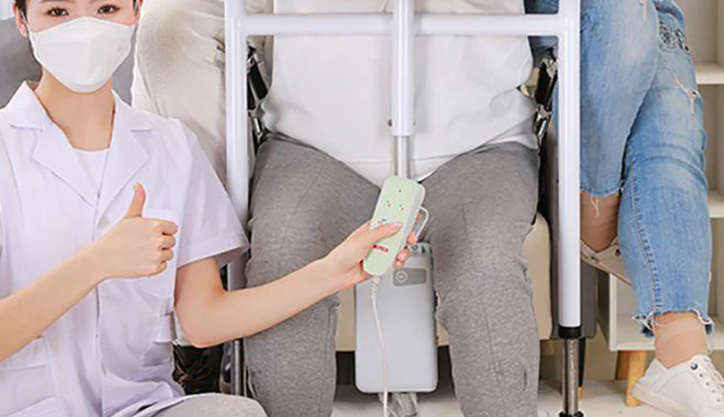
In recent years, with the accelerated global aging population and growing demand for high-quality care, the Hoyer Lift—a key medical device for safely transferring individuals with limited mobility—has been receiving unprecedented attention and undergoing transformations. From updates to federal regulations and breakthroughs in product technology, to safety accident warnings and the reshaping of industry standards, the Hoyer Lift is no longer just an auxiliary tool in the corner of hospital rooms. Instead, it has become a focal issue in medical safety, occupational health, and dignified care.
This article compiles important global and U.S.-based Hoyer Lift-related news events and trends from the end of 2025 to the beginning of 2026, providing timely and authoritative information references for family caregivers, medical institutions, and policymakers.
1. U.S. Medicare Fully Implements Prior Authorization for Hoyer Lifts (Effective January 2026)
In October 2025, the U.S. Centers for Medicare & Medicaid Services (CMS) officially announced that starting January 1, 2026, all Medicare beneficiaries must obtain prior authorization when applying for electric Hoyer Lifts (HCPCS code E0635). hoyer lift news This means Durable Medical Equipment (DME) suppliers will not be reimbursed if they deliver the equipment without approval.
The policy aims to curb abuse and ensure the equipment is only used by patients who have been clinically assessed as having a genuine need for "fully dependent transfer" assistance. According to CMS estimates, this measure could reduce improper payments by hundreds of millions of dollars annually while promoting more precise allocation of care resources.
Industry Response: Multiple DME suppliers have upgraded their electronic submission systems, and some state Medicaid programs are considering following suit with similar measures.
2. FDA Strengthens Sling Safety Supervision, Mandates Service Life Labeling
In November 2025, the U.S. Food and Drug Administration (FDA) issued a final rule requiring that starting July 2026, all newly marketed Hoyer slings must clearly display the maximum weight capacity, recommended replacement cycle, and material composition on their labels. Products lacking this information will be deemed "mislabeled" and banned from sale.
This initiative stems from multiple reports of fall accidents caused by aged and broken slings. The FDA emphasized, "Slings are life-supporting components, and their integrity is directly related to patient safety."
Major manufacturers, including Arjo (the former owner of the Hoyer brand), Medline, and Handicare, have proactively incorporated color-coded wear indicators and QR code tracing systems into their product lines. Users can scan the QR code to check the production date and recommended replacement time.
3. Ohio Nursing Home Fined Heavily for Improper Hoyer Lift Operation
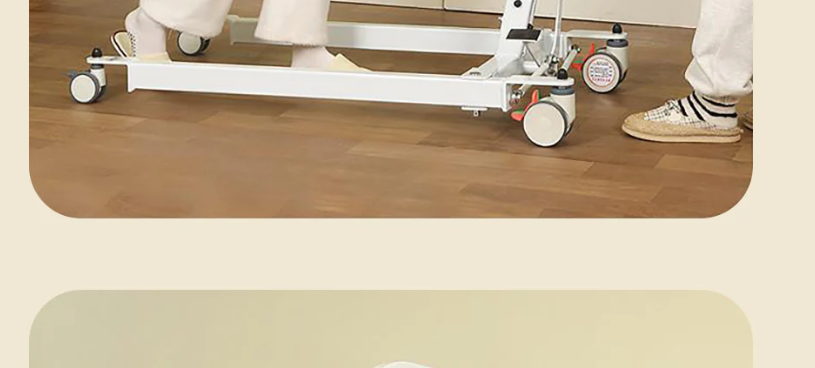
In September 2025, the Ohio Department of Health (ODH) issued a $48,000 fine to a nursing home in Columbus. The penalty came after a resident suffered a hip fracture when a Hoyer Lift tipped forward because its base legs were not locked during a transfer. The investigation revealed that the on-duty caregiver had not received formal training, and the institution had no records of the lift’s operation.
This case triggered a state-wide special inspection. The ODH announced that "verification of Hoyer Lift base leg locking" would be a mandatory check item in nursing home surprise inspections in 2026. Similar law enforcement actions have also been launched in states such as Florida and Texas.
4. Arjo Launches Next-Generation Smart Hoyer Lift with LINAK Drive and Remote Monitoring
In December 2025, Arjo—a global leader in patient mobility solutions and the parent company of the Hoyer brand—released the Hoyer Elevate Smart+ series. This model is equipped with a LINAK intelligent electric linear actuator system, supporting:
Bluetooth connectivity to a mobile app for real-time monitoring of battery status and usage count
Automatic recording of each transfer time and operator ID (requires pairing with an NFC wristband)
Automatic shutdown and alert triggering in case of overload or abnormal tilting
Arjo stated that the system is designed to help elderly care institutions implement "predictive maintenance" and "care quality auditing." hoyer lift news It is currently being piloted in Sweden and Canada, with plans to enter the U.S. market in the second quarter of 2026.
5. Family Caregiver Alliance Calls for Expanding Medicaid Sling Reimbursement Coverage
In November 2025, the National Family Caregivers Alliance for Care (NFCAC), together with multiple disability rights organizations, launched an initiative urging state Medicaid programs to include slings as an independent reimbursement item. Currently, most states only cover new slings when the main lift unit is replaced, forcing many families to use aged slings for extended periods due to cost concerns.
Fortunately, CMS approved that starting 2026, the national Medicare program will allow reimbursement for up to 2 slings per year—a move regarded as a significant step forward. Advocates are pushing for Medicaid to implement the same policy.
6. ISO Updates ISO 10535 Sling Safety Standard
In August 2025, the International Organization for Standardization (ISO) officially released the ISO 10535:2025 standard, which sets higher requirements for patient sling strength testing, material durability, and interface compatibility. The new standard specifically emphasizes:
Slings must pass a fatigue test simulating 10,000 lifting cycles
Mesh slings require additional wet-strength verification
All metal components must be rust-resistant and suitable for use in bathing environments
Major global manufacturers have begun certifying their products in accordance with the new standard, with a full transition expected by the end of 2026.
7. Public Awareness Grows: #HoyerLiftSafety Goes Viral on TikTok
Surprisingly, in the second half of 2025, the hashtag #HoyerLiftSafety gained rapid popularity on TikTok and Instagram. hoyer lift news Occupational therapists, nurses, and family caregivers posted short videos demonstrating comparisons between "correct vs. incorrect" operations—such as "unlocked vs. locked base legs" and "sling pressing the popliteal fossa vs. proper positioning."
One video posted by a California nurse @CareWithGrace received over 2 million views. She wrote, "Spending 10 seconds locking the base legs may save you a lifetime of regret." Social media is emerging as a new platform for popularizing Hoyer Lift safety knowledge.
Conclusion: From Tool to Responsibility—the Hoyer Lift Era Is Evolving
Today’s Hoyer Lift has long transcended its original definition as a "lifting machine." It is a mirror reflecting society’s respect for the elderly and people with disabilities; it is a defense line safeguarding the dual safety of patients and caregivers; and it is a signal that in the field of care, details equal ethics, and standards equal compassion.
With the implementation of multiple new regulations in 2026, there is reason to believe that future Hoyer Lifts will be smarter, safer, and more accessible. However, no matter how technology advances, real change always starts with that soft reminder before each operation: "Are the base legs locked?"