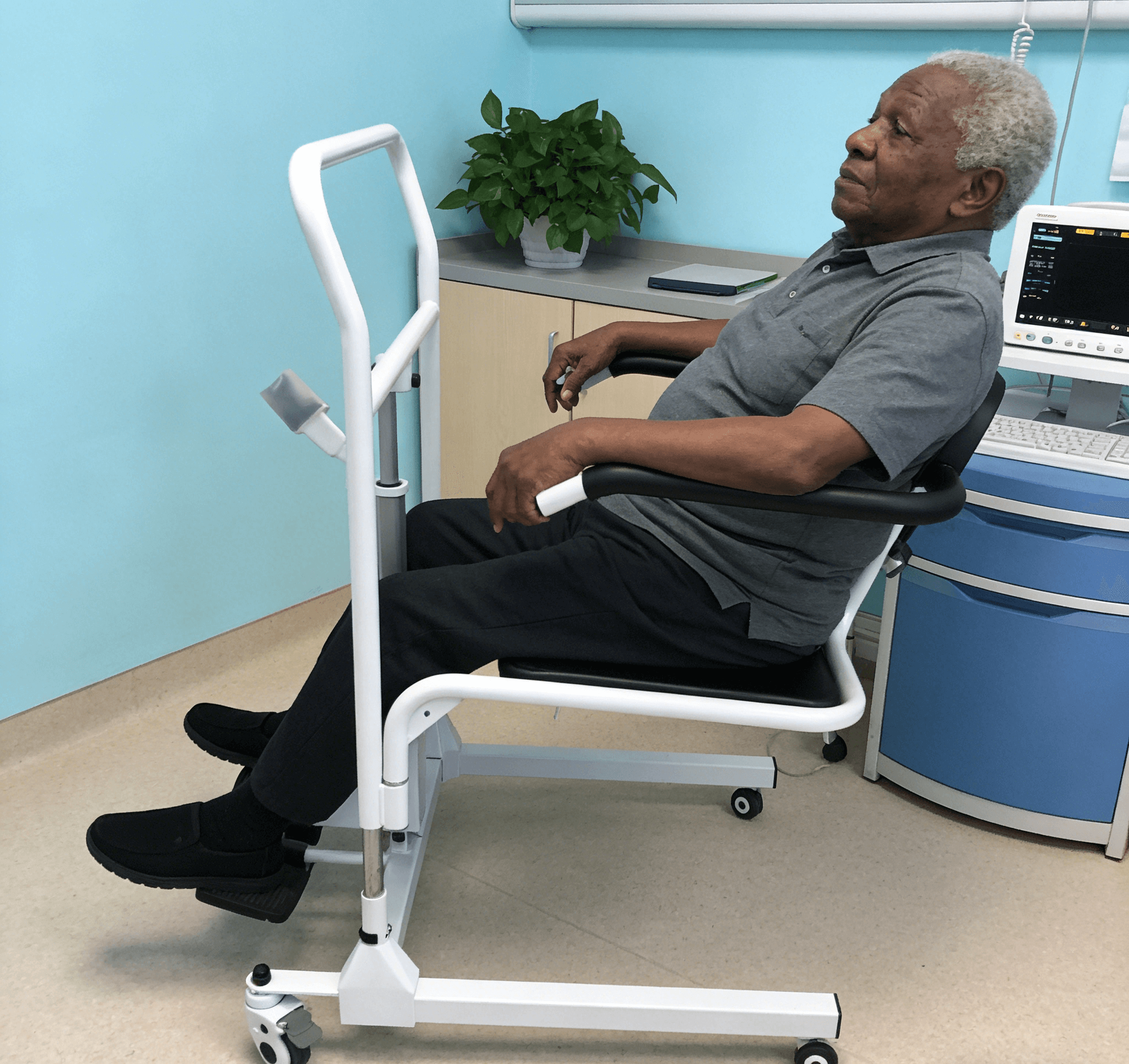
Category: Patient Lifts
Posted by 2025-12-16 10:12
hoyer lift dimensions
The Complete Guide to Hoyer Lift Dimensions: Why "Size" Matters for Safety and Suitability
When choosing a Hoyer Lift, its physical dimensions are just as important as its weight capacity. Choosing the wrong size can result in the device being unable to pass through doorways, lacking maneuverability in rooms, or even posing safety risks. This guide will take an in-depth look at the key dimensions of Hoyer Lifts to help you make an informed choice for your home or care environment.
Core Dimension Breakdown: Which Measurements Should You Focus On?
1. Base Dimensions: The Foundation of Stability
What is it? The length and width of the lift’s bottom support legs when fully extended. This is one of the most critical dimensions.
Why does it matter?
Stability: A larger base makes the lift more stable and less likely to tip over. Bariatric lifts typically have wider bases.
Passability: The base width determines whether the lift can fit through standard doorways (usually 30–36 inches) or enter narrow spaces like bathrooms.
Common range:
Collapsed width: Typically 18 to 24 inches, allowing passage through doorways.
Extended width: Up to 35 to 42 inches or wider when fully expanded for stability.
Extended length: 40 to 55 inches from front to back.
2. Lift Range: Capacity for Vertical Movement
What is it? The vertical distance the lift’s hooks can move from the lowest to the highest position.
Why does it matter?
Low-position accessibility: The minimum height must be low enough to lift the user from a low bed, sofa, or even the floor.
High-position flexibility: The maximum height must be sufficient to safely transfer the user over taller hospital beds or wheelchairs, while also providing enough space underfoot for caregivers.
Common range: Lift ranges typically fall between 50 and 80 inches.
3. Device Height and Boom Reach
What is it? The total height of the device when stored, and the horizontal distance the boom can extend.
Why does it matter?
Storage: The device’s height determines how much vertical space you need to store it.
Coverage: The boom’s reach dictates how far the user can be positioned from the lift’s center point—this is crucial for accurately placing the user onto a wheelchair or bed.
4. Device Weight
What is it? The weight of the lift itself.
Why does it matter?
Maneuverability: Lighter models (approximately 80–120 pounds) are easier for caregivers to push.
Stability: Heavier models (over 150 pounds) are usually more stable but require more effort to move.
How to Choose the Right Size for Your Space? A Decision-Making Process
Step 1: Measure Your Environment
Before purchasing, use a tape measure to record these key data points:
Doorway width: Measure the narrowest width of all doorways the lift will need to pass through.
Turning radius in rooms: In key areas like bedrooms and bathrooms, measure the diameter available for the device to turn.
Bed height and wheelchair seat height: Measure the height from the floor to the top of the mattress/wheelchair seat.
Ceiling height: Ensure the device’s height and lift range are compatible with your room’s ceiling.
Step 2: Match the Base Dimensions
Challenging spaces: If you have narrow doorways or limited bathroom space, prioritize models with "scissor-style" or "narrow-profile" bases. These models are very narrow when collapsed for easy passage, but still provide sufficient stability when extended.
Step 3: Evaluate the Lift Range
If you have an extremely low bed (e.g., a Japanese-style futon mattress) or a tall wheelchair, carefully check the device’s minimum and maximum heights to ensure they meet your specific needs.
Step 4: Consider Storage Needs
If space is limited, look for foldable models. Many lifts have booms that can fold downward and bases that can collapse, significantly reducing the storage space required.
Special Scenario: Dimension Considerations for Ceiling Lifts
For ceiling lifts, dimension considerations are entirely different:
Track coverage: This is the most important "dimension." You need to plan the track to precisely cover all key areas—from the bed to the bathroom and to chairs.
Hoist thickness: The hoist itself requires a certain amount of vertical space, which needs special attention in rooms with low ceilings.
Structural space: Installation requires access between ceiling joists, so there must be enough structural space to secure the track.
Practical Tips and Common Mistakes
Create a mock path: Use cardboard boxes or tape to mark the base dimensions of the lift you’re considering on the floor, simulating its movement and turning in your room. This is an excellent way to test suitability.
Consult a professional: Occupational therapists are the best choice for assessing home environments and recommending appropriate device sizes. They have extensive experience and can identify issues you might overlook.
Common mistakes:
Focusing only on price while ignoring size compatibility.
Assuming all lifts can fit through standard doorways.
Failing to consider the strength and space required for caregivers to move the lift when it’s carrying a user.
Conclusion
The dimensions of a Hoyer Lift are not just simple numbers—they are key factors that determine whether the device can operate safely and effectively in your specific environment. Taking the time to carefully measure your space, understand the significance of key dimensions, and seek professional guidance is an upfront investment that will bring long-term safety, convenience, and peace of mind. Remember: only the right size can make this powerful care tool truly helpful, not a hindrance.