Category: Patient Lifts
Posted by 2025-12-13 11:12
hoyer lift alone
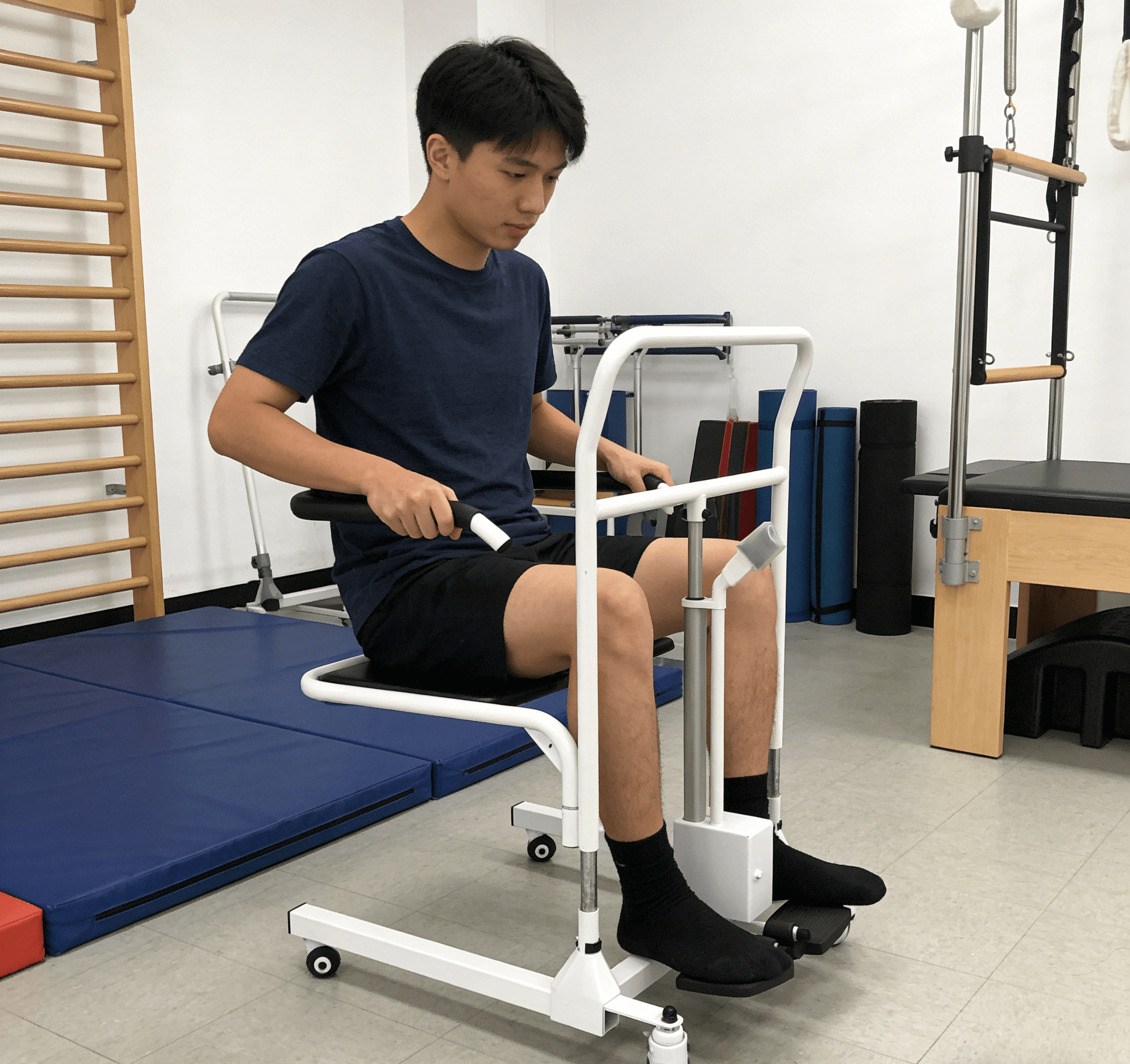
Using a Hoyer Lift Alone: Practical Challenges and Safety Boundaries
In many households, caregiving responsibilities often fall on a single person—an elderly spouse, an only child, or a live-in caregiver. When doctors recommend using a Hoyer Lift to assist with transfers, a common question arises: “Can I operate it alone?”
The answer is not a simple “yes” or “no”; it depends on a comprehensive assessment of the patient’s condition, the type of equipment, the environmental layout, and the caregiver’s operational skills. While Hoyer Lifts are designed to reduce physical strain on caregivers, operating one entirely unassisted still carries significant risks. This article will objectively analyze the practical feasibility of solo operation and provide actionable advice to maximize safety.
I. Can You Operate It Alone? It Depends on These Three Key Factors
1. The Patient’s Ability to Cooperate
✅ Solo operation may be attempted if:The patient is conscious, can follow simple instructions (e.g., “Lift your head a little,” “Hold onto the sling”), and has basic trunk control.
❌ Solo operation is strictly prohibited if:The patient is completely paralyzed, agitated, has a history of epilepsy, or cannot maintain sitting balance. Even with a lift, if the patient suddenly struggles or slips while suspended in the air, a single caregiver will almost certainly be unable to gain control of the situation.
2. The Type of Hoyer Lift
✅ Electric models are more feasible:Fully electric Hoyer Lifts (e.g., Drive Medical Elite) support remote-controlled lifting and lowering, allowing the caregiver to keep both hands on the patient for stability throughout the process.
❌ Manual hydraulic models pose high risks:They require one hand to operate the pump and the other to support the patient, making it easy to neglect one task while focusing on the other—especially during the lowering phase.
3. The Accessibility of the Transfer Path
A minimum of 90cm of space beside the bed;
Flat, dry flooring with no thresholds;
Wheelchair/toilet positioned securely with reliable brakes;
No interference from pets, children, or clutter.
II. Five Non-Negotiable Safety Prerequisites for Solo Operation
Even if the above conditions are met, the following five measures must be implemented. If not, seek temporary assistance without exception:
1. Receive Formal Training
Watching official instructional videos is far from sufficient.It is recommended to contact community nurses, rehabilitation therapists, or equipment suppliers for at least one on-site hands-on training session.Key skills to master: Sling application, center-of-gravity judgment, and emergency lowering procedures.
2. Use “Solo-Friendly” Slings
Choose split-leg slings, which can be slid under the patient from behind without needing to roll them over.Avoid traditional full-body slings, which require two people to lift the patient’s hips for application.
3. Ensure the Equipment Has Remote Control or Delay Functions
Electric models should support wireless remote control, allowing the caregiver to operate the lift while standing beside the patient.Some high-end models have a “pause” button, enabling position adjustments mid-lift/lowering.
4. Set Up Emergency Assistance Mechanisms
Keep a mobile phone within easy reach and activate voice assistants (e.g., “Hey Siri, call emergency services”);Install fall detection sensors or call bells in the room;Inform neighbors or relatives of your transfer schedule and ask them to be alert for unusual sounds.
5. Never Skip the “No-Load Test”
Before each use, perform a no-load lift/lower test to confirm the equipment is functioning properly.Check that the casters are locked and the base is fully extended.
III. Recommended Solo Operation Process (for Electric Models)
Preparation Phase
Lower the bed to its lowest position, remove bed rails, and clear the transfer path;
Position the wheelchair/toilet in a fixed spot and engage the brakes firmly;
Extend the lift’s base and lock the casters.
Sling Application
Ask the patient to lie on their side, then slide the split sling under their back and thighs;
Once the patient is lying flat, fasten the buckles and ensure the sling is not twisted.
Connection and Lifting
Securely attach the four-point hooks to the sling;
Stand beside the patient, placing one hand gently on their back and holding the remote control with the other;
Slowly lift the patient 10cm off the bed, then pause to check for balance.
Movement and Lowering
Move the lift directly above the target location (wheelchair/toilet);
Lower the patient slowly while guiding their hips to align with the seat;
Only unfasten the sling once the patient is fully seated securely.
Reset
Reinstall the bed rails and adjust the backrest;
Move the lift to a corner for storage and charge it (for electric models).
IV. “Solo Risks” That Are Absolutely Prohibited
❌ Operating the lift alone on wet, slippery bathroom floors;❌ Transferring a patient whose weight exceeds 80% of the lift’s rated capacity (e.g., using a 150kg lift for a 130kg patient);❌ Using damaged, aged, or non-original slings;❌ Transferring the patient immediately when they are in pain, agitated, or have just taken sedatives;❌ Attempting to block a potentially tipping lift with your body.
V. Alternative Strategies If No Assistance Is Available
If you are in a long-term solo caregiving situation, consider the following solutions:
1. Apply for Community Support
Contact your local “in-home elderly care service center”—some cities offer free transfer assistance 1–2 times a day;Programs like Medicaid Waivers (U.S.) or long-term care insurance (pilot cities in China) may cover the cost of temporary caregivers.
2. Adjust Daily Schedules
Complete all necessary transfers during the day (e.g., bathing, toileting, and activities in the morning), and minimize nighttime transfers;Use bedpans and waterproof pads to reduce the need for nighttime transfers.
3. Upgrade Equipment
Invest in a ceiling track system (though initial costs are high, it truly enables safe solo operation);Or choose an intelligent transfer robot with automatic following functions (e.g., early pilot products).
VI. Conclusion: Safety Is Not About “Toughing It Out”—It’s About Wisdom
Solo caregiving is already difficult enough;There’s no need to hide potential risks behind “I can handle it.”
True strengthIs not about shouldering everything alone,But about recognizing your limits,Knowing when to use tools, seek help, and set boundaries.
A Hoyer Lift can reduce physical burden,But it cannot replace a second pair of eyes, a second pair of hands, or a second judgment.
May your caregiving journeyBe filled with love and responsibility,And also with protection and respect for yourself.