Category: Patient Lifts
Posted by 2026-01-08 10:01
hoyer lift requirements
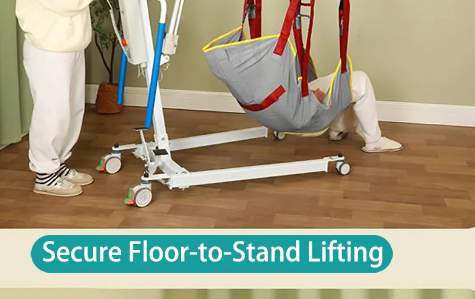
Assessing Hoyer Lift Needs: A Complete Guide to Ensuring Safety and Dignity
Introducing a Hoyer Lift for a family member with limited mobility is a crucial decision. It is not just about purchasing or renting a device, but about establishing a safe and sustainable mobility solution for both the caregiver and the care recipient. When searching for “hoyer lift requirements,” there is much more to consider than just the product model itself.
This guide will help you comprehensively evaluate the core needs for introducing a Hoyer Lift, including the physical environment, the care recipient’s conditions, the caregiver’s capabilities, and regulatory standards—ensuring you make the most informed and safe choice.
I. Medical and Physical Needs Assessment: The Starting Point
Before considering any equipment, a professional medical and physical assessment must first be conducted.
Care Recipient’s Physical Condition (Assessed by a Doctor or Occupational Therapist):
Weight and Weight-Bearing Capacity: This is the most critical indicator. Is the care recipient completely unable to bear weight, or can they bear partial weight? This will determine the transfer method.
Physical Mobility: What is the care recipient’s range of joint motion? Is there joint contracture? This affects the choice of sling type (e.g., full-back slings, leg slings).
Cognitive and Cooperative Abilities: Can the care recipient understand instructions and cooperate with movement? Anxiety or resistance requires special communication skills and potentially more inclusive slings.
Skin Condition: Is there a risk of pressure ulcers? The sling’s material, stitching, and pressure points must not exacerbate skin issues.
Caregiver’s Physical Condition:
Does the caregiver have back pain, shoulder problems, or strength limitations? hoyer lift requirements One of the core purposes of a Hoyer Lift is to protect caregivers from strain injuries.
II. Environmental and Spatial Needs: Is Your Home Ready?
A Hoyer Lift operates in a real home environment, so spatial considerations are critical.
Equipment Size and Maneuverability:
Base Width: The lift’s outriggers must fit smoothly between the spaces beside beds, wheelchairs, and toilets. Be sure to measure the width of these narrow passages.
Equipment Height: Ensure that from the lowest to the highest position, the lift will not hit the ceiling, chandeliers, or ceiling fans.
Equipment Weight and Storage: Consider the weight of the equipment and whether you have space to store it. Foldable models may be more suitable for small spaces.
Access Paths:
Plan the complete movement path from the bed to chairs and the bathroom. Clear wires, carpet edges, or other obstacles from the floor to ensure the casters can move smoothly.
III. Equipment and Technical Needs: Choosing the Right Model
Faced with different types of Hoyer Lifts, you need to choose based on specific needs.
Hoyer Lift Types:
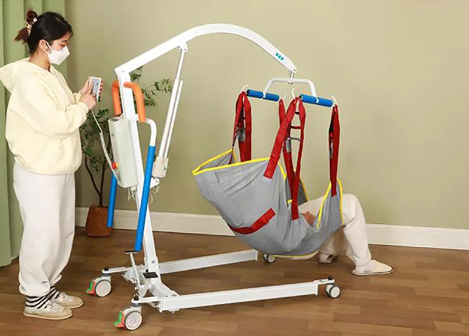
Manual Hydraulic Lifts: The most common type, operated via a manual pump. They are more affordable and easy to maintain but require some physical effort from the caregiver.
Electric/Battery-Powered Lifts: Controlled by buttons for lifting and lowering, saving effort and ensuring precise control. Suitable for caregivers with limited strength or situations requiring very smooth transfers.
Sling Types:
Full-Back Slings: Provide comprehensive trunk support, ideal for care recipients who cannot sit up independently or have extremely weak core strength.
Leg-and-Back Slings: More versatile, allowing the care recipient to remain seated—convenient for transfers to toilets, etc.
Stand-Up Slings: Suitable for care recipients with partial lower limb strength, as they assist in completing the standing motion.
Weight Capacity:
The maximum weight capacity of the selected equipment must exceed the care recipient’s weight, with a safety margin included.
IV. Training and Operational Needs: The Core of Safety
“Having equipment” does not equal “knowing how to use it safely.” Training is a mandatory requirement.
Professional Training:
Request on-site operational training from an occupational therapist or qualified medical equipment supplier. hoyer lift requirements They can guide you on how to properly fit the sling, balance the center of gravity, operate the equipment smoothly, and comfort the care recipient.
Team Collaboration:
In the initial stage, it is recommended that two caregivers operate the lift together: one primarily responsible for operating the equipment, and the other focusing on stabilizing and comforting the care recipient—ensuring no mistakes are made.
V. Financial and Regulatory Needs
Payment Sources:
Health Insurance: If the “medically necessary” criterion is met, Medicare Part B may cover rental or purchase costs. However, this requires a doctor’s prescription and acquisition from a certified supplier.
Private Insurance: Contact your insurance company to understand its Durable Medical Equipment (DME) coverage policy.
Out-of-Pocket Payment: Understand the cost difference between rental and purchase.
Safety Standards:
Ensure the equipment meets the safety standards of your country (e.g., FDA standards in the United States). Purchase or rent from formal channels, and check if the equipment has safety certification marks.
Conclusion: A Dynamic Needs Checklist
The needs for introducing a Hoyer Lift are not static. It is a dynamic checklist that requires re-evaluation as the care recipient’s physical condition, care environment, and financial situation change.
Before making a final decision, it is strongly recommended to consult an occupational therapist or physical therapist. hoyer lift requirements They can conduct a comprehensive home assessment, integrating the care recipient, caregiver, and environment to provide you with the most professional and personalized needs analysis and product recommendations. A wise upfront investment is a long-term guarantee of safety and dignity.