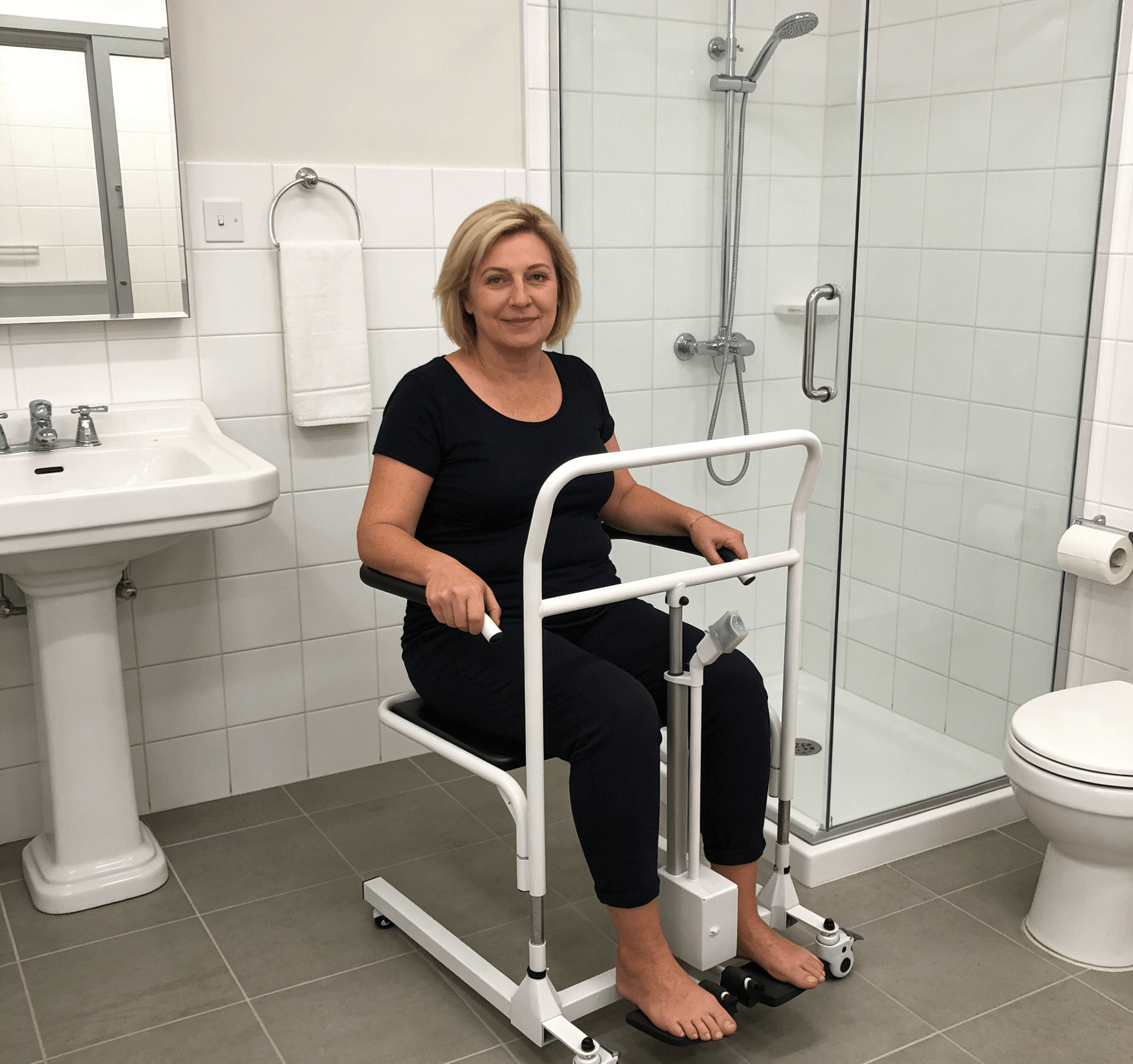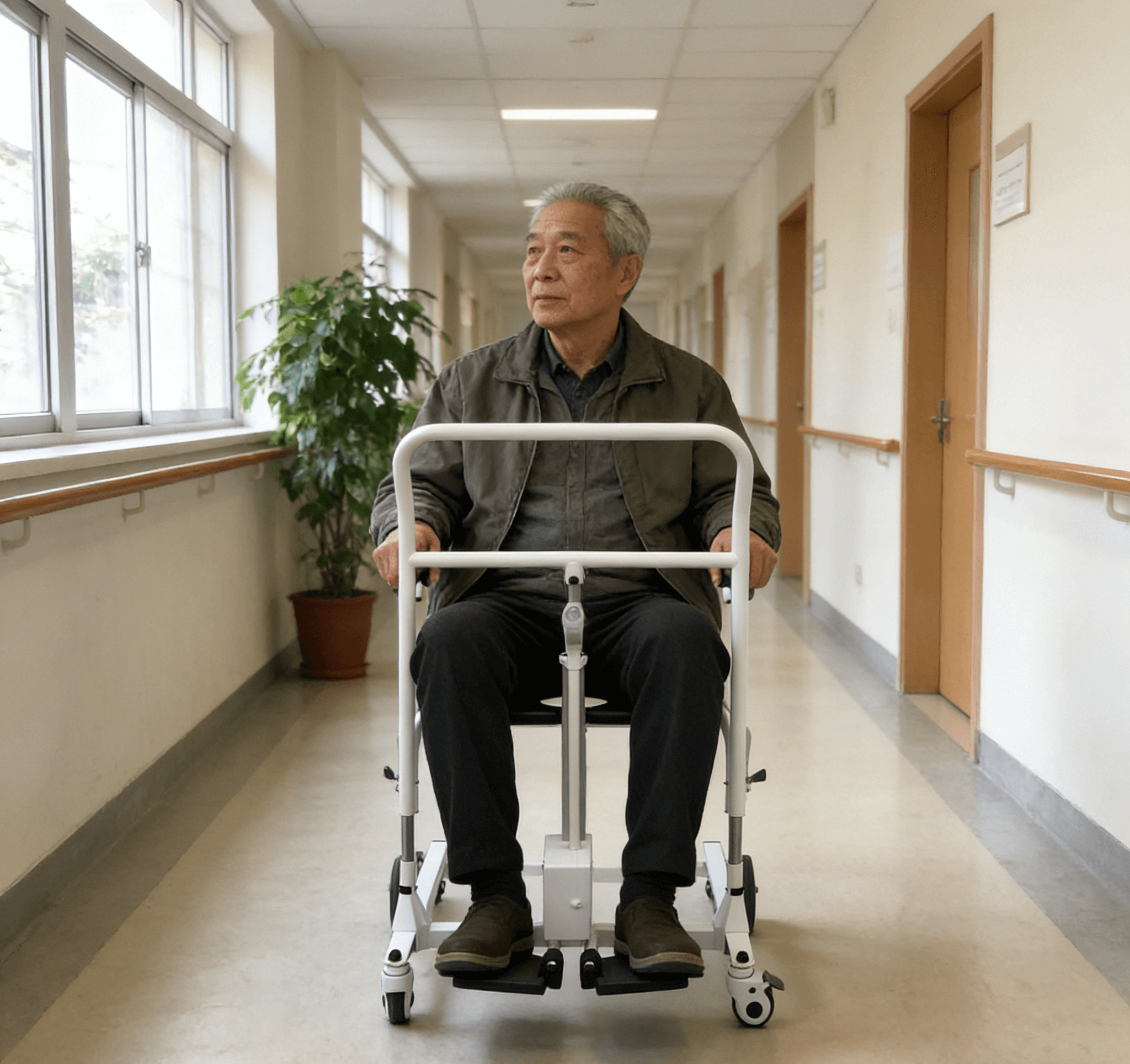
Category: Electric Transfer Chair
Posted by 2025-12-17 10:12
hoyer lift experience
The Experience of Using a Hoyer Lift: More Than Just Lifting, It’s the Remolding of Care Relationships
In medical device catalogs, a Hoyer Lift is defined as a "patient transfer assistance device." However, in countless families’ mornings and late nights, it carries far more than just a technical function. It is the salvation for caregivers’ aching backs, the last line of defense for the dignity of people with disabilities, and a gentle testament to family love that endures even under extreme pressure.
This article will not discuss specifications or models; instead, it will share the real stories and feelings of people who actually use Hoyer Lifts—because the true experience always lies beyond the instruction manual.
I. From the Caregiver’s Perspective: "Finally, I Don’t Have to Risk Ruining My Back Anymore"
Aunt Li, 62, has been taking care of her bedridden husband (who suffered a stroke) alone for three years.
"For the first two years, I carried him up by myself. Every time I moved him from the bed to the wheelchair, it felt like a tug-of-war—on one side was his weight, and on the other was my back, which was almost breaking. Once I strained my back and had to lie on the floor for half an hour before I could get up to make a call...
Later, a community nurse recommended a Hoyer Lift. On the day I used the electric model for the first time, I pressed the remote control and watched the sling steadily lift him up. Tears immediately welled up in my eyes. It wasn’t because the device was so advanced; it was because—I could keep taking care of him without destroying my own health first."
For many family caregivers, the Hoyer Lift first brings physical liberation. It transforms "manual carrying" into "mechanical collaboration," allowing elderly children, frail spouses, and even single mothers to provide care without sacrificing their own health.
Yet the adaptation process is not easy.
"At first, I was always afraid the sling wasn’t fastened properly, and my hands shook more than his when lowering him," one daughter admitted. "It wasn’t until my dad said, ‘Take your time lowering me; I’m not in a hurry’ that I gradually learned to trust the machine—and trust myself too."
II. From the Care Recipient’s Perspective: "At Least, I’m Not Just a Piece of Luggage to Be Dragged Around"
Mr. Zhang, 58, has been completely disabled due to a spinal cord injury for five years.
"The hardest part isn’t being unable to move; it’s feeling like I’ve become a burden to my family. Before, when they dragged me from the bed to the chair, I could see them gritting their teeth and hear them panting. That guilt was more tormenting than any pain.
Now with the Hoyer Lift, I still can’t move, but the process is quiet and smooth. The sling holds me up, like a gentle hug. Once, after my mom finished operating it, she smiled and said, ‘The lift went really smoothly today.’ In that moment, I felt like I was still a ‘person’—not just a ‘task’ that needed to be handled."
For people with disabilities, the Hoyer Lift brings not only physical safety but also the restoration of psychological dignity. No dragging, no awkward physical entanglement, no groans of pain—transfer becomes a rhythmic, predictable daily ritual.
However, some also admit to discomfort: "The sling pinches my shoulders," "I’m a bit scared hanging in mid-air," "I feel like a piece of cargo." This reminds us: equipment is just a tool; true care lies in communication and attention to details during operation—a simple "We’re going to lift you now," a pause to check in, a soft cloth padded under the armpits—all can make the experience completely different.
III. From the Professional Caregiver’s Perspective: "Safety Isn’t a Choice, It’s a Bottom Line"
Nurse Wang has worked in a nursing home for ten years and operates a Hoyer Lift more than a dozen times a day.
"We’ve seen too many accidents happen because people ‘cut corners’: the sling slipping because it wasn’t put on properly, the base tipping over because the brakes weren’t secured, dragging someone directly just to save time... A Hoyer Lift isn’t a panacea, but using it correctly can prevent 90% of transfer-related injuries.
What matters most to me isn’t how expensive the machine is, but whether family members are willing to learn. Once, I taught a son to operate it, and he practiced for three whole days—just to make sure his mom was safe. In that moment, I knew this machine had found the right person."
In professional settings, the Hoyer Lift is the cornerstone of occupational safety. Caregivers have a high incidence of lumbar disc herniation, mainly due to repetitive lifting. A reliable Hoyer Lift, combined with standardized training, can significantly reduce the rate of occupational injuries.
But Nurse Wang also emphasizes: "No matter how good the equipment is, if you’re in a hurry or try to take shortcuts, it becomes a source of risk. Experience has taught me: slow is actually the fastest way."
IV. Details You Only Understand After Using One
The first thing to do in the morning isn’t to turn on the light, but to check the battery level;The sling must be completely dried after washing, otherwise it will smell moldy and easily cause skin allergies;An electric model, charged overnight, lasts for two days—but the battery always seems to drain faster on rainy days;For a manual model, rhythm is more important than strength when pumping the hydraulic lever;The most reassuring sound is the soft hiss of hydraulic fluid flowing back when the boom slowly lowers.
These trivial details form the texture of real life.
V. Conclusion: Seeing the "Person" in Every Lift and Lower
A Hoyer Lift can’t speak,
But it witnesses countless silent acts of love:
The perseverance of children who refuse to give up even when their backs ache,The restraint of parents who don’t want to be a burden,The professionalism and patience between strangers.
What it lifts up,Is a body that can’t move on its own;
What it holds up,Is the hope a family refuses to let go of, even in hardship.
The true care experience,Isn’t in the specification sheet,But in the words spoken after every steady lowering:
"All right, you’re sitting safely now."
May everyone who uses a Hoyer Lift,Not only gain safety,But also feel—
The possibility of being treated with tenderness.