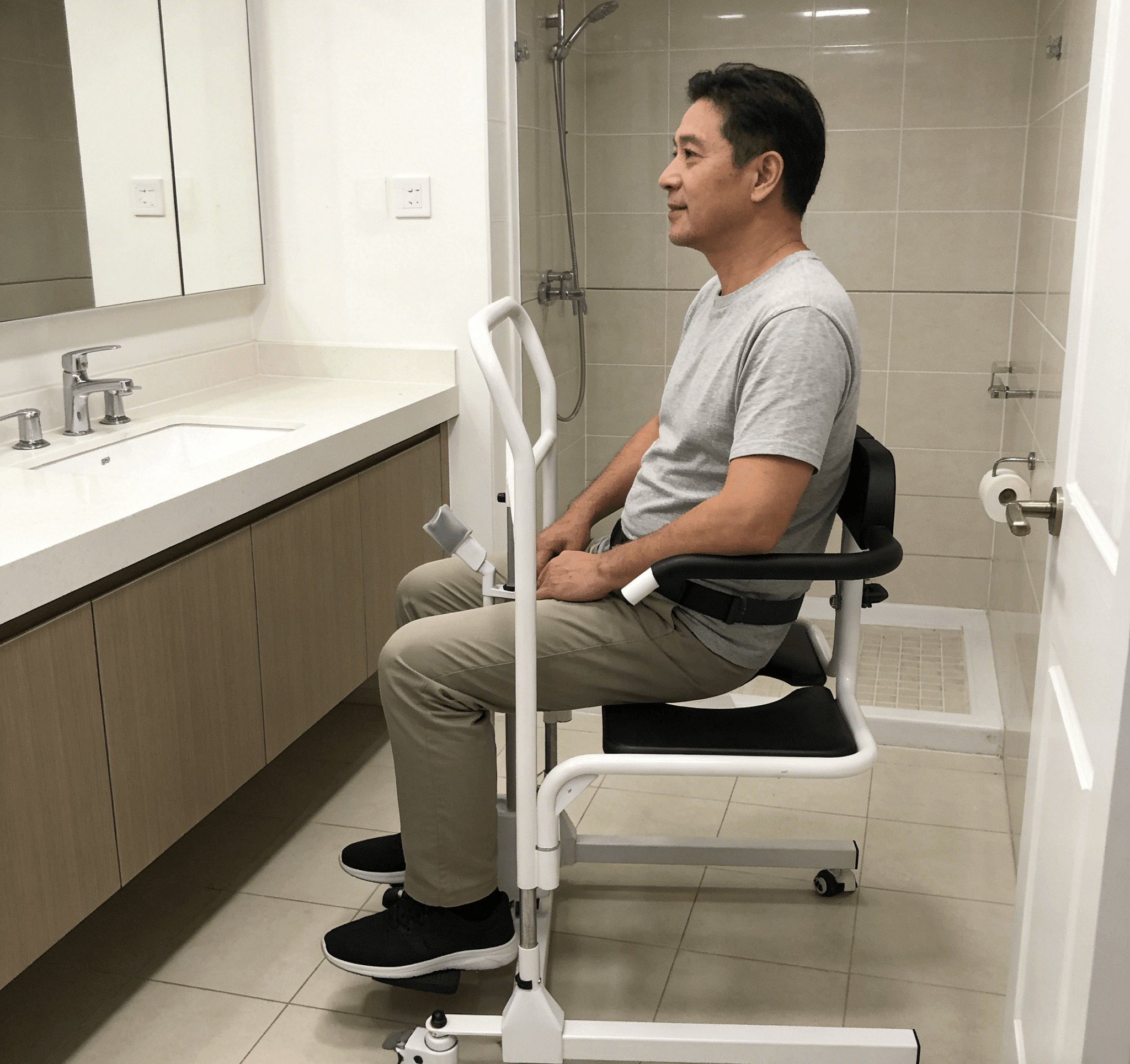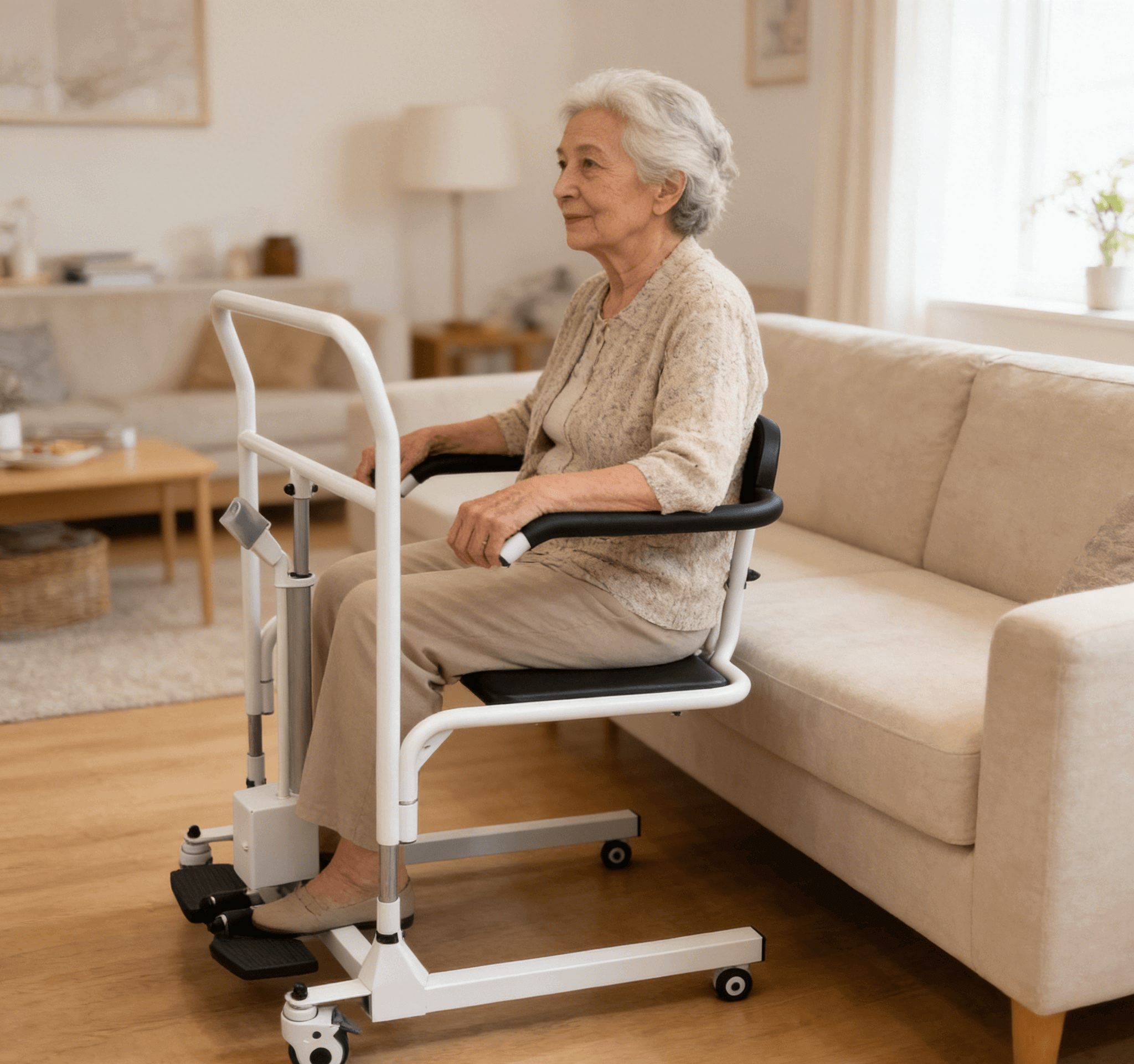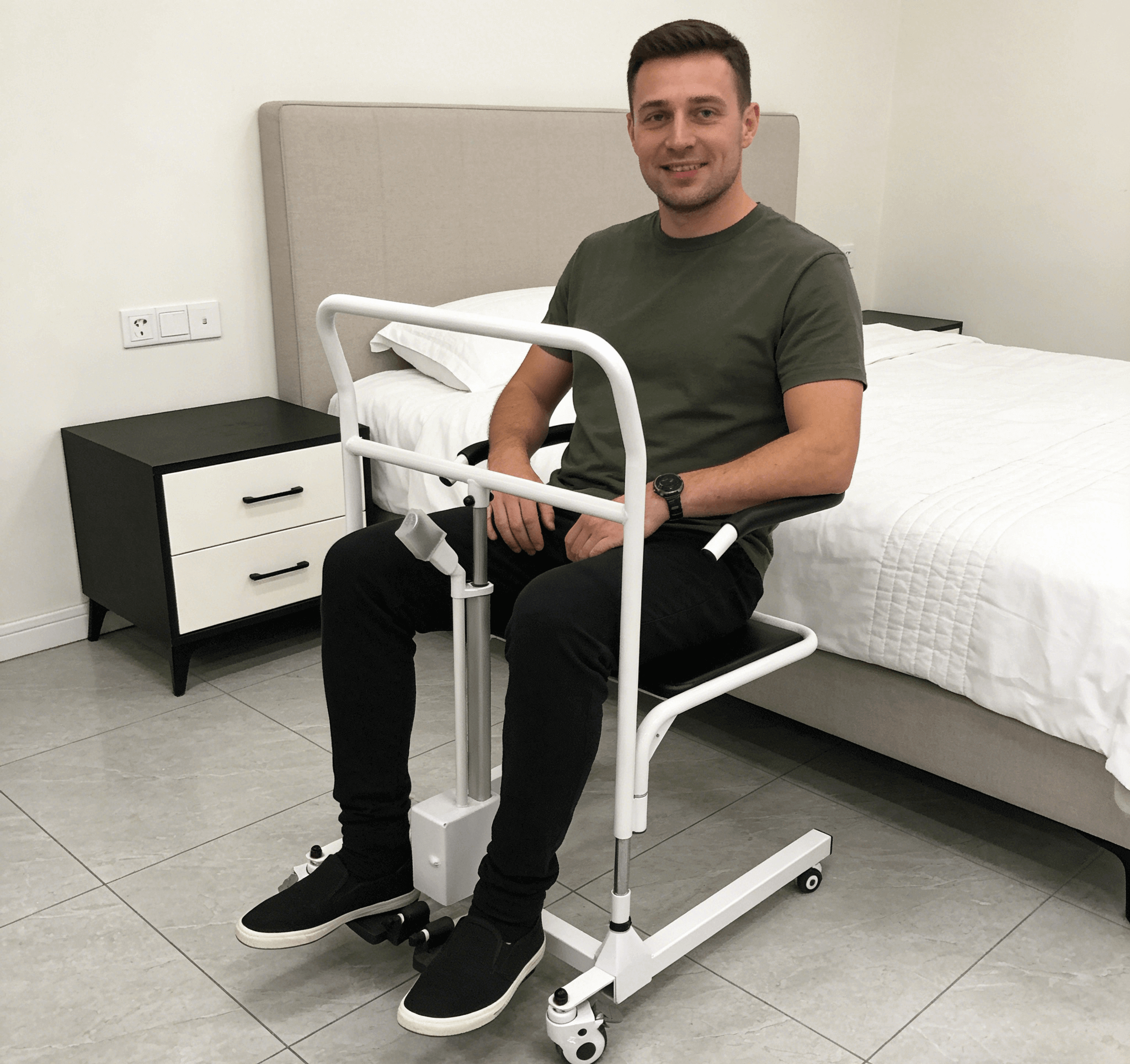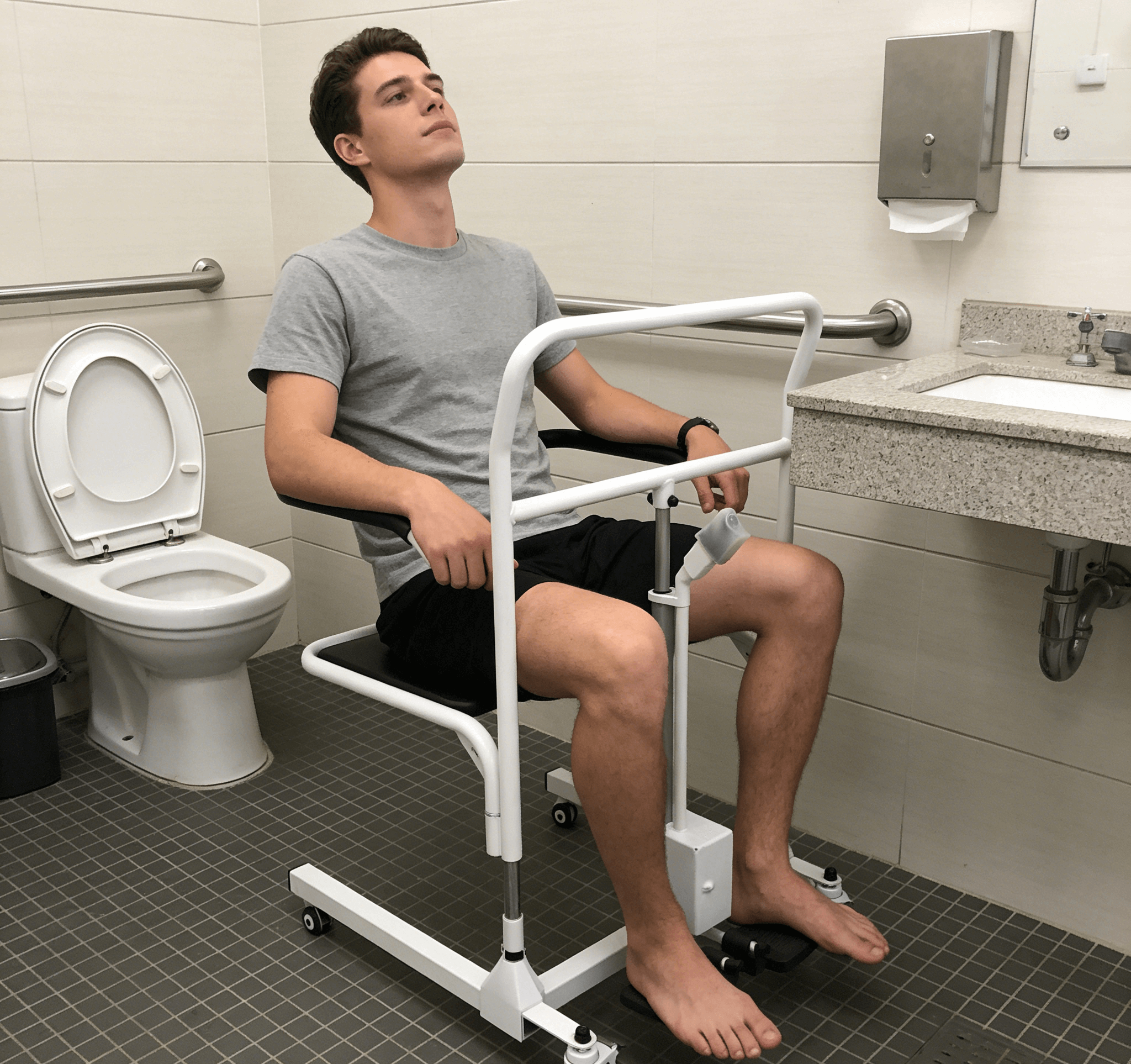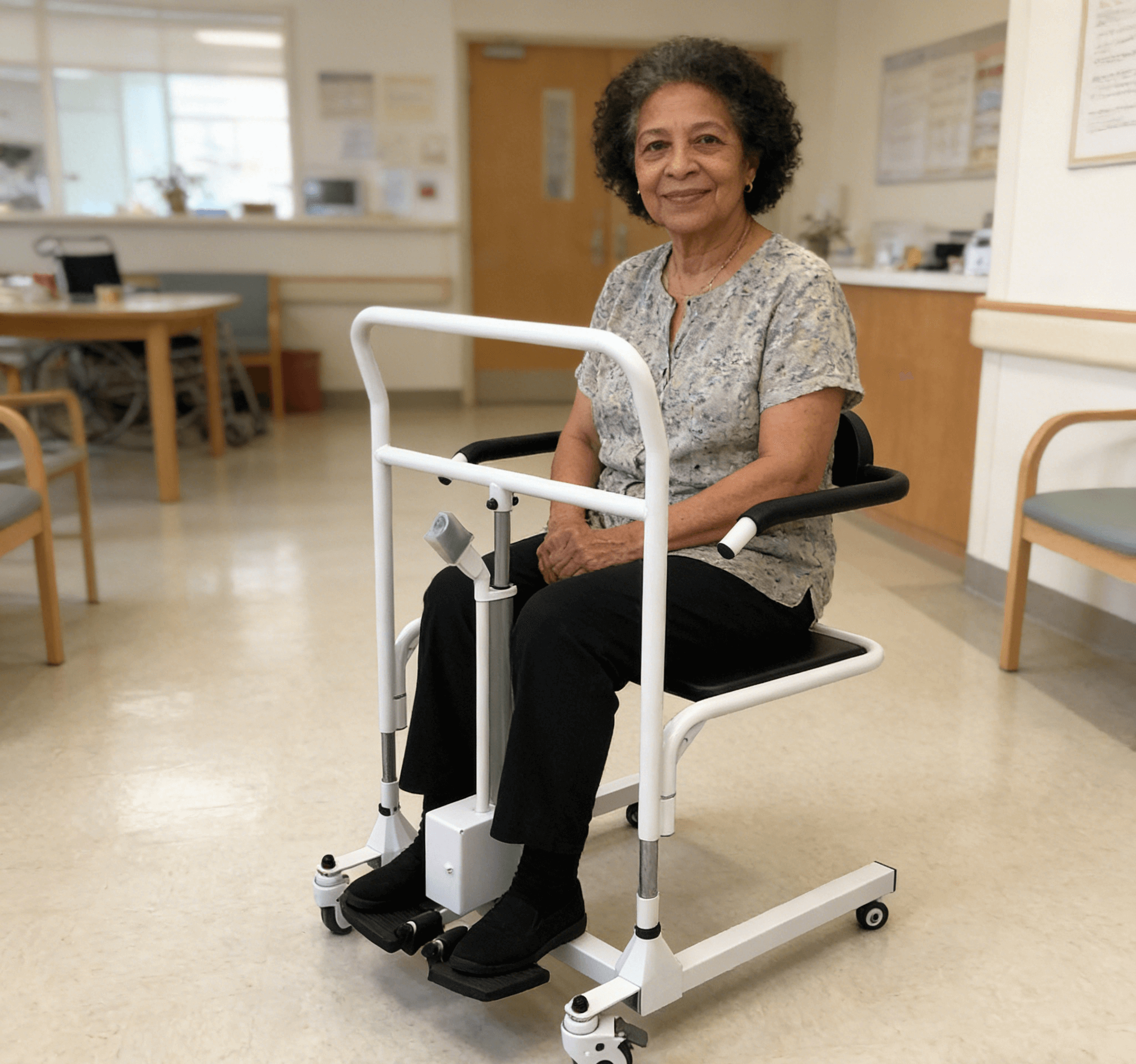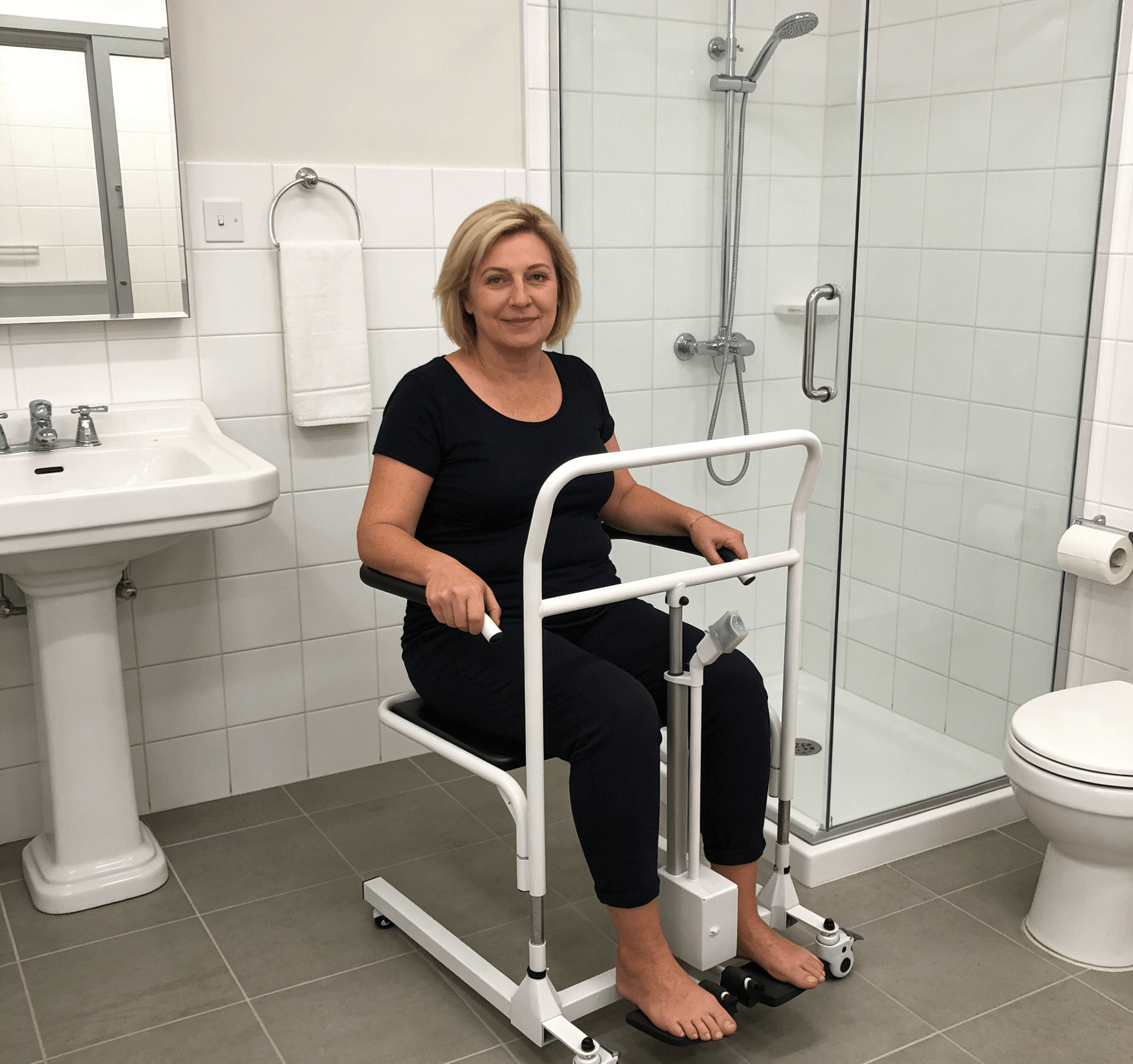
Category: Electric Transfer Chair
Posted by 2025-12-17 10:12
hoyer lift equipment
Detailed Explanation of Hoyer Lift Equipment: More Than Just the Main Unit, It’s a Complete Safe Transfer System
When people mention "Hoyer Lift", the image that often comes to mind is a lifting device with a boom. However, what truly determines whether a transfer is safe, comfortable, and efficient goes far beyond the main unit itself—it is a complete system composed of the main unit, slings, base, control system, and auxiliary accessories.
Understanding each component of this equipment and how they work together is a prerequisite for ensuring safe long-term use. This article will take you into the "equipment world" of Hoyer Lifts, comprehensively explaining their composition and operational logic from core parts to details.
I. Main Unit: The "Skeleton and Engine" of the Transfer System
The main unit is the core structure of a Hoyer Lift, usually consisting of the following key parts:
1. Base
Mostly designed with a triangular or quadrangular shape, equipped with swivel casters;
Sliding legs can retract inward, making it easy to slide under standard beds;
Equipped with brakes at the bottom to prevent sliding during lifting and lowering.
2. Mast & Boom
The boom is U-shaped to suspend the patient;
Height-adjustable (usually 80–180 cm) to fit different beds/chairs;
Mostly made of high-strength steel or aluminum alloy, balancing load-bearing capacity and portability.
3. Lifting Mechanism
Manual models: Lifting is achieved by pressurizing the hydraulic pump handle, and lowering is controlled by loosening the valve;
Electric models: Built-in motor and battery, with precise control of lifting/lowering speed via a remote control;
All models are equipped with an emergency manual lowering valve, allowing safe descent even in case of power failure.
✅ Tip: The selection of the main unit should match the frequency of use, the caregiver’s physical strength, and spatial conditions.
II. Sling: The "Second Skin" for Close Protection
The sling is the part that directly contacts the patient’s body, and its importance is no less than that of the main unit. Choosing the wrong sling may lead to slipping, pressure sores, or even falls.
Common Types:
Full-Body Sling:Wraps around the torso and legs, suitable for patients with complete mobility impairment, and is the most commonly used type.
Toileting Sling:Features an open design at the hip for easy toilet use, but only for short-term use.
Standing Sling:Supports partial weight-bearing training, used for patients in the rehabilitation stage.
Hygiene (Waterproof) Sling:Made of PVC or coated nylon, used for bathing, with quick-drying and antibacterial properties.
Bariatric Sling:Wider and thicker, with stronger load-bearing capacity, reducing local pressure.
Key Selection Points:
The size must match the patient’s height and weight;
The stitching should be flat without protrusions to avoid skin friction;
The buckles should be secure, and colors should be used to distinguish left and right (to prevent incorrect wearing).
⚠️ Warning: Slings are consumables. It is recommended to replace them every 6–12 months, or stop using them immediately if wear is detected.
III. Power Supply and Control System (Exclusive to Electric Models)
Rechargeable Battery: Mostly 24V lead-acid or lithium batteries, supporting 20–30 lifting cycles on a single charge;
Intelligent Charger: Automatically switches to trickle charging after full charge to prevent overcharging;
Wireless Remote Control: Waterproof design with clear buttons, some with battery level display;
Low Battery Alarm: Reminds to charge in time to avoid power failure during transfers.