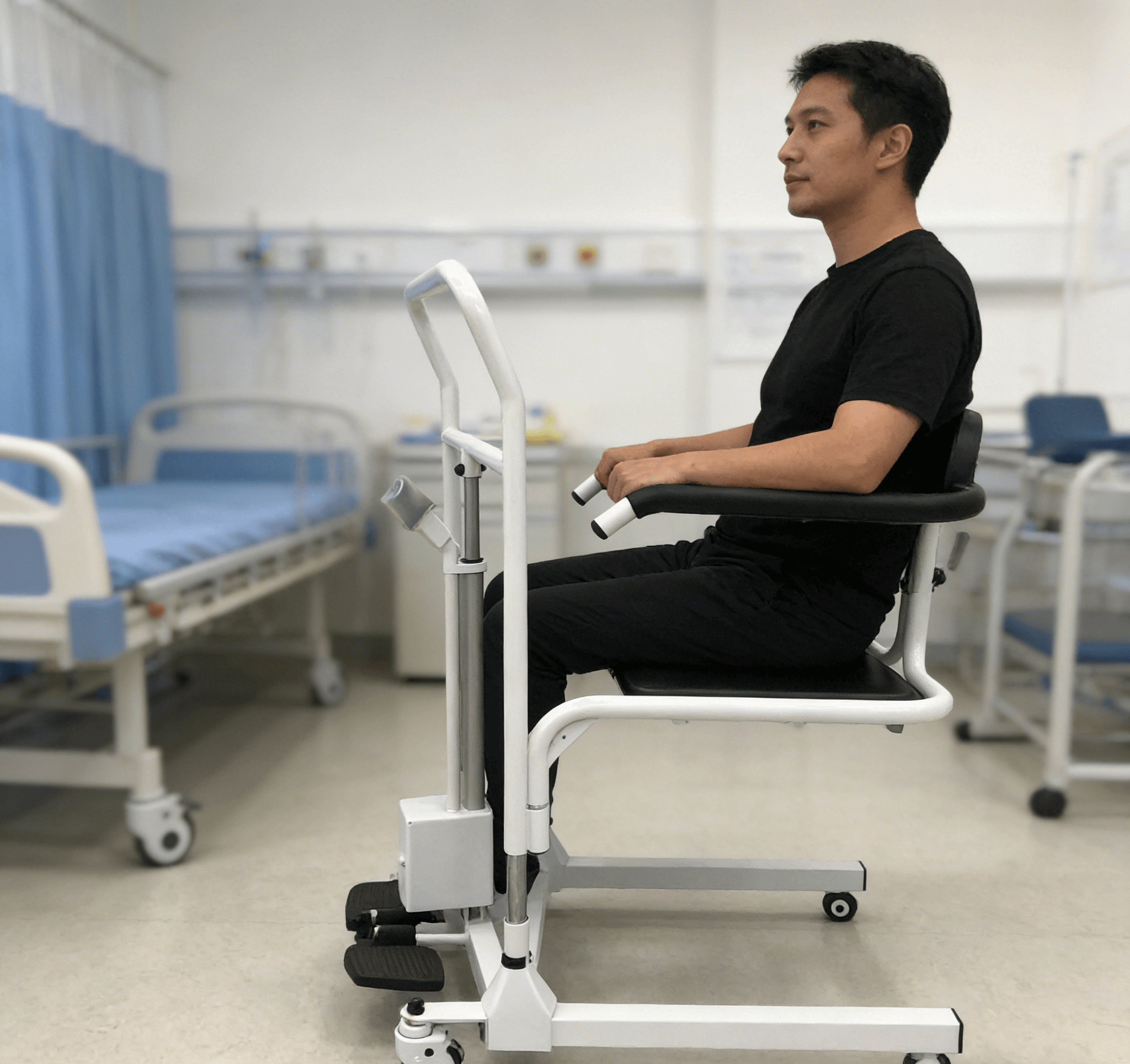
Category: Patient Lifts
Posted by 2025-12-12 10:12
hoyer lift actuator
Hoyer Lift Actuator: The Invisible "Heart" That Determines Stability in Every Lift and Lower
Beneath the metal frames and boom arms of a Hoyer Lift, the component that truly gives it "life" is the quietly operating actuator. Whether it’s the manually pressed hydraulic pump or the hum of an electric linear actuator, the actuator is responsible for converting operational commands into smooth lifting and lowering movements—it is the "heart" of the entire device.
If the actuator fails, even the sturdiest frame cannot complete a safe transfer. However, many users only focus on load capacity or slings, while overlooking the type, condition, and maintenance of this critical component. This article will take you deep into understanding the essence and practical knowledge of Hoyer Lift actuators.
I. What is an Actuator?
The actuator is the core mechanical or electromechanical system in a Hoyer Lift that enables the lifting and lowering function. It receives commands from the control handle or buttons, pushing the boom arm upward or slowly lowering the patient. Based on the power source, it is mainly divided into two types:
1. Hydraulic Actuator
Most commonly used in manual or semi-electric Hoyer Lifts;
By manually pressing the pump lever, hydraulic oil is pushed into the cylinder, lifting the piston to achieve elevation;
When lowering, the pressure relief valve is opened, oil flows back, and the boom arm slowly descends by gravity;
Advantages: Simple structure, low cost, no power supply required, high reliability;
Disadvantages: Requires physical effort to operate; frequent use may cause fatigue.
2. Electric Linear Actuator
Used in fully electric Hoyer Lifts;
A motor drives a lead screw or belt to push the linear telescopic rod for lifting and lowering;
Controlled via a remote control or handle buttons, no manual effort needed throughout the process;
Advantages: Effortless operation, smooth lifting/lowering, supports precise fine-tuning;
Disadvantages: Relies on batteries, higher cost, requires regular charging.
✅ Simple Identification Method:
If you need to "repeatedly press the handle" → Hydraulic actuator;
If you only need to press the "up/down button" → Electric linear actuator.
II. How Does the Actuator Affect User Experience?
1. Lifting Speed and Stability
A high-quality hydraulic system with sufficient air bleeding ensures smooth lifting and lowering without jolts;
For electric linear actuators, if the motor power is insufficient (<100W), it may slow down or make abnormal noises under load.
2. Noise Level
Hydraulic models are almost silent, suitable for nighttime use;
Electric models produce slight motor noise, but high-end models adopt noise-reduction designs.
3. Emergency Capability
Hydraulic models can still be operated manually even if not used for a long time;
If the battery of an electric model is dead and there is no backup power, the emergency manual lowering valve (usually a knob or pull cord) must be activated.
III. Common Malfunctions and Cause Analysis
❌ Malfunction 1: Boom Arm Fails to Lift
Hydraulic models: Oil circuit blockage, hydraulic oil leakage, insufficient air bleeding;
Electric models: Dead battery, burned-out motor, faulty limit switch.
❌ Malfunction 2: Boom Arm Slowly Lowers Automatically
Hydraulic models: Aging of the pressure relief valve seal, causing slow oil backflow;
Electric models: Failure of the internal brake in the actuator, requiring factory repair.
❌ Malfunction 3: Abnormal Noise or Jamming During Lifting/Lowering
Lack of lubrication on the piston rod;
Foreign objects inside or metal wear;
Structural deformation caused by overloading.
⚠️ Important Reminder: Do not disassemble the actuator by yourself! The hydraulic system contains high-pressure oil, and the electric linear actuator has precision gears. Operation by non-professionals may cause permanent damage or personal injury.
IV. Daily Maintenance Recommendations
For Hydraulic Actuators:
Check every 6 months if the hydraulic oil is turbid or insufficient (some models allow refilling of special hydraulic oil);
Regularly clean the exterior of the pump body to prevent dust from entering the valve;
If not used for a long time, operate it several times a month to maintain the elasticity of the seals.
For Electric Linear Actuators:
Charge the battery after each use to avoid deep battery discharge;
Wipe the outer tube of the actuator with a dry cloth; do not rinse with water;
Check if the wires are damaged and if the plug is loose.
V. How to Focus on the Actuator When Purchasing?
Clarify Needs:
If the caregiver has good physical strength and the lift is used infrequently → Hydraulic models are economical and reliable;
For frequent use or elderly caregivers → Prioritize electric models.
Check Motor Parameters (for Electric Models):
Recommended power ≥100W;
Battery capacity ≥2Ah, supporting more than 15 lifting/lowering cycles.
Confirm Emergency Functions:
Must be equipped with a manual emergency lowering device to prepare for power outages.
Brand and Warranty:
Choose brands that provide a 2–3 year warranty for the actuator (e.g., Drive Medical, Invacare, high-end series of Yuwell).
VI. Special Reminder: Do Not Confuse "Actuator" with "Control Handle"
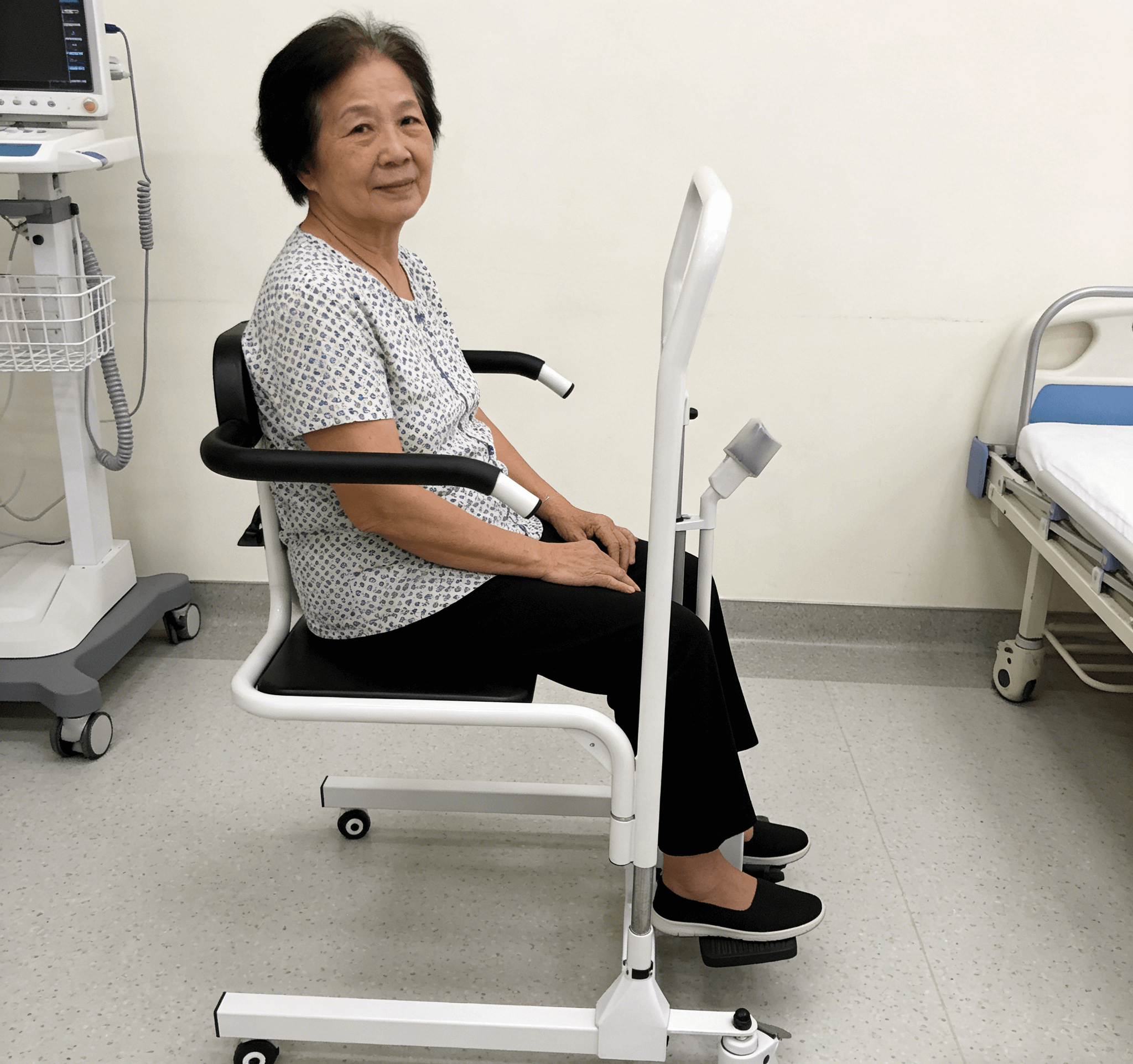
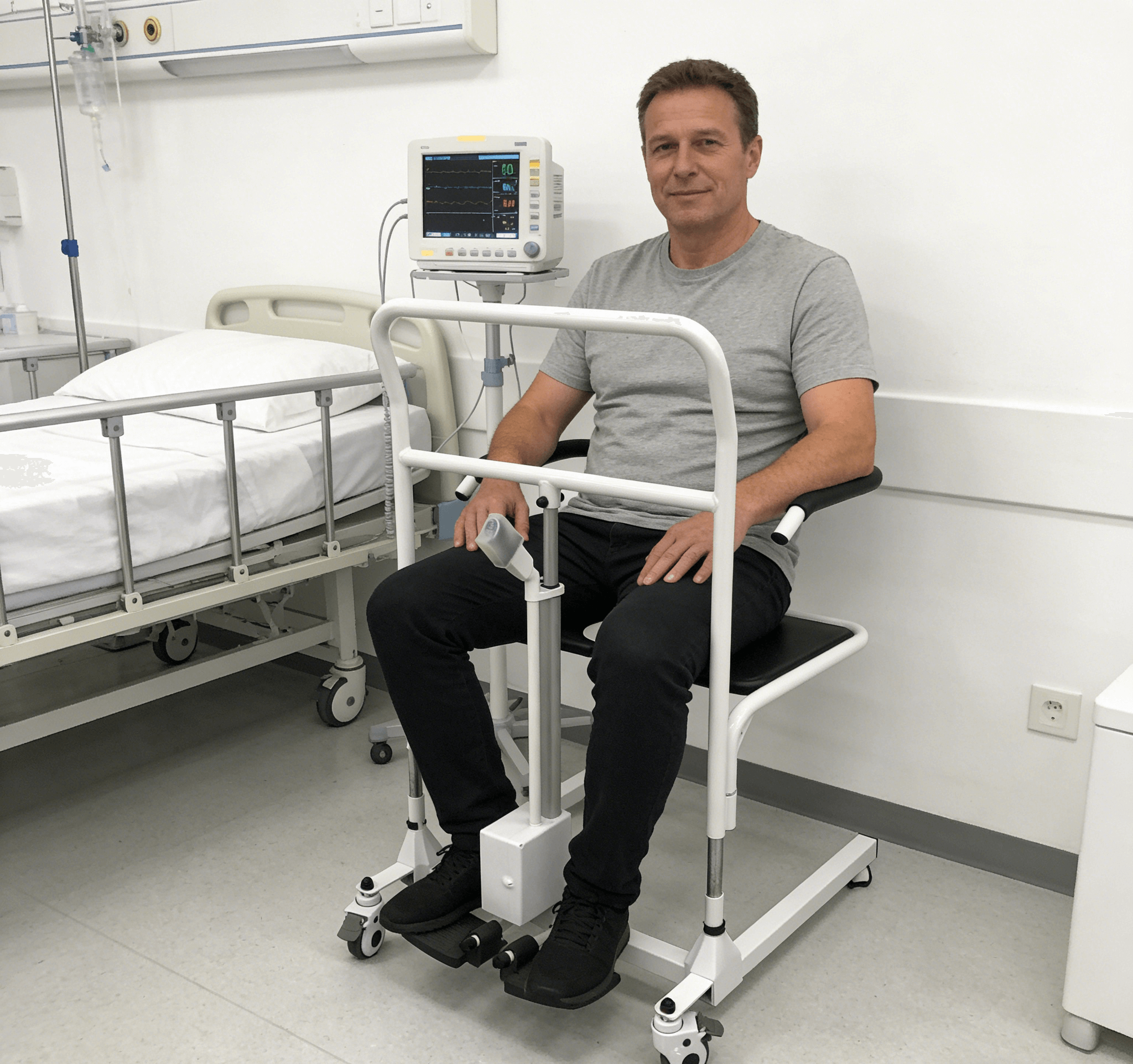
Actuator: Hidden inside the column, responsible for actual lifting and lowering;
Control handle/buttons: Only the input terminal for sending commands;
A faulty handle may be due to wiring issues, not necessarily a malfunction of the actuator.
Conclusion
The actuator of a Hoyer Lift,though hidden within the steel,bears the trust in every lift.
It makes no noise,yet in every smooth rise and fall,it silently guards the patient’s stability and the caregiver’s peace of mind.
True reliability,lies not in the brilliance of appearance,but in the sturdiness and durability of core components.
May your device,always have a strong "heartbeat,"lift and lower as usual,and be the most reliable companion on your care journey.