Category: Electric Transfer Chair
Posted by 2026-01-06 10:01
hoyer lift operation
Comprehensive Analysis of Hoyer Lift Operation: Key Steps for Safe Transfer and Humanistic Details
In long-term care, rehabilitation therapy, and home care, the Hoyer Lift has become a core tool for ensuring the safe transfer of individuals with limited mobility. However, no matter how advanced the equipment is, improper operation not only fails to fulfill its protective function but may also lead to falls, skin injuries, or even psychological trauma. Therefore, mastering a standardized, meticulous, and patient-centered operation process is a fundamental skill for every caregiver.
This article systematically elaborates on the complete operation process of the Hoyer Lift, from preparation to conclusion, emphasizing the principles and significance behind each key action. It aims to help nurses, nursing assistants, and family caregivers truly achieve "safe, smooth, and dignified" transfers every time.
I. Thorough Preparation Before Operation: Safety Starts with Assessment and Inspection
Every successful Hoyer Lift operation begins with careful pre-operation preparation. This is not only a procedural requirement but also the first step in being responsible for the patient.
First, a quick yet comprehensive assessment of the patient must be conducted: Are they completely unable to participate in the transfer? Do they have pain, spasms, cognitive impairments, or feelings of resistance? These factors directly affect sling selection, operation rhythm, and even whether two-person collaboration is required. For example, for patients who are agitated or confused, proactive communication, reassurance, or arranging a second caregiver for assistance can significantly reduce risks.
Second, selecting the appropriate equipment and sling is crucial. Confirm the lift’s weight capacity based on the patient’s weight to avoid overloading; choose the corresponding type of sling according to the transfer purpose—whether it is for moving to a wheelchair, using the toilet, or taking a bath. Full-body slings are suitable for daily transfers, slings with an open crotch facilitate toilet use, and breathable mesh slings are ideal for showers. At the same time, the sling must be carefully checked for wear, fraying, mildew, or odors. Even minor damage means the sling should be immediately taken out of use, as it is the "lifeline" directly responsible for bearing weight.
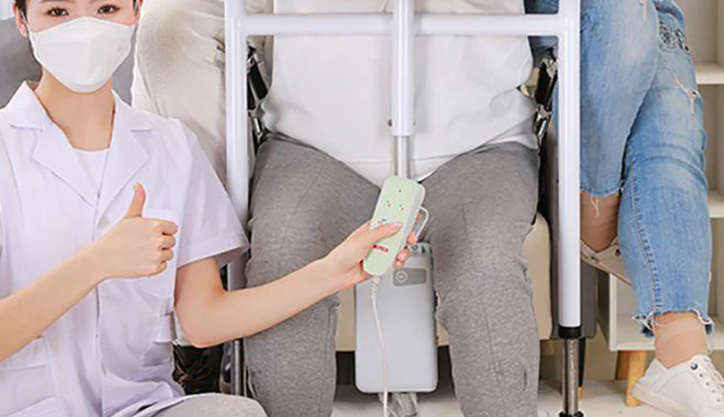
Next, fully inspect the equipment’s condition: For electric models, ensure the battery is fully charged, the control handle responds sensitively, and the emergency stop button works effectively; for manual models, test whether the hydraulic pump operates smoothly, the release valve is flexible, and there are no signs of oil leakage. In addition, the base legs should extend and retract freely, the swivel wheels should turn smoothly, and the brake function should be reliable.
Finally, clear the transfer path. Remove obstacles such as floor wires, small rugs, and slippers to ensure an unobstructed route from the bed to the target location. Non-slip mats should be laid on wet floors, and movement routes should be planned in advance for narrow spaces.
II. Standard Operation Process: Seven Steps to Achieve Safe Transfer
Step 1: Extend and Securely Lock the Base Legs
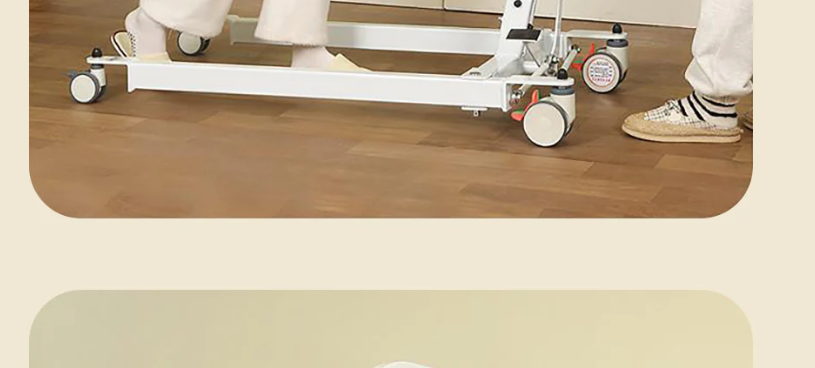
This is the most non-negotiable step in the entire operation. After pushing the Hoyer Lift to the bedside, both sides of the base legs must be fully extended until a clear "click" sound is heard or the mechanical locking pin pops out. Only when the legs are fully extended and locked can sufficient support be provided to prevent the equipment from tipping forward. Countless accidents stem from skipping this step in a hurry.
Step 2: Properly Put on the Sling
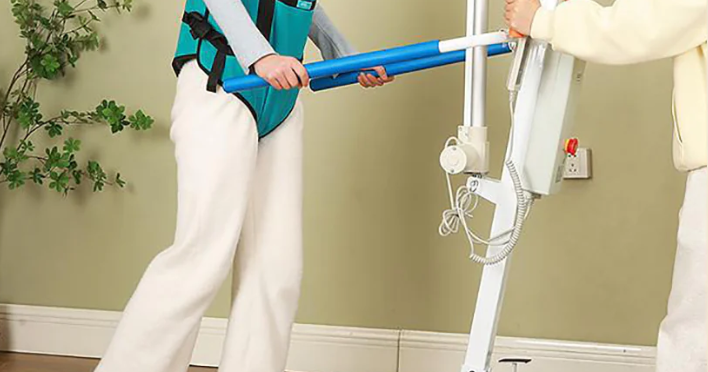
Assisting the patient with putting on the sling requires patience and skill. The "rolling method" is usually adopted: Ask the patient to lie on their side, place the folded sling flat under their back, then help the patient lie flat, and adjust the position so that their hips fully fit into the bottom pocket of the sling. The leg straps should be wrapped around the middle of the thighs—never around the back of the knees (popliteal fossa), as this may compress the common peroneal nerve and cause foot drop. Ensure the sling is flat and not twisted, with no wrinkles on the back, and even weight distribution on both shoulders.
Step 3: Attach the Hooks and Confirm Closure
Accurately hang the loops on the sling into the corresponding hooks on the lifting arm, and check one by one to ensure each hook is fully closed. A single unfastened hook is enough to cause the sling to slip during lifting.
Step 4: Conduct a Low-Altitude Test
This is a hallmark step of professional operation. First, slowly lift the patient by approximately 5 to 10 centimeters, then pause to observe: Is the equipment stable? Is the sling slipping? Does the patient feel uncomfortable or in pain? If any abnormalities are found, lower the patient immediately and readjust. This short test of just a few centimeters can often prevent catastrophic consequences at height.
Step 5: Smooth Lifting and Movement
After confirming everything is normal, continue lifting the patient at a steady speed to a height slightly above the target seat. Release the wheel brakes, slowly push the equipment to the destination (such as a wheelchair or toilet), and step on the brakes to secure it after aligning with the target position. Maintain body stability during movement and avoid sharp turns or collisions.
Step 6: Control the Lowering Speed
The lowering phase is equally critical. For electric models, gently press the lowering button to maintain a steady speed; for manual models, the release valve must be rotated counterclockwise extremely slowly with your fingers. Never twist it forcefully or let go—ideal lowering should be as gentle as a feather falling. Maintain verbal communication with the patient throughout: "We’re coming down slowly, don’t worry," which helps ease their anxiety.
Step 7: Remove the Sling and Organize the Environment
Once the patient is fully seated securely, carefully unfasten the leg straps. If necessary, assist the patient to lie on their side again to pull out the sling. Arrange the patient’s clothing, ask about their comfort level, and provide cushions or blankets if needed. Subsequently, clean and dry the sling, and return the equipment to its storage location for charging (if electric) to prepare for the next use.
III. Extended Responsibilities After Operation
A complete Hoyer Lift operation does not end when the patient is seated. Caregivers should record the operation time, equipment model, sling type, and the patient’s response. This not only facilitates tracking the quality of care but also provides a basis for subsequent assessments. At the same time, regular equipment maintenance should be performed: Clean the body, check for loose structural parts, and test battery life to ensure the equipment is always in optimal condition.
IV. Wisdom in Responding to Special Situations
In real care scenarios, accidents often occur. If the equipment loses power midway during lifting (for electric models), all compliant products are equipped with a manual release valve. Caregivers should remain calm and operate this valve to lower the patient safely at a controlled speed. If the patient’s weight is close to the equipment’s upper limit, two-person collaboration is recommended—one person operates the equipment, and the other stabilizes the patient’s torso. When operating in a narrow bathroom, consider using a lift with quick-opening legs or a ceiling track lift to save space.
Conclusion: Technology as the Framework, Care as the Soul
The Hoyer Lift operation process may seem to consist of a series of mechanical actions, but its true value lies in the humanistic spirit behind it. When you squat down to adjust the sling for an elderly person, when you insist on completing every safety step late at night, when you gently reassure a patient who fears transfers—you are not just using a piece of equipment, but conveying respect and warmth.
Standardized operation is not a constraint, but the cornerstone of care; safe transfer is not a task, but the most basic protection for life. As a well-known maxim in nursing goes: "The best care makes the recipient feel not like they are being ‘moved,’ but like they are being ‘held up.’"
And this is precisely the ultimate meaning of Hoyer Lift operation.