Category: Electric Transfer Chair
Posted by 2026-01-06 10:01
hoyer lift one person
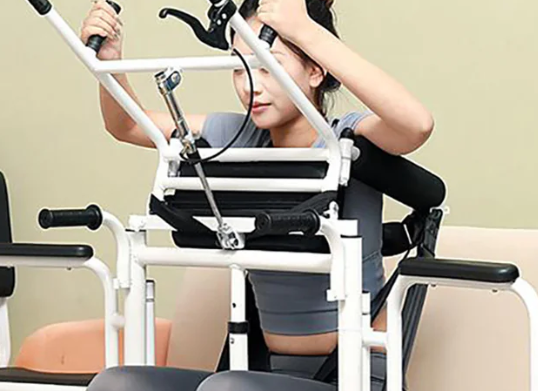
Comprehensive Guide to Solo Operation of a Hoyer Lift: A Safe and Efficient Independent Care Solution
When care resources are limited or in emergency situations, solo operation of a Hoyer Lift is not only possible but also can be safe and efficient with proper techniques and preparation. hoyer lift one person This guide provides you with detailed solo operation instructions and professional advice.
Feasibility Analysis of Solo Operation
Assessment of Applicable Conditions
User Conditions
Conscious and able to understand and follow instructions
Weight within 70% of the device’s weight capacity
No severe behavioral issues or intense involuntary movements
Able to maintain basic sitting balance
Operator Conditions
Completed professional training and has practical operation experience
Physical strength sufficient to move the device and respond to emergencies
Mastery of correct body mechanics techniques
Strong emergency response capabilities
Environmental Conditions
Adequate operating space (minimum 1.5m × 1.5m)
Flat and dry floor
Good lighting conditions
Unobstructed emergency exits
Equipment Selection and Preparation
Equipment Features Suitable for Solo Operation
Priority for Electric Models
Labor-saving operation, reducing physical exertion
Stable control, lowering the risk of accidents
Precise adjustment, facilitating fine-tuning of position
Emergency backup power supply, enhancing safety
Structural Design Considerations
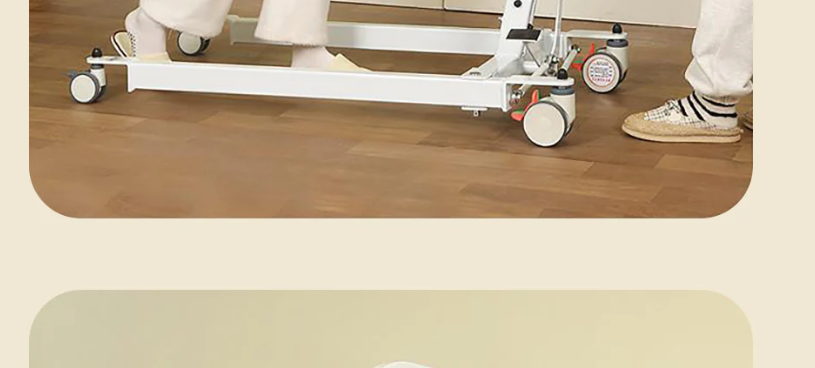
Adjustable-width base, adapting to different spaces
Flexible wheel steering system
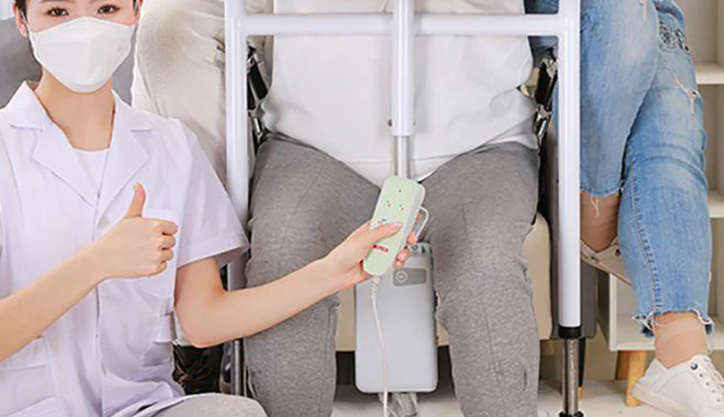
Ergonomic operating handles
Clear visual and tactile feedback
Equipment Preparation
Comprehensive Inspection
Confirm the sling is intact and undamaged
Test the functionality of all safety devices
Inspect the hydraulic or electric system
Verify base stability and wheel brakes
Environmental Preparation
Clear obstacles along the transfer path
Ensure the target location is secured
Prepare necessary auxiliary tools
Confirm emergency contact information is accessible
Standardized Solo Operation Process
Phase 1: Communication and Preparation
Detailed explanation: Inform the user of the entire operation process
Secure cooperation: Ensure the user understands and consents to the operation
Mental preparation: Help the user relax and build trust
Posture adjustment: Assist the user in achieving a proper starting position
Phase 2: Sling Placement
Skillful Placement
Utilize the user’s ability to turn over independently
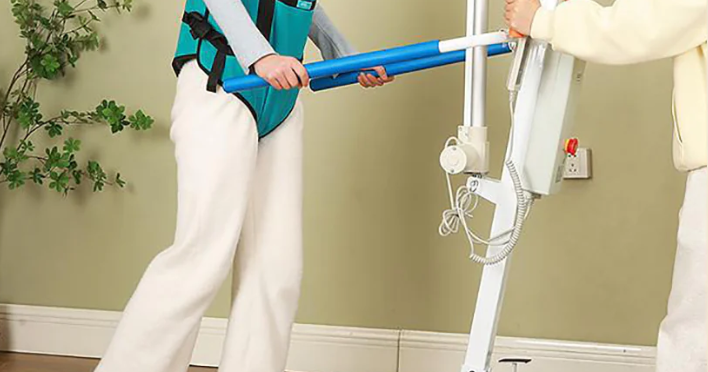
Adopt the "roll-up" method for sling placement
Ensure the sling is positioned correctly and flat
Adjust to a comfortable weight-bearing position
Key Notes
Avoid discomfort caused by sling wrinkles
Confirm even distribution of weight-bearing points
Check areas where the sling contacts the skin
Adjust the sling to an appropriate tightness
Phase 3: Equipment Operation
Precise Positioning
Approach the bed edge at a 45-degree angle
Ensure the base extends fully under the bed
Lock all wheel brakes
Adjust the lifting arm to a position directly above the user
Safe Connection
Follow the "far-to-near" connection principle
Confirm the locking sound of each hook one by one
Double-check all connection points
Test the balance of the sling
Phase 4: Lifting and Transfer
Test Lifting
Lift slowly by 5–10 centimeters
Pause to check stability and comfort
Continue lifting only if no abnormalities are found
Reach a safe operating height (15–20 centimeters)
Stable Transfer
Release the brakes and guide the device by walking backward
Maintain a steady and slow movement speed
Continuously monitor the path and obstacles
Approach the target location precisely
Phase 5: Safe Lowering
Precise Positioning
hoyer lift one person
hoyer lift one person
Use fine-tuning functions to align accurately
Pause briefly before contact with the target surface
Make final adjustments to ensure proper positioning
Lower slowly and steadily
Disconnection
Confirm the user is in a stable and comfortable sitting position
Disconnect hooks in the "near-to-far" order
Gently remove the sling
Assist in adjusting the user’s final posture
Risk Control Strategies
Risk Identification and Prevention
Main Risks
Device tipping
User falling
Operator injury
Equipment malfunction
Preventive Measures
Strict weight control
Standardized operation procedures
Use of non-slip mats
Regular equipment maintenance
Emergency Preparation
Emergency Plans
Emergency lowering procedures for equipment malfunctions
Immediate response measures for user discomfort
Rapid response to sudden environmental incidents
Specific steps for emergency assistance
Backup Plans
Preparation of manual transfer techniques
Arrangement of emergency contacts
Channels for obtaining backup equipment
Temporary care support network
Efficiency Optimization Techniques
Time Management
Preparation: Place all necessary items within easy reach
Process optimization: Establish a standardized operation sequence
Concurrent operations: Arrange multiple tasks reasonably under safe conditions
Experience summary: Record operation time each time and continuously improve
Physical Conservation
Body Mechanics
Keep the back straight and use leg strength
Utilize the principle of equipment weight balance
Avoid sudden exertion and twisting movements
Arrange operation rhythm and rest periods reasonably
Equipment Assistance
Make full use of electric functions
Adjust the device to a suitable height
Use auxiliary carts to move accessories
Utilize storage racks to reduce bending
Skill Improvement Path
Basic Skill Training
Simulation exercises: Conduct repeated practice with simulated weights
Step decomposition: Break down complex operations into simple steps
Speed control: Start at a slow pace and gradually increase efficiency
Problem-solving: Simulate handling of various abnormal situations
Advanced Skill Development
Complex scenarios: Practice operation in confined spaces
Special situations: Learn techniques for handling emergencies
Efficiency improvement: Increase operation speed through timed exercises
Quality assurance: Cultivate habits of self-inspection and evaluation
Psychological Factor Management
Operator Psychology
Confidence building: Accumulate confidence through successful experiences
Stress management: Learn techniques to cope with operational pressure
Focus training: Improve concentration during operations
Emotional regulation: Maintain a calm and professional attitude
User Psychology
Trust building: Establish trust through professional operations
Anxiety relief: Alleviate anxiety using communication techniques
Sense of control: Involve the user in some decision-making processes
Dignity preservation: Maintain the user’s dignity throughout the process
Conclusion
Solo operation of a Hoyer Lift is an important capability that requires professional knowledge, proficient skills, and adequate preparation. hoyer lift one person Through systematic training, strict safety standards, and continuous skill improvement, solo operation can not only be achieved but also be carried out safely, efficiently, and professionally. Remember, successful solo operation is built on three foundations: correct equipment selection, sound operational skills, and sufficient risk awareness. On the path of independent care, every safe transfer is a perfect combination of professional knowledge, practical experience, and sense of responsibility. Let us use our professional capabilities to provide safe and dignified care services to those in need—even when operating alone, we can ensure every transfer is safe and reliable.