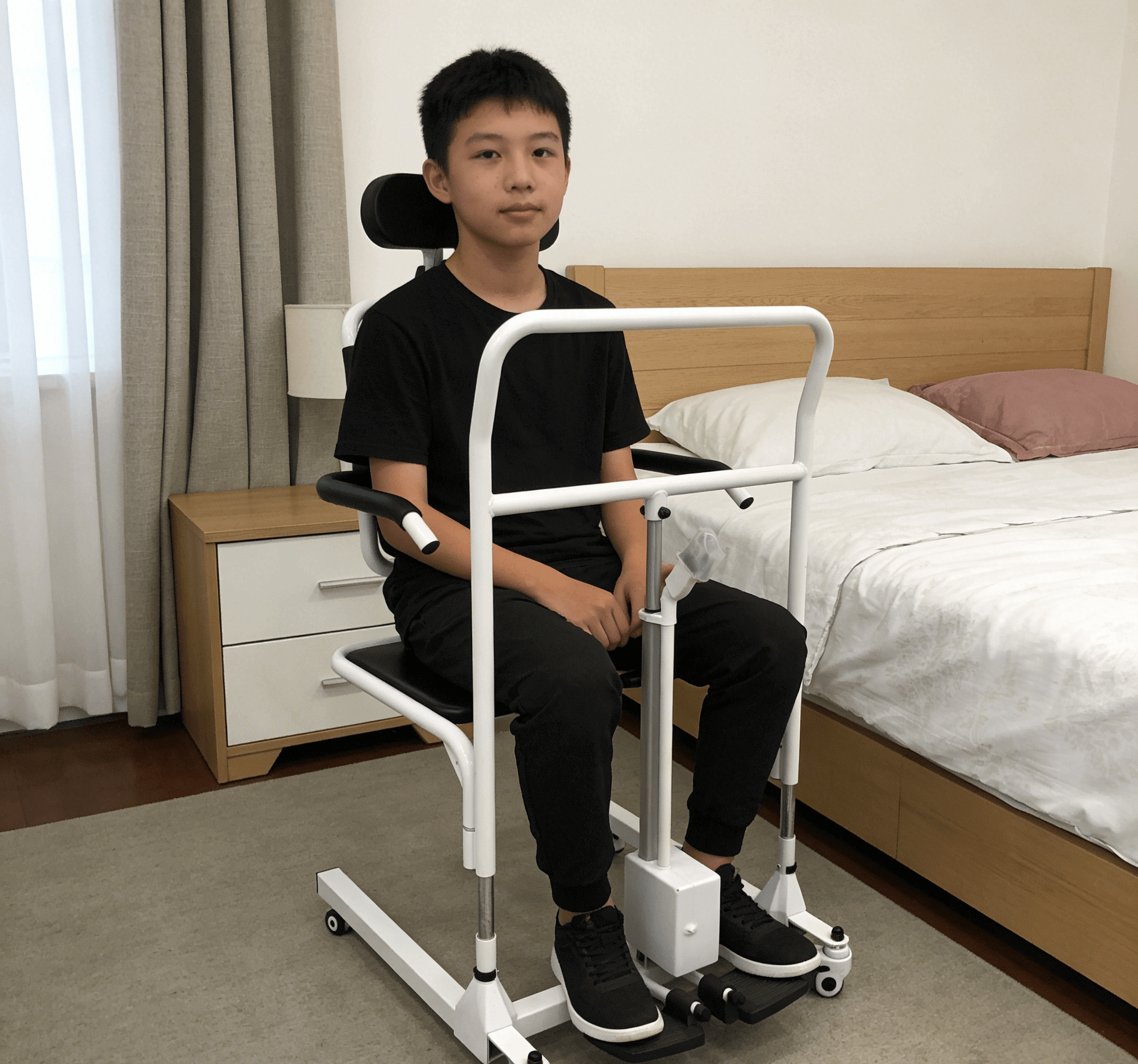
Category: Electric Transfer Chair
Posted by 2025-12-22 11:12
hoyer lift for hot tub
Safe Transfer In and Out of a Whirlpool Tub with a Hoyer Lift: Feasibility, Solutions, and Critical Warnings
For individuals with limited mobility who still desire to enjoy the therapeutic benefits of a whirlpool tub, getting in and out of the tub poses a significant and dangerous challenge. The Hoyer Lift (patient lift) is often mentioned as a potential solution. This article will delve into its feasibility, necessary accessories, safety risks, and better alternative options.
Core Conclusion: While theoretically feasible, standard-configured Hoyer Lifts are not designed for wet, slippery bathroom environments. Using them directly for transferring in and out of a whirlpool tub carries extremely high risks. Strict safety measures and specialized accessories are absolutely essential.
I. Why Is Direct Use of a Standard Hoyer Lift for Whirlpool Tub Access Dangerous?
Slip and Tipping Risks: Wet bathroom floors and water spills can cause the lift’s wheels to slip, leading to an unstable base. When swinging the user over the tub, the system’s center of gravity shifts, making the equipment highly prone to tipping.
Equipment Damage and Electric Shock Risks: Hoyer Lifts are either electric or hydraulic devices and must never be submerged in water. Even splashed water can damage critical components and pose a potential electric shock hazard.
Sling Issues: Standard fabric slings become extremely heavy when soaked, increasing the equipment’s load. They also cling to the skin, causing discomfort from cold. After exiting the water, wet slings are difficult to remove immediately, which can easily lead to the user losing body heat.
Difficulty in Precise Positioning: Accurately lowering the user into the narrow seating space inside the tub while avoiding collisions with the tub walls requires extremely high operational skills. Any mistake could result in bumps or falls.
II. If You Insist on Using a Hoyer Lift: Essential Specialized Accessories and Modification Plans
To make using a Hoyer Lift for whirlpool tub access relatively feasible, you must invest in the following specialized accessories:
1. Tub-Specific Ceiling Lift System
This is an overhead ceiling lift track system mounted directly above the tub. It completely eliminates the risk of floor-based lifts sliding on wet surfaces, making it the safest lifting solution.
Professional installation is required to ensure the ceiling structure can support the weight.
2. Hydrotherapy/Commode Slings
These slings are typically made of porous, quick-drying mesh material.
Their design provides support in water while minimizing water absorption to stay lightweight and allowing water to contact the skin.
It is critical to confirm that the selected hydrotherapy sling is compatible with your lift model and has sufficient weight-bearing capacity.
3. Non-Slip Bathroom Flooring
If a floor-based lift must be used, ensure the bathroom floor is non-slip and the movement path is completely dry.
Basic Operation Steps (With the Above Accessories in Place)
Preparation: Before filling the tub with water, properly secure the hydrotherapy sling on the user in a dry area.
Connect the Lift: Use the ceiling track lift system, or ensure the floor-based lift is on a completely dry surface, then lift the user.
Transfer Over the Tub: Smoothly move the user to a position above the filled tub.
Safe Entry into Water: Slowly lower the user into the tub. Important: The user should not be fully supported by the sling while sitting on the tub bottom; instead, they should be partially suspended in the water.
Enjoy the Bath: Disconnect the lift hooks to allow the user to enjoy the hydrotherapy freely. The caregiver must monitor the user at all times.
Exit and Transfer: After the bath, reattach the lift hooks, lift the user out of the water, transfer them to a wheelchair in a dry area, and immediately remove the wet sling and dry the user’s body.
III. Safer, More Recommended Alternatives
Given the complexity and risks of using a Hoyer Lift for whirlpool tub access, the following alternatives are generally more recommended:
1. Tub Lift Chairs
These are specially designed, motorized seats installed directly on the edge of the tub.
The user sits on the chair, which slowly rotates and lowers into the tub; after the bath, it lifts the user back up.
This is one of the most integrated and convenient solutions, requiring no additional transfer equipment.
2. Walk-In Tubs
These tubs feature a sealed door, allowing the user to walk in (or roll in via wheelchair) like entering a shower stall. Water is filled only after the door is closed.
They completely eliminate the high threshold of "stepping over" the tub edge, making them one of the safest tub solutions for individuals with limited mobility on the market.
3. Accessible Showers with Seats
For users prioritizing safety and convenience, a curbless walk-in shower equipped with a sturdy shower chair and handheld showerhead is often a safer and more practical choice than a whirlpool tub.
IV. Summary of Critical Safety Warnings
Never allow the mechanical parts of the Hoyer Lift to come into contact with water.
Never attempt to use the lift over a fully filled tub for the first time.
Never use standard fabric slings for hydrotherapy.
The caregiver must monitor the user closely at all times and be ready to respond to emergencies.
Prioritize ceiling-mounted track systems over floor-based mobile lifts.
Conclusion
While it is possible to safely adapt the Hoyer Lift concept for whirlpool tub use by employing specialized hydrotherapy slings and ceiling track systems, this is not the most straightforward or cost-effective option for most households. Purpose-built devices like tub lift chairs or walk-in tubs typically offer a higher level of safety, ease of use, and independence for this specific scenario.
Before making a decision, it is strongly recommended to consult an occupational therapist or professional accessibility modification expert. They can assess your specific situation and home environment to provide the safest, most suitable personalized recommendations.