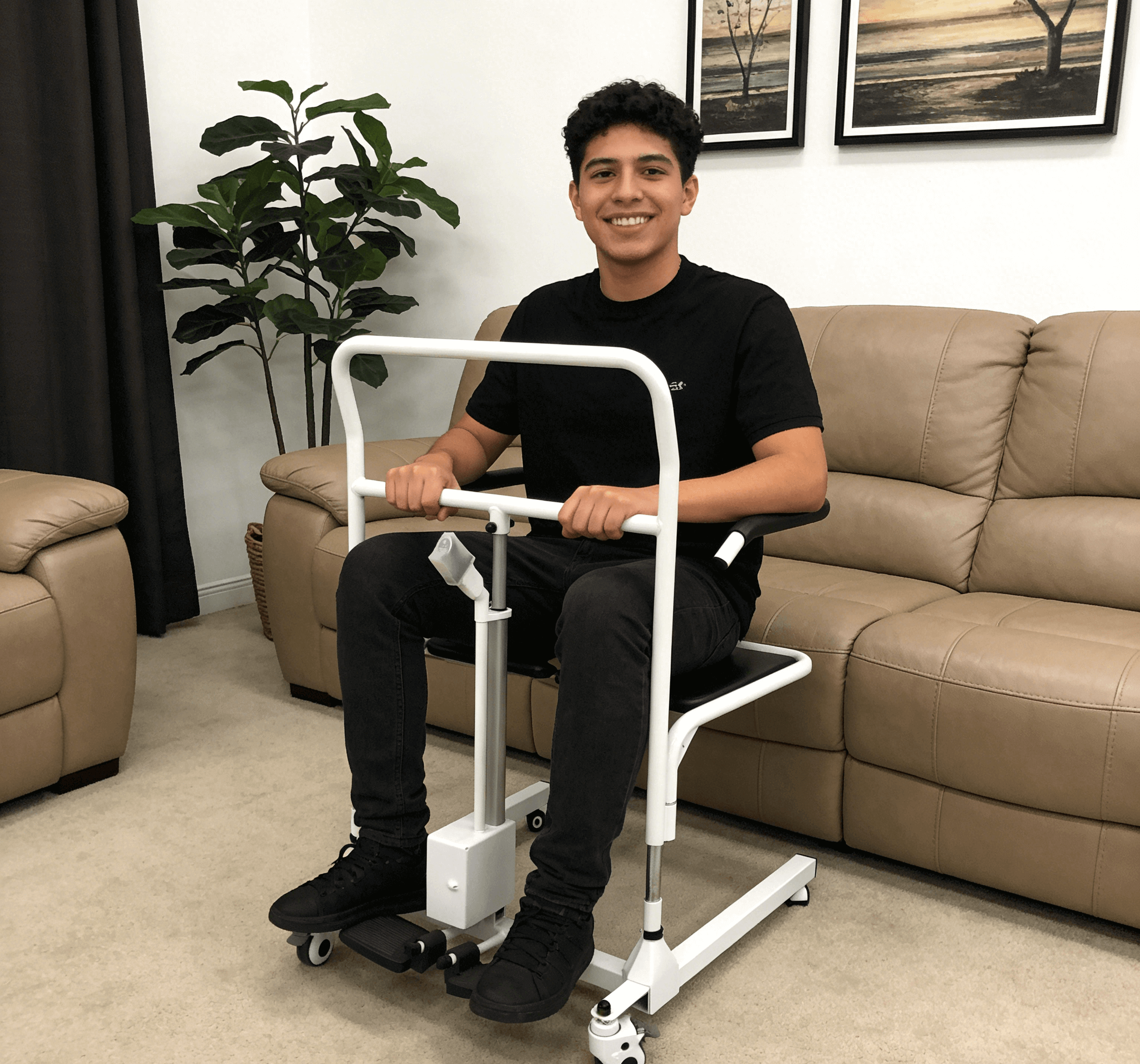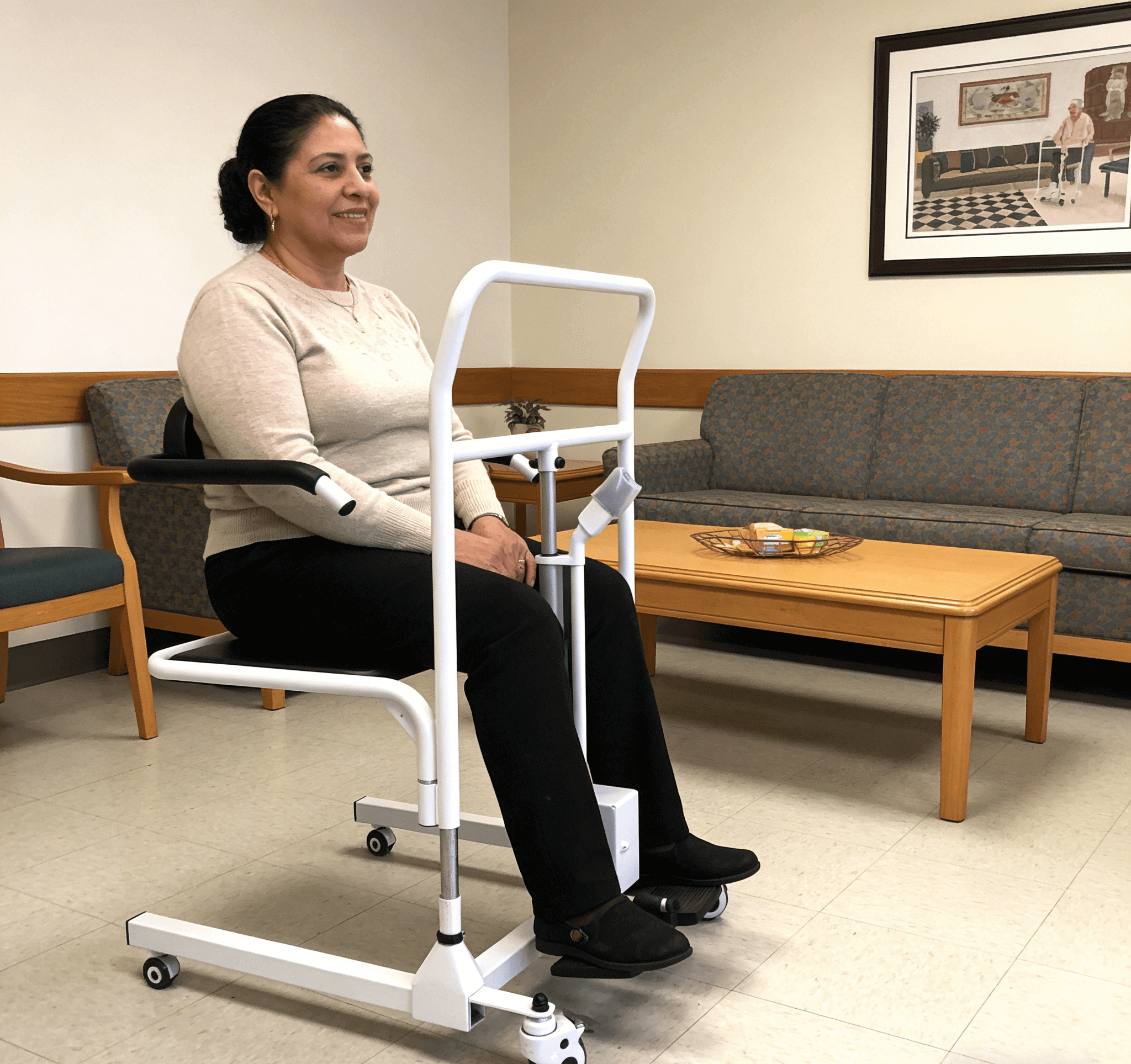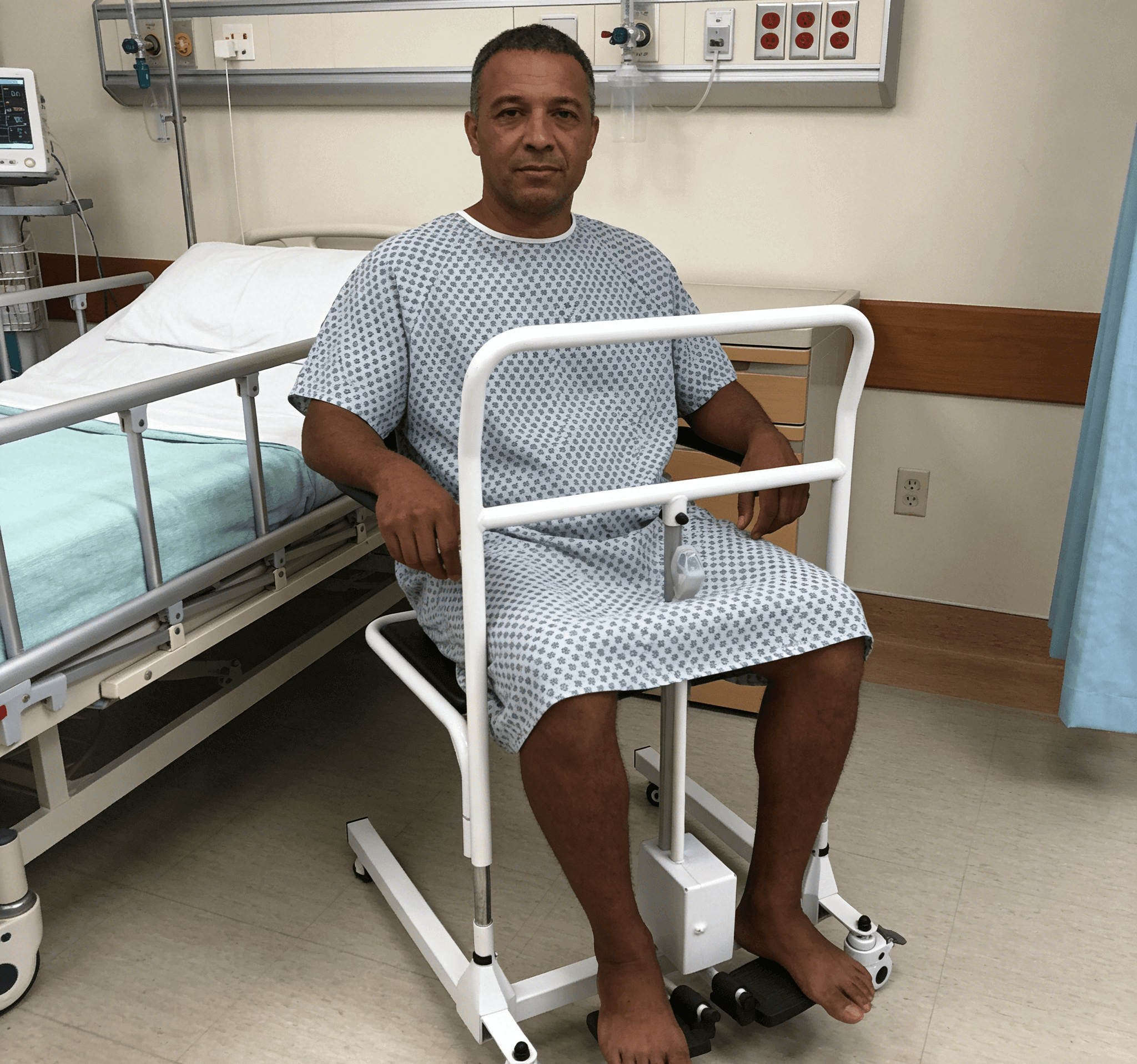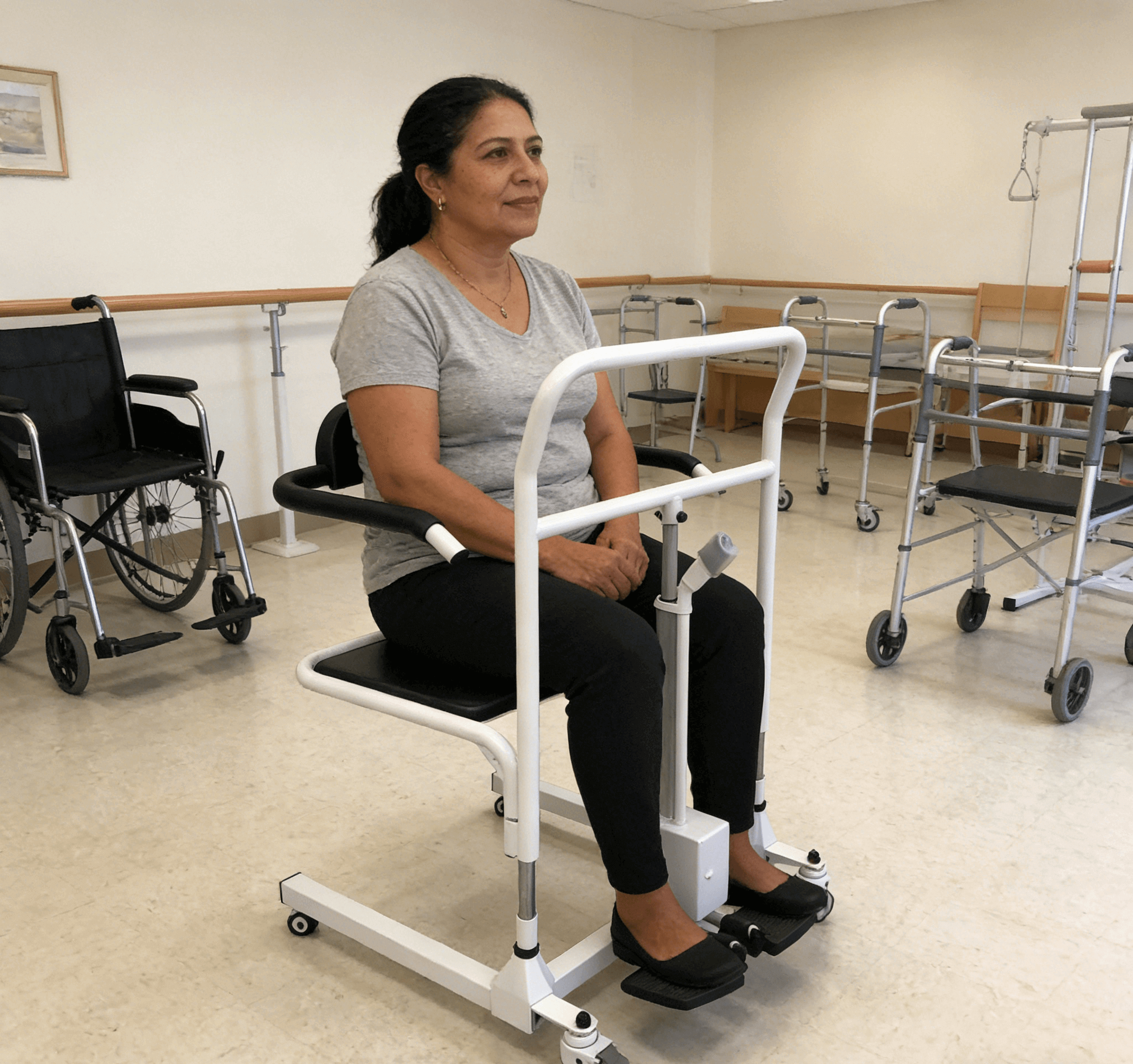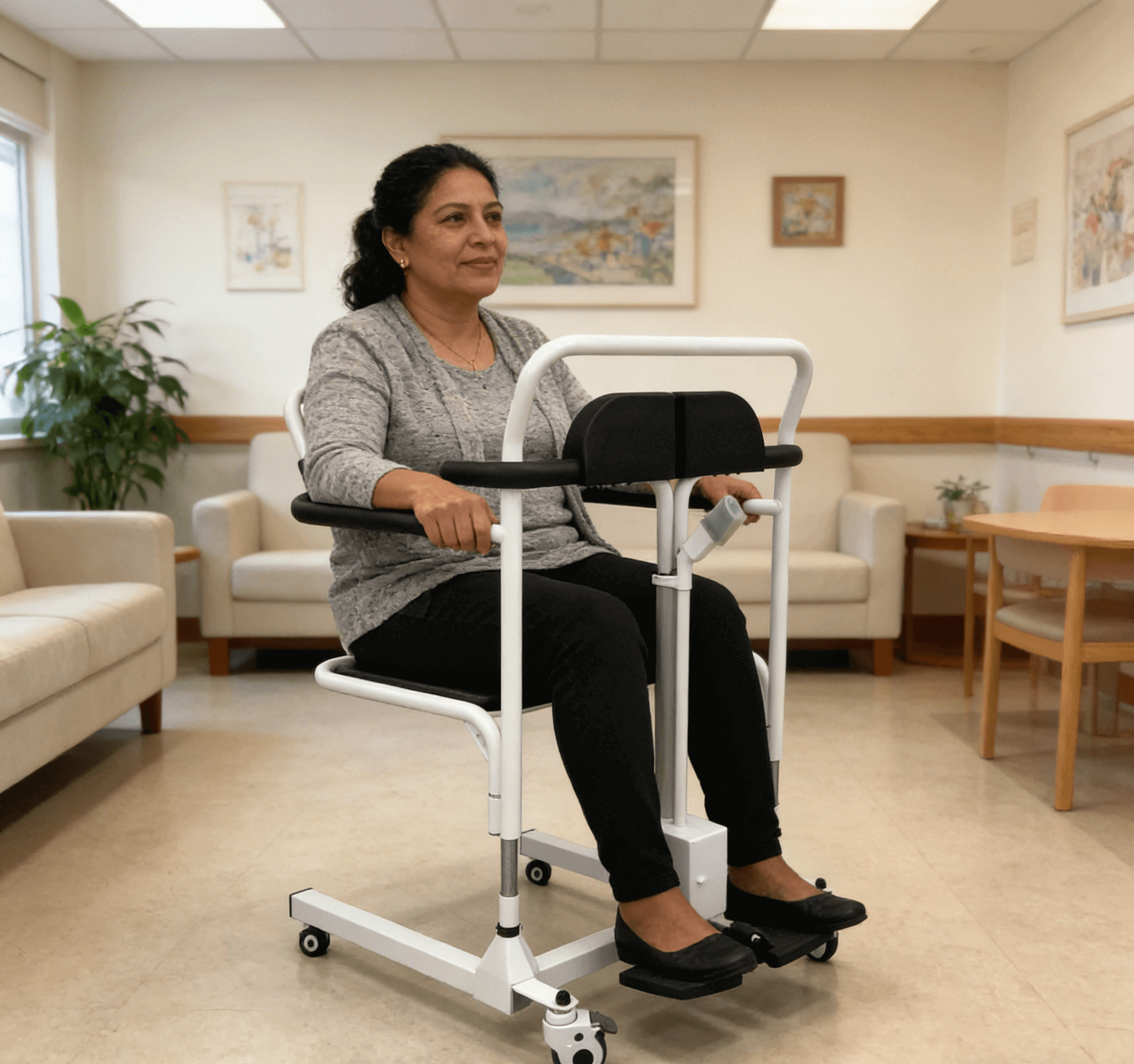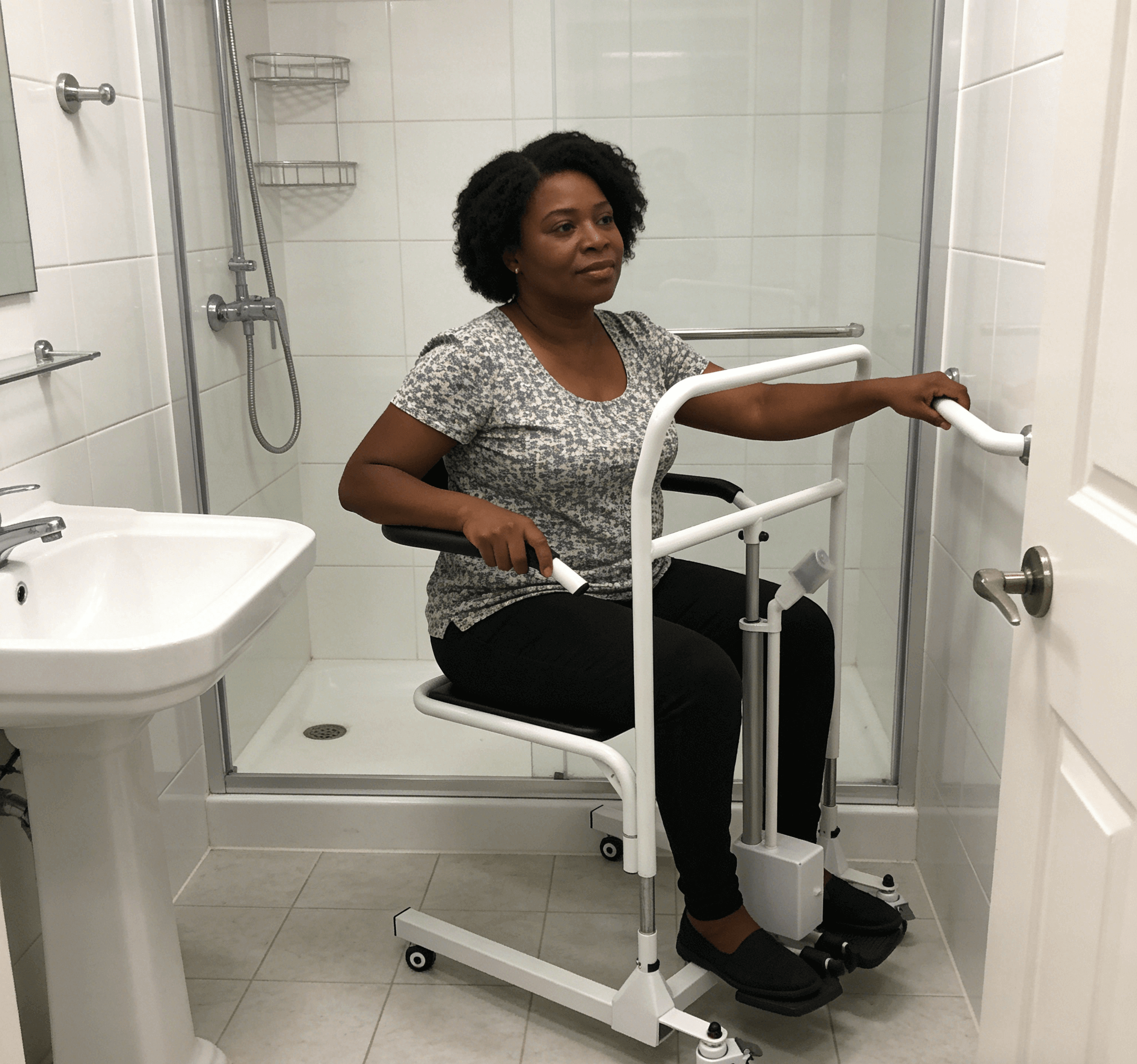
Category: Electric Transfer Chair
Posted by 2025-12-24 11:12
hoyer lift for small spaces
Care Solutions for Small Spaces: How to Choose and Use a Hoyer Lift
In apartments, small bedrooms, or cramped home environments, caring for family members with limited mobility poses a unique challenge: how to safely transfer them within confined spaces? Traditional Hoyer Lifts, with their large bases and operational radius, often seem daunting. However, by selecting models designed specifically for small spaces and adopting smart strategies, safe care is entirely achievable.
I. Unique Challenges of Care in Small Spaces
Narrow pathways: Limited width of doorways and corridors makes it difficult for equipment to pass through.
Cramped bedside areas: Nightstands and furniture prevent the lift’s base from sliding smoothly under the bed.
Limited movement space: The transfer path from bed to wheelchair is short and complex, with insufficient room for maneuvering.
Storage difficulties: Large equipment occupies significant living space when not in use.
II. Key Features to Look for in a Hoyer Lift for Small Spaces
Choosing a model with one or more of the following features will greatly improve its suitability for small spaces:
Width-Adjustable Base
This is the most important feature. The legs of this type of base can retract inward to easily pass through narrow doorways; once in place, they can extend outward to provide a wide, stable support base.
Advantage: Perfectly resolves the core conflict of "being able to get in and stand stably."
Telescoping Boom
The boom can extend and retract horizontally.
Advantage: You can place the lift in a fixed position, then use the telescoping boom to "reach" the user and accurately "place" them in a wheelchair or on a toilet. There’s no need to repeatedly move the entire device to align it—this is revolutionary when turning space is extremely limited.
Compact or Apartment-Style Design
Some manufacturers specifically produce "compact" or "apartment-style" lifts. They typically have:
Shorter base length and width.
A slimmer overall frame.
Weight capacity sufficient for most home transfer needs (usually 135–180 kg).
U-Shaped or Split-Leg Base
Compared to the standard H-shaped base, a U-shaped base can usually access the user from the side or front-side of the bed. It has lower requirements for under-bed clearance and can more easily find an entry angle among crowded furniture.
Lightweight Design
A lighter body means caregivers can more easily move and adjust the device’s position, especially in small spaces where frequent fine adjustments are needed.
III. Best Practices and Tips for Transfers in Small Spaces
Even with the right equipment, proper techniques can make operations twice as effective with half the effort:
Environmental Modifications
Clear the path: Remove unnecessary furniture, such as nightstands. Consider using wall-mounted nightstands to free up floor space.
Choose the right bed: If possible, use a hospital bed or height-adjustable bed—these usually have higher frames, making it easier for the base to slide underneath.
Utilize room layout: Plan a fixed transfer path and keep it clear at all times.
Operational Techniques
"Position and telescope" method: For models with a telescoping boom, fix the lift’s base in an optimal position, then rely mainly on the boom’s extension/retraction to complete the transfer.
Use angles: Maneuver the lift into the bedside at a 45-degree angle—this is the most stable and space-saving approach.
Lift first, then move: Raise the user to a sufficient height to avoid collisions with the bed edge or chair, hoyer lift for small spaces thereby reducing the distance that needs to be moved.
IV. The Ultimate Solution: Ceiling Track Lift Systems
If you are planning a new renovation or long-term care setup, a ceiling track system is the ultimate answer for care in small spaces.
Working principle: One or more tracks are fixed to the ceiling, covering key areas such as the bedroom and bathroom. The lift unit runs along the tracks.
Major advantages for small spaces:
Zero floor space occupation: The floor is completely cleared, eliminating the need to store and move floor-based equipment.
Seamless transfers: Users can be moved directly from above the bed to above the bathroom, enabling precise, safe point-to-point transfers.
Maximized independence: Users can operate the system independently via a remote control.
Aesthetic and tidy: Tracks can be integrated into interior design, unlike floor-based equipment which is more conspicuous.
V. Buying Checklist: Questions to Ask Suppliers
When contacting suppliers, ask directly:
"Do you have compact or apartment-style lifts designed specifically for small spaces?"
"Can the base of this model be adjusted for width? What are the dimensions when retracted and at maximum width?"
"Does the boom telescope?"
"Can you provide an on-site assessment to see if my space is suitable?" (Quality service providers usually offer this.)
Conclusion
Small spaces should not be a barrier to safe care. By selecting a modern Hoyer Lift with an adjustable base and telescoping boom, combined with smart space planning and operational techniques, you can fully overcome physical limitations. For long-term needs, investing in a ceiling track system provides a one-time solution that delivers unparalleled safety and independence. Remember, the key is not the size of the space, but whether you choose the right tools and methods.