Category: Patient Lifts
Posted by 1970-01-01 08:01
hoyer lift for car transfer
Can Hoyer Lifts Be Used for Car Transfers? — Practical Solutions and Safety Boundaries for Getting In and Out of Vehicles
When a family member becomes completely disabled due to a spinal cord injury, stroke, ALS, or other conditions, safely transferring them from a wheelchair to a car seat becomes the biggest challenge for every outing—whether for medical appointments, visiting relatives, or leisure activities. Many families naturally wonder: "Can we use the home Hoyer lift to help get them into the car?"
Behind this question lies a deep desire for independent travel and participation in daily life. However, the reality is that standard household Hoyer lifts are almost impossible to use safely for car transfers. But this does not mean there is no way out—we simply need to turn to professional solutions that are truly adapted to the vehicle environment.
This article will clarify misunderstandings, explain feasible car transfer techniques, and provide safe, practical travel strategies.
I. Why Are Standard Hoyer Lifts Unsuitable for Car Transfers?
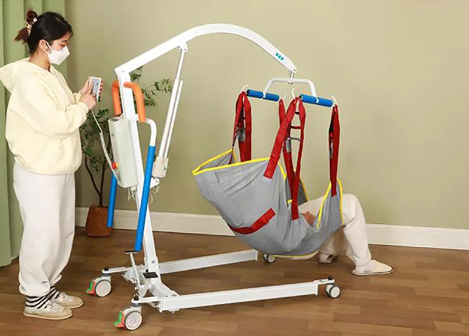
Common floor-standing Hoyer lifts (such as the Hoyer Advance and Drive Elite) perform reliably indoors, but they face multiple insurmountable obstacles in car scenarios:
1. Severe Space Limitations
After opening the door of a sedan or SUV, the lateral operating space is usually less than 60 cm;
The base of a Hoyer lift requires 80–100 cm to expand, and the boom has an even larger rotation radius—making it impossible to maneuver at all.
2. Unstable Ground Conditions
Roadside parking areas often have slopes, gravel, or slippery surfaces, which make the lift prone to tipping;
Vehicle sway (e.g., when parked on a slope or in strong winds) further increases risks.
3. Inability to Secure the Equipment
The main unit of a Hoyer lift weighs 30–50 kg, making loading and unloading difficult;
If not securely fixed during driving, it becomes a dangerous projectile.
4. Lack of Power Support (for Electric Models)
Household electric lifts rely on 220V AC power, while cars only have 12V DC power—they are incompatible.
⚠️ Important Warning: Using a household Hoyer lift for car transfers by the roadside is a high-risk operation, which can easily lead to falls, fractures, or even traffic accidents.
II. What Are the Real "Car Transfer Solutions"?
Although standard Hoyer lifts cannot be directly used for car transfers, there are three types of professional solutions to enable safe entry and exit:
1. Vehicle-Mounted Electric Elevating Seats (Rotary or Lift-Out Seating)
Principle: The original car seat can rotate 90° outward and lower to ground level. After the patient sits down, it lifts back up and returns to the vehicle;
Compatible Vehicle Types: Some MPVs or mobility vehicles (e.g., Toyota Alphard, Mercedes-Benz V-Class, Honda Stepwgn) support retrofitting;
Advantages: No transfer is required throughout the process—users remain seated, and operation can be done by one person;
Limitations: High retrofitting costs (usually starting at ¥80,000), suitable only for long-term, frequent use.
2. Portable Vehicle-Mounted Patient Hoists
Representative Products:
Handi-Move Auto Hoist (USA)
Mobi-Lift Car Hoist (Europe)
Features:
Foldable and fixable to the trunk or roof rack;
Powered by 12V vehicle power supply;
Telescopic boom can cover the front passenger seat or rear seats;
Equipped with specialized lightweight waterproof slings.
Requirements: Professional installation is needed, and the vehicle must have sufficient structural strength;
Price: Approximately ¥25,000–50,000, suitable for families with severely disabled members.
3. Transfer Boards + Assistive Belts (for Partially Cooperative Users)
Applicable Conditions: The patient still has upper limb strength to support part of their body weight;
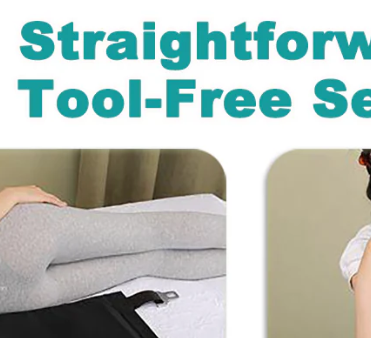
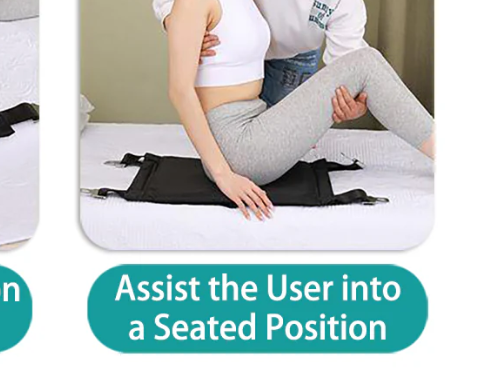
Operation: Place the transfer board between the wheelchair and the car seat, and the caregiver uses an assistive belt to help the patient slide into the seat;
Cost: Low (¥200–500), but requires two people to cooperate, and is less effective for high-chassis SUVs.
III. More Recommended Practical Strategy: Shift from "Transfer" to "Systematic Travel"
Instead of focusing on "how to get someone into the car," it is better to build a complete barrier-free travel system:
✅ Choose the Right Vehicle
Prioritize low-floor MPVs (e.g., Buick GL8, Honda Odyssey);
Avoid high-chassis SUVs or sports cars—excessively high steps increase transfer difficulty.
✅ Utilize Social Resources
Book barrier-free taxis: Many cities offer specialized vehicles with ramps or lifting platforms;
Rent mobility vehicles: Renting a retrofitted vehicle by the day/week is much cheaper than purchasing one;
Apply for subsidies from disabled persons' federations: Some regions provide financial assistance for vehicle purchases or retrofits.
✅ Plan Trips in Advance
Combine medical appointments and errands to reduce the frequency of transfers;
Choose parking lots with barrier-free access, close to elevators or entrances.
IV. If Manual Assistance Is Unavoidable: Safety Bottom-Line Principles
Without professional equipment, be sure to follow these rules:
Two-Person Cooperation: One person supports the back, and the other supports the legs—exert force simultaneously;
Use an Assistive Belt: Increase grip points to reduce the risk of slipping;
Test the Movement First: Simulate the transfer path once without the patient to practice;
Never Attempt Alone: Lifting or carrying by one person can easily cause injuries to both parties.
V. Conclusion: The Right to Travel Should Not Be Blocked by Car Door Sills
We understand the desire to let loved ones "go out and see the world too."
But the roadside is not a hospital ward, and car doors are not operating tables.
Every hasty transfer
may lead to an irreversible injury.
Genuine barrier-free travel
is not about forcing household equipment next to the car,
but about designing a safe, smooth access path
for both the vehicle and the person.
May all lives longing for free movement
be steadily supported,
depart safely,
and return unharmed.