Category: Patient Lifts
Posted by 2025-12-19 11:12
hoyer lift for children
Pediatric Hoyer Lift: Providing Safe, Growth-Supportive Transfer Solutions for Small Bodies
When children face mobility challenges due to congenital conditions, neuromuscular disorders, injuries, or post-surgical recovery, Hoyer lifts (pediatric lifts) become vital tools that enable them to explore the world, participate in family life, and access education. Selecting and using a lift for children requires special consideration of their unique physical, developmental, and psychological needs.
Why Do Children Need Specialized Lifts?
Body Size and Proportions: Adult lifts are too large and heavy for children. The positions of slings and hooks are ill-suited, failing to provide safe and comfortable support.
Specialized Support Requirements: Many children with disabilities may have weak trunk control, joint hyperextension or contractures, and abnormal muscle tone. They need equipment that offers more precise support.
Promoting Development and Participation: A properly fitted lift not only facilitates transfers but also helps children engage in desk activities, play, and social interactions with correct posture—boosting both their physical and psychological development.
Protecting Caregivers: Whether it’s parents or school teachers, repeatedly lifting a growing child easily leads to chronic strain. Lifts are key to preserving long-term caregiving capacity.
Core Features of Pediatric Lifts
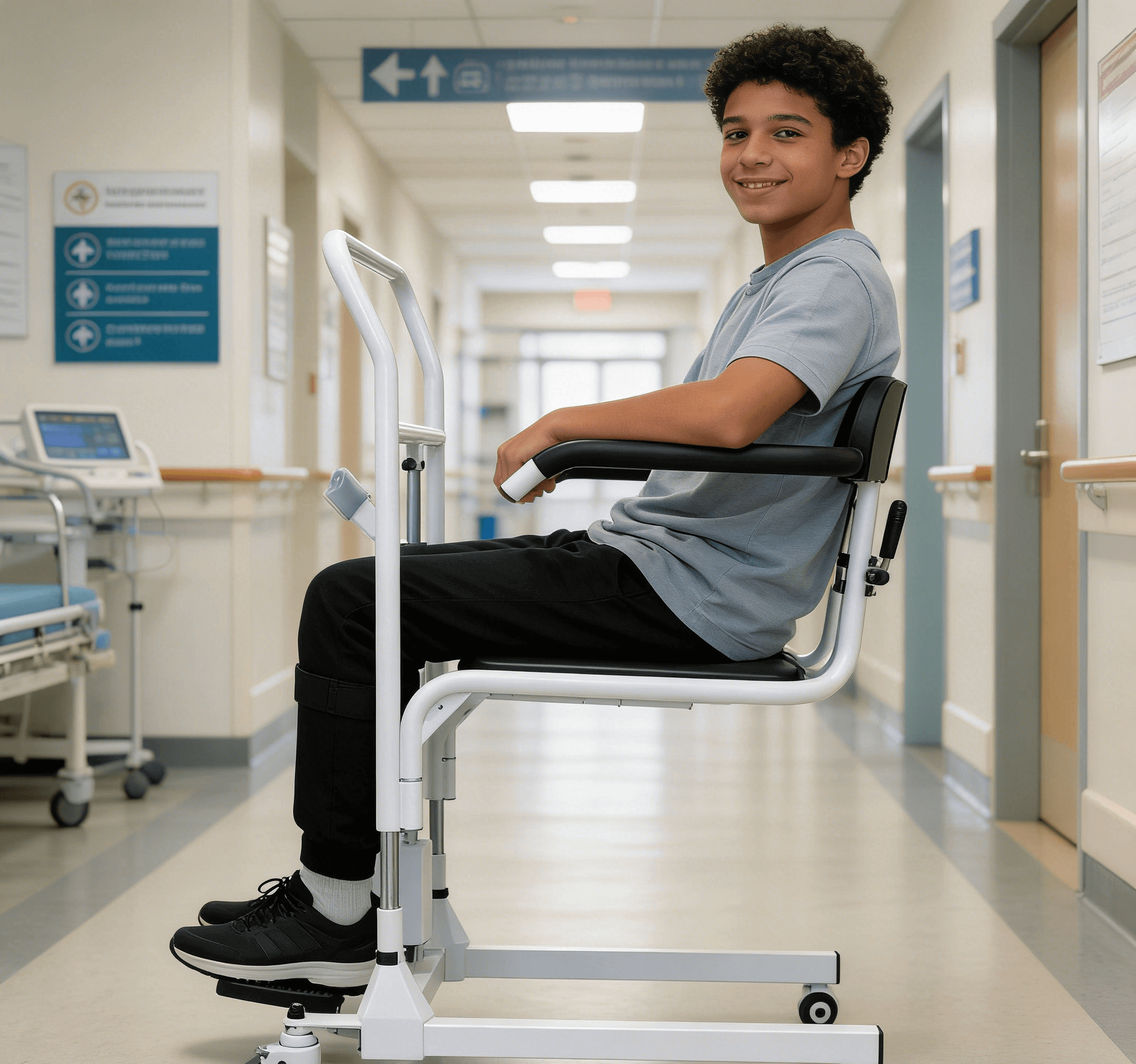
Compared to adult equipment, pediatric lifts have distinct design differences:
Size and Weight Capacity
Weight Range: Typically designed for children and adolescents weighing less than 150 pounds (approximately 68 kg).
Smaller Overall Size: Narrower bases and shorter lift columns to match the dimensions of children’s beds, desks, and wheelchairs.
Lower Lifting Range: The lowest position can reach close to the ground, making it easy to lift children from play mats on the floor.
Booms and Hooks
Shorter Booms: Reduce the child’s swaying in mid-air and enhance stability.
More Hooks: Usually equipped with 4 hooks, allowing for finer adjustments to the child’s posture (e.g., controlling the angles of the head, trunk, and legs).
Specialized Pediatric Slings
This is one of the most critical components. Slings specifically designed for children must be selected, with the following features:
Multiple Sizes: Available in sizes ranging from infant to adolescent.
Reinforced Head and Trunk Support: For children with weak neck strength, slings with integrated headrests are essential.
Leg-Separation Options: Include internal and external leg straps to prevent the child from slipping out of the sling.
Soft Materials and Child-Friendly Patterns: Made of softer fabrics, often with colorful designs to reduce the "cold" feel of medical equipment.
Selection Guide: Finding the Best Match for Your Child
Professional Assessment Is a Must:
Pediatric occupational therapists or physical therapists are your most important partners. They will evaluate the child’s muscle tone, joint range of motion, posture control ability, and specific environments (home, school), then provide a detailed equipment prescription.
Consider "Growth Potential":
Some pediatric lifts have adjustable bases and lift columns that can adapt as the child grows, making them a more cost-effective long-term investment.
Pay Attention to Psychological Feelings:
Involve the child in choosing the color or pattern of the sling.
Describe the lift using positive language—such as "your lift chair" or "flying machine"—positioning it as a fun, empowering tool rather than a restriction.
Safe Usage and Communication with Children
Introduce Through Play: For young children, first let them use the lift to lift their favorite stuffed toys to alleviate fear.
Clear Communication: Always explain each step in language the child can understand: "We’re going to fly now!" "Getting ready to land!"
Slow and Smooth Operation: Children are more sensitive to movement, so smooth operation is crucial.
Constant Supervision: Never leave a child suspended alone in the lift.
Application Scenarios: Beyond Basic Transfers
Pediatric lifts have a wide range of uses:
At Home: Transfers between beds, wheelchairs, bathtubs, toilets, and the floor.
At School: Help children transfer between desks, floor activity areas, and specialized seats, promoting classroom participation.
Rehabilitation Training: Therapists can use lifts to safely place children on various therapeutic equipment (e.g., standing frames, balance balls).
Community Activities: Facilitate children’s access to swimming pools or participation in outdoor games.
Funding and Resource Support
Pediatric equipment is usually very expensive, but assistance can be sought through the following channels:
Early Intervention Programs: For infants and young children.
School Systems: If the equipment is necessary for in-school education, the school may be required to provide it.
Health Insurance/Medicaid.
Charitable Foundations: Such as the Children’s Miracle Network, local children’s hospital foundations, etc.
Conclusion
Investing in a properly fitted Hoyer lift for a child is a profound investment in their independence, dignity, and future development. It is more than just a transfer tool—it is a key that opens the door to a broader world for the child, allowing them to learn, play, and grow on a more equal footing. By working closely with medical teams and choosing a child-centered design, you can ensure this equipment becomes a positive and powerful part of the child’s life.